The 1960s File Feature
Danny Boy
The Story Behind Danny Boy by Ray Price A Country Legend Broadening His Sound By 1967, Ray Price had already spent close to two decades establishing himself …
01 The Story
The Story Behind "Danny Boy" by Ray Price
A Country Legend Broadening His Sound
By 1967, Ray Price had already spent close to two decades establishing himself as one of the defining voices of country music, first as a honky-tonk stylist steeped in the tradition of his mentor and roommate Hank Williams, then as a pioneer of the lush, string-laden countrypolitan sound that pulled country music toward the pop mainstream. That evolution made him a somewhat controversial figure among purists even as it made him a massive commercial force, his rich baritone sliding effortlessly between twangy honky-tonk shuffles and orchestrated ballads aimed at crossover radio. His decision to record one of the most famous ballads in the English language fit squarely into that broader ambition to expand country music's audience well beyond its traditional listener base. It was a deliberate choice for an artist who could easily have coasted on formula, testing his interpretive range against one of the most recognizable melodies in the English-speaking world.
Reviving a Century-Old Melody
The song itself long predates Price's career by decades, its melody drawn from the traditional Irish air known as "Londonderry Air" and set to lyrics written in the early twentieth century by an English lawyer. By the time Price approached the song, it had already become a standard covered by generations of singers across nearly every genre, its mournful, farewell-tinged melody proving endlessly adaptable to different vocal styles, from grand opera to bar-room ballad. Price's version brought his signature countrypolitan sensibility to the material, wrapping the ancient melody in the lush orchestration that had become his commercial trademark by the mid-1960s.
A Lush, Reverent Arrangement
Sonically, the recording favors sweeping strings and a stately, measured tempo that lets Price's voice carry the song's considerable emotional weight without rushing through its melancholy. His delivery is dignified rather than showy, treating the well-worn melody with real reverence while still bringing his own distinctive warmth to the performance. That combination, a country legend applying his crossover pop instincts to a beloved traditional song, gave the recording a broad appeal that reached listeners well outside his usual country audience, drawing in fans who might never have picked up a honky-tonk record.
A Solid Showing on Pop Radio
The single entered the Billboard Hot 100 on March 25, 1967 at number 83, then climbed steadily through the following weeks as both country and pop stations picked it up. By May 6, 1967, it had reached its peak position of number 60, a genuinely notable achievement for a traditional ballad competing against a pop chart increasingly dominated by psychedelic rock and soul. The song spent a total of 8 weeks on the Hot 100, a run that underscored just how far Price's crossover appeal had traveled beyond the country charts where he remained a dominant force throughout the decade, a rare feat for such traditional material.
A Testament to Timeless Material
Within Price's extensive catalog, this recording stands as proof of his ability to take material with centuries of history behind it and make it feel newly urgent for a mid-1960s pop audience. It also reflects a broader moment in country music when the countrypolitan sound was actively courting mainstream listeners, blurring genre lines in ways that would influence the format for years to come, well past Price's own era of dominance. Let it play and hear a familiar melody rendered with genuine, unhurried grace.
"Danny Boy" — Ray Price's singular moment on the 1960s charts.
02 Song Meaning
What "Danny Boy" Is Really About
A Farewell Wrapped in Melody
At its core, the song is a farewell address, sung by a parent, or sometimes interpreted as a lover, to someone named Danny who is departing, historically understood by many listeners as a soldier or emigrant leaving home. The lyric moves between the sorrow of that departure and the hope of eventual reunion, and its enduring power lies precisely in that emotional duality: grief and hope held together in the same breath, neither one ever fully overwhelming the other.
A Song Shaped by History and Migration
Because the melody originates in Irish tradition, the song has long carried associations with emigration and separation, themes that resonated powerfully with generations of Irish families divided by the Atlantic Ocean and, later, with soldiers and families separated by war. Price's American audience in 1967, living through the escalating anxieties of the Vietnam War, would have heard those themes of departure and uncertain return with particular immediacy, even though the song itself long predates that specific conflict by many decades.
Universal Grief, Specific Voice
What makes the lyric so durable across generations and genres is its refusal to specify exactly who is leaving or why, leaving space for listeners to project their own losses and farewells onto its structure. It becomes, in that sense, less a story about one particular parting than a vessel for any parting, a song that can be sung at funerals, farewells, or moments of quiet longing without ever feeling misapplied. Price's warm, measured baritone leans into that universality, treating the song as an act of comfort rather than performance.
Country Music Meets a Timeless Standard
Price's decision to record the song reflects the countrypolitan movement's broader ambition to position country vocalists as interpreters capable of tackling the same standard repertoire embraced by pop and traditional vocalists. By bringing his considerable interpretive skill to such a well-worn song, Price signaled that country music belonged in conversation with the broader American songbook, not confined to its own separate lane, a stance that helped push the genre toward the mainstream crossover success it would continue chasing throughout the following decades.
Why the Song Still Moves Listeners
Nearly a century after it was written, the song continues to resonate because loss and separation remain constants of human experience, regardless of era or circumstance. Price's version endures as one of countless interpretations precisely because his restrained, dignified reading trusts the melody and lyric to do their own emotional work, offering listeners a farewell song sturdy enough to carry whatever grief or hope they bring to it themselves, whether mourning a soldier, an emigrant, or simply the passage of time.
→ More from Ray Price
View all Ray Price hits →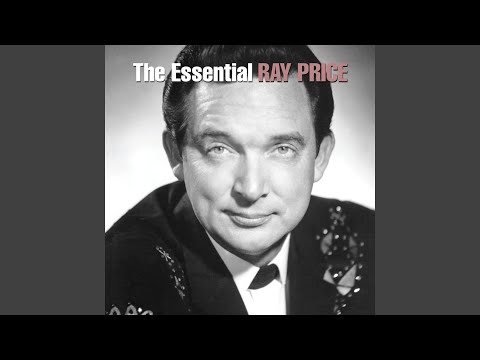



→ More from the 1960s File
View all 1960s hits →




Keep digging