The 1960s File Feature
Puff (The Magic Dragon)
Puff (The Magic Dragon) — Peter, Paul and Mary (1963) "Puff (The Magic Dragon)" was released as a single by Peter, Paul and Mary on January 12, 1963 , throug…
01 The Story
Puff (The Magic Dragon) — Peter, Paul and Mary (1963)
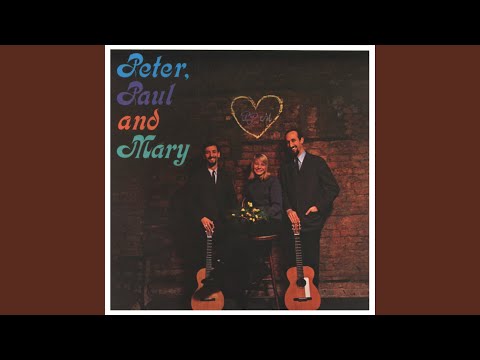
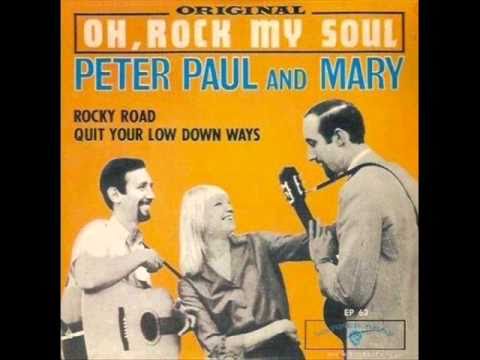
"Puff (The Magic Dragon)" was released as a single by Peter, Paul and Mary on January 12, 1963, through Warner Bros. Records, becoming one of the most successful and enduring popular songs of the early 1960s folk revival. The track was written by Peter Yarrow and Leonard Lipton, the latter of whom had written the poem on which the song was based while a student at Cornell University in 1959. Yarrow set the poem to music and developed it into the form it took when the trio recorded it, and it became the signature song of one of the most commercially successful acts of the folk boom that swept American popular music in the early part of the decade.
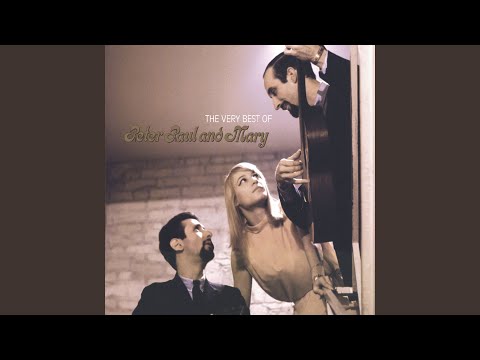
Peter, Paul and Mary, consisting of Peter Yarrow, Paul Stookey, and Mary Travers, had been assembled in 1961 by manager Albert Grossman, who recognized the commercial potential of folk music at a moment when the success of groups like the Kingston Trio had demonstrated that the genre could reach a mass audience. The trio recorded for Warner Bros. Records, and their debut album had already established them as major commercial forces when "Puff (The Magic Dragon)" was released as a single. The song reached number two on the Billboard Hot 100, one of the highest chart positions the group would achieve during their career, and spent two weeks at that position while keeping significant company on the chart with other major hits of the early 1963 period.
The production of "Puff (The Magic Dragon)" was handled with the characteristic restraint of folk recording practice of the period, centering the arrangement on acoustic guitars and vocal harmonies rather than the elaborate orchestration that characterized much of the mainstream pop recorded at the time. This simplicity was both an aesthetic choice and a statement of identity, as folk music positioned itself in deliberate opposition to the commercial gloss of pop production. Producer Milton Okun, who worked with the group on their early recordings, understood the balance between accessible commercial production and the authenticity demands of the folk audience.
The song's commercial success was extraordinary for the period. It sold well over a million copies in the United States, achieving gold sales certification and demonstrating that folk music could compete with rock and roll and conventional pop for chart dominance. The achievement was part of a broader moment in which folk music was briefly a mainstream commercial force, driven partly by the energy of political activism and partly by the appeal of the music's relative acoustic simplicity in contrast to the increasingly elaborate pop production of the post-rock-and-roll era.
The controversy that surrounded "Puff (The Magic Dragon)" almost from the moment of its release became one of the most discussed aspects of its cultural history. The allegation that the song contained drug references, circulating widely in the press and in public conversation from the mid-1960s onward, was consistently and repeatedly denied by both Yarrow and Lipton. They maintained that the song was exactly what it presented itself as: a children's story about the loss of childhood imagination. Whatever the intentions behind the song, the controversy itself became a cultural fixture that ironically expanded the song's reach and familiarity across multiple generations.
"Puff (The Magic Dragon)" appeared on Peter, Paul and Mary's debut album, which was also released in 1963 and reached number one on the Billboard 200, remaining on the chart for an extended period and becoming one of the most successful album-era folk recordings of the decade. The album's commercial performance demonstrated the group's broad appeal and their ability to translate the energy of the folk revival into album sales as well as single performance.
The song's impact extended well beyond its initial chart performance. It was covered extensively, adapted for children's programming, animated in a television special that aired in 1978, and remained a standard of children's music and folk programming for decades. The animated special, produced by Yarrow himself, gave the song a visual dimension that introduced it to new generations who had not been alive during its original release.
In the context of the early 1960s folk revival, "Puff (The Magic Dragon)" occupies an important position as one of the genre's most commercially accessible and emotionally resonant achievements. The song's chart success came at a moment when Bob Dylan was beginning to transform folk music's political content and aesthetic ambitions, and Peter, Paul and Mary themselves would go on to become important interpreters of Dylan's work. "Puff" represented the more accessible, family-oriented wing of the folk revival, and its endurance demonstrated that accessibility and emotional sincerity were not incompatible with artistic achievement.
02 Song Meaning
The Meaning Behind "Puff (The Magic Dragon)" by Peter, Paul and Mary
"Puff (The Magic Dragon)" presents itself as an allegorical narrative about childhood, imagination, and the inevitable process of growing up and leaving behind the magical world of childhood play. The story follows a dragon named Puff and his young friend Jackie Paper through a period of adventure and imaginative life, culminating in the child's gradual withdrawal from the world they had shared as he ages into adolescence and adulthood. The dragon is left alone, having been abandoned by the one person who gave him imaginative life, and the song ends in an emotional register of loss and melancholy that is unusual for what is often categorized as a children's song.
The emotional core of the piece is the grief of being left behind as someone you love grows up and moves on. From the dragon's perspective, Jackie Paper's departure is experienced as abandonment, but the song does not characterize the child as cruel or thoughtless. Instead, it presents the natural drift away from childhood imagination as simply what happens, a sad but inevitable aspect of human development. This unsentimental acknowledgment of loss gave the song its emotional depth and distinguished it from simpler children's music that resolved such tensions more comfortably.
The song also operates as a meditation on the nature of imagination itself, specifically on the idea that the imaginative world requires belief to sustain it. Puff exists in the world created by Jackie Paper's imagination, and when Jackie Paper stops believing, Puff fades. This is not a metaphor about drug use, as the persistent and entirely unfounded allegations about the song's meaning claimed; it is a meditation on the relationship between belief and existence within the context of childhood creative life. Leonard Lipton's original poem, written from the vantage point of a Cornell undergraduate, was an elegy for the imaginative freedom of childhood seen from the position of someone who had just left it behind.
Peter Yarrow's musical setting of Lipton's poem gave the emotional content a warmth and accessibility that expanded its potential audience beyond what a straightforward poetic rendering might have achieved. The folk tradition within which Yarrow worked was well-suited to narrative songs that carried emotional weight in simple storytelling form, and "Puff" was a perfect expression of that tradition's capacity for accessible depth. The harmonies contributed by Stookey and Travers amplified the warmth of the melodic setting, creating a sound that was simultaneously comforting and mournful.
For generations of listeners who encountered the song in childhood, its meaning evolved as they aged. Children who heard the song and responded to the adventure narrative of Jackie Paper and Puff later encountered the song again as adults and found its ending newly resonant with the experience of having themselves grown past the imaginative world of childhood. This capacity to mean different things at different stages of a listener's life was one of the song's most remarkable qualities, and it helps explain the extraordinary durability of its cultural presence.
The controversy about the song's alleged drug references, which Yarrow and Lipton denied consistently and vehemently throughout their lives, actually reflected a broader cultural anxiety of the 1960s about the boundary between innocence and corruption in popular music. The fact that a song so clearly about the loss of childhood innocence became the subject of allegations about drug culture said more about the interpretive habits of a particular cultural moment than about the song itself. The song's actual meaning, once examined carefully, was almost the opposite of what the allegations suggested: it was a lament for the loss of the very innocence that the accusations implied it was celebrating the abandonment of.
Within the catalog of Peter, Paul and Mary, "Puff (The Magic Dragon)" stands as the track that most fully realized the group's capacity to combine emotional seriousness with broad accessibility, making a song that could be received as both a children's entertainment and a genuinely moving reflection on the passage of time and the cost of growing up.
→ More from Peter, Paul & Mary
View all Peter, Paul & Mary hits →

→ More from the 1960s File
View all 1960s hits →




Keep digging