The 1960s File Feature
Strange
Strange — Patsy Cline (1962) Patsy Cline's recording of "Strange" stands as one of the later productions from the final chapter of her tragically short caree…
01 The Story
Strange — Patsy Cline (1962)
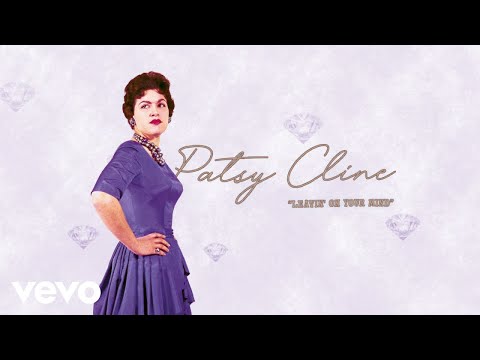
Patsy Cline's recording of "Strange" stands as one of the later productions from the final chapter of her tragically short career. The song was written by Mel Tillis and Fred Burch, a professional writing team that supplied the Nashville recording establishment with carefully crafted country material throughout the late 1950s and early 1960s. Mel Tillis, who would go on to become a celebrated recording artist in his own right, was at this point primarily known as a songwriter, and his ability to craft lyrical scenarios that captured the emotional complexity of adult relationships made him a valued contributor to the Nashville creative community.
It bears noting that this "Strange" is an entirely separate song from the Reba McEntire recording of the same title from the 1990s. Patsy Cline's "Strange," recorded for Decca Records in the early 1960s, predates and is unrelated to the McEntire song in both composition and subject matter.
Cline's recording sessions at this period of her career were produced primarily by Owen Bradley, the Nashville producer whose work with her had been among the most creatively and commercially productive partnerships in country music history. Bradley's production philosophy for Cline emphasized lush orchestration, smooth recording techniques, and a sonic environment that positioned her voice to appeal to both country and pop audiences. The "countrypolitan" sound that he and Cline developed together, characterized by strings, background vocals, and production values that softened the rougher edges of traditional country recording, was enormously influential on the broader direction of Nashville production through the 1960s and beyond.
By 1962, Patsy Cline had already achieved the breakthrough commercial success that had eluded her through most of the 1950s. "Walkin' After Midnight," her 1957 breakout on Four Star Records, had given her initial national exposure, but the contract difficulties that followed had complicated her commercial trajectory. Her arrival at Decca and her collaboration with Owen Bradley had produced "I Fall to Pieces" and "Crazy" in 1961, two recordings that would become among the most celebrated in country music history and that gave Cline a secure commercial foundation for the first time in her career.
"Strange" arrived in this context, as one of the follow-up recordings to the breakthrough success of 1961. The commercial and creative momentum generated by "Crazy" and "I Fall to Pieces" gave Cline and Bradley the leverage to choose material carefully, and the selection of the Tillis-Burch composition reflected their confidence in finding songs that would suit her interpretive gifts. The recording appeared on the charts during one of the most commercially productive periods of Cline's career, even as that career was approaching its premature end.
Patsy Cline died in a plane crash in March 1963, cutting off a career that had only recently reached its full commercial potential. "Strange" and the other recordings from her final creative period have been preserved with unusual care by Decca and its successor labels, and the posthumous release and rerelease of her catalog has maintained her commercial and critical presence across subsequent decades in a way that is rare even among major recording artists.
The song performed respectably on the country charts during its initial release period, contributing to the sustained run of charting singles that marked Cline's final years on Decca. The production quality of the recording, consistent with Bradley's work across this period, has ensured that it holds up well sonically, sounding clear and professional in a way that was not universal for country recordings of its era. The combination of Tillis's songwriting craft and Bradley's production sophistication created a recording that served as a worthy showcase for one of the most naturally gifted vocalists the country genre has ever produced. The song has appeared consistently on Patsy Cline compilation releases in the decades since her death, introducing successive generations of listeners to the breadth of her Decca catalog and confirming that her recordings from the early 1960s retain their emotional and sonic power across time.
02 Song Meaning
What "Strange" Means — Patsy Cline
The "Strange" that Mel Tillis and Fred Burch wrote for Patsy Cline is a song about the disorienting emotional aftermath of romantic loss. The narrator finds herself experiencing the world differently after a relationship has ended, and she describes this altered perception as a kind of strangeness, a sense that familiar things have become unfamiliar now that the emotional context that surrounded them has changed. The feeling of loss described in the song is not simply grief for the person who is gone but a more pervasive disorientation about one's own inner life in the absence of that relationship.
This is sophisticated emotional territory for a country song of the early 1960s, and it suited Patsy Cline's interpretive gifts precisely. Cline had demonstrated throughout her career an ability to inhabit songs of romantic loss and longing with a depth and authenticity that went beyond mere performance. Her vocal choices, the specific places she chose to add emotional emphasis, the way her voice moved through the dynamics of a lyric, communicated genuine feeling in a way that distinguished her from contemporaries who executed similar material more technically but less expressively.
Mel Tillis's writing gave the song a psychological specificity that made it more than a generic breakup lament. The focus on the strangeness of continuing to exist in a familiar world after a significant emotional loss points toward a real and recognizable human experience: the way that grief and longing can make ordinary surroundings feel alien, can make one feel like a stranger in one's own life. This kind of psychological precision was one of the qualities that distinguished the best Nashville songwriting of the period from more formulaic approaches.
Within Cline's catalog, "Strange" sits alongside her other recordings of emotional devastation and romantic difficulty from the same period. The thematic cluster of "Crazy," "I Fall to Pieces," and "Strange" represents Cline's particular strength as an interpreter of female emotional experience in the early 1960s, a period when country music had not yet fully developed the language it would later use to address these subjects. Her recordings in this vein gave subsequent generations of country artists a model for how to approach material of this kind with full commitment and without protective irony.
The Owen Bradley production surrounding Cline's vocal on "Strange" served the song's emotional content by providing a sonic environment of warmth and clarity that allowed the lyric's sadness to register without becoming oppressive. The countrypolitan aesthetic that Bradley had developed with Cline was particularly suited to songs of this emotional register: polished enough to maintain commercial accessibility, expressive enough to honor the emotional weight of the material. The result was a recording that communicated genuine feeling through professional craft, which was the defining achievement of the Cline-Bradley partnership at its best.
The lasting significance of "Strange" in Cline's legacy is as further evidence of the interpretive depth she brought to material across her Decca years. Even among the crowded field of emotionally resonant Patsy Cline recordings, the song retains its power to communicate the specific and human experience Tillis and Burch had identified: the feeling that one has become a stranger to oneself in the wake of love's departure.
→ More from Patsy Cline
View all Patsy Cline hits →



→ More from the 1960s File
View all 1960s hits →




Keep digging