The 1960s File Feature
Little Green Apples
Little Green Apples: O.C. Smith and the Song That Won the Grammy "Little Green Apples" achieved the remarkable distinction of winning the Grammy Award for So…
01 The Story
Little Green Apples: O.C. Smith and the Song That Won the Grammy
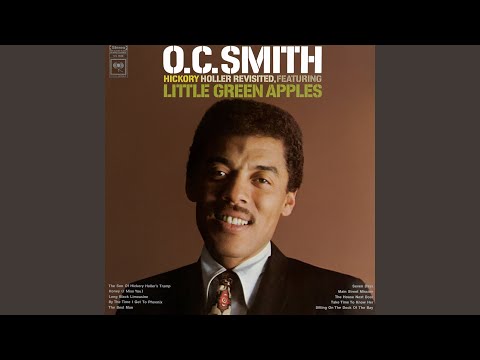
"Little Green Apples" achieved the remarkable distinction of winning the Grammy Award for Song of the Year while also becoming a major commercial hit for its recording artist, a combination that demonstrated both its broad popular appeal and its recognition from the music industry's professional community as an exceptional piece of songwriting. The song was written by Bobby Russell, one of the more gifted commercial songwriters of the late 1960s, and recorded by O.C. Smith on Columbia Records in 1968. The single reached number two on the Billboard Hot 100, making it one of the biggest pop hits of the year and one of the definitive recordings of O.C. Smith's career.
Bobby Russell's songwriting credentials were considerable. He was responsible for a number of significant hits during the late 1960s and early 1970s, and "Little Green Apples" represented his most acclaimed achievement, both commercially and critically. The song's construction is deceptively simple: it accumulates a series of everyday domestic observations and presents them as evidence of a fundamental emotional truth, building its case for the reliability of love through an accumulation of ordinary details rather than grand romantic gestures. This approach, which brought to pop songwriting something of the economy and precision associated with the best short fiction, was what distinguished Russell's writing from more formulaic treatments of romantic themes.
O.C. Smith was an experienced performer who had worked in jazz and pop contexts before finding his greatest commercial success with this recording. His vocal style combined a warm baritone quality with a conversational delivery that was perfectly suited to Russell's lyrical approach, which relied on the singer communicating genuine personal warmth rather than theatrical vocal display. Smith's performance conveys the sense that the narrator's feelings are deeply held and quietly expressed, a quality of emotional restraint that amplifies rather than diminishes the impact of the material.
The production of the Columbia Records recording reflected the sophisticated pop sensibility that characterized the label's work with adult pop artists in this period. The arrangement is orchestral without being overwhelming, providing a rich musical context for Smith's vocal performance without drowning out the lyrical detail that is central to the song's appeal. The balance between orchestral support and vocal clarity was achieved with considerable skill, and the result was a recording that sounded simultaneously intimate and expansive, personal and widely accessible.
The chart performance of "Little Green Apples" was exceptional. Its position at number two on the Hot 100 for multiple weeks reflected the depth and consistency of its popular support across a wide range of demographic and geographic markets. The song's subject matter, everyday domesticity treated as a vessel for genuine romantic feeling, gave it an accessibility that transcended the specific pop subgenre conventions of the period and allowed it to find audiences among listeners who might not have responded to more stylistically specific recordings from the same era.
The Grammy recognition was particularly significant in the context of 1968, a year of exceptional creative output in popular music. The competition for the Song of the Year award in that cycle included work from some of the most acclaimed songwriters and performers of the decade, and the selection of "Little Green Apples" as the winner represented a strong statement about the song's qualities by the Recording Academy's voting membership. The Grammy both validated Russell's approach to commercial songwriting and increased the song's exposure to audiences who might not have encountered it through radio play alone.
The song was subsequently recorded by a large number of other artists, reflecting the recognition among performers of its exceptional songwriting craft. Roger Miller, who was among the first to record the song before O.C. Smith's version became the definitive commercial treatment, represented one notable alternative reading of the material. The multiple cover versions that followed Smith's successful recording confirmed the song's status as a standard rather than merely a hit, demonstrating that the qualities that had made it commercially successful were recognized as intrinsic to the composition itself rather than being artifacts of a particular production or performance style.
O.C. Smith's career following "Little Green Apples" continued to develop, though the song remained his most commercially and critically celebrated achievement. His subsequent recordings drew on similar strengths, the combination of warm vocal delivery and thoughtfully crafted material, but none achieved quite the same convergence of popular and critical success that "Little Green Apples" had managed. The song stands as one of those relatively rare cases in which a recording genuinely earns the recognition it receives from both the public and the music industry's professional community, and its place in the popular music canon of the late 1960s is secure.
02 Song Meaning
The Ordinary Made Extraordinary: Love and Everyday Life in "Little Green Apples"
"Little Green Apples" represents one of the most skillful deployments in American popular song of a particular lyrical strategy: the accumulation of mundane domestic detail as a form of emotional argument. Bobby Russell's lyrics build their case for the narrator's love not through declarations of grand passion or unusual romantic circumstances but through a list of ordinary observations about the everyday world, using the reliability and constancy of those observations as an analogy for the reliability and constancy of the relationship being celebrated. The underlying argument is that some things simply are, beyond question or analysis, and that love belongs in that category of fundamental certainties.
The "little green apples" of the title function as an anchor image, a specific, concrete, unambiguously real thing whose existence is presented as beyond dispute. The lyrical strategy uses this kind of unambiguous reality as a standard against which to measure the narrator's love, asserting that his feelings are equally real and equally beyond dispute. This approach bypasses the usual vocabulary of romantic declaration in favor of something more oblique and in some ways more powerful: rather than saying "my love is great," the song says "my love is real in the way that ordinary real things are real," and this substitution carries a different and more persuasive kind of conviction.
The domestic setting of the song's imagery is central to its emotional impact. The details that Russell accumulates are not spectacular or exotic but quotidian and recognizable: the kinds of small observations that characterize the texture of shared daily life rather than the heightened moments of romantic drama. This focus on the ordinary is itself a romantic statement, implying that the relationship being celebrated is one that has the depth and security to find meaning in everyday experience rather than requiring constant external stimulation or dramatic incident to sustain itself.
O.C. Smith's vocal performance is essential to the song's thematic success. His delivery is warm and conversational rather than operatically expressive, and this quality of voice creates the sense that the narrator is sharing genuine personal reflections rather than performing a carefully constructed emotional display. The restraint of the performance communicates confidence in the material, a trust that the song's lyrical content is sufficient to carry the emotional weight without additional amplification from vocal technique or theatrical presentation.
The song's reception of the Grammy Award for Song of the Year reflects the recognition by the music industry's professional community that Russell had achieved something genuinely distinctive in the art of popular songwriting. The award category honors the composition rather than the performance, and its conferral on "Little Green Apples" was an acknowledgment that the lyrical strategy Russell had employed represented an unusual and valuable contribution to the tradition of popular songwriting. The song demonstrated that the most ambitious aspirations in popular music could be served by the simplest and most accessible of means.
The thematic content of "Little Green Apples" also reflects something important about the cultural moment of its creation. Nineteen sixty-eight was a year of intense social and political turbulence in America, and a song that found meaning and stability in the ordinary details of domestic life offered a kind of emotional counterweight to the uncertainty and disruption of the broader cultural environment. The song did not engage directly with those circumstances, but its celebration of the reliable and the everyday resonated with audiences for whom those qualities felt particularly valuable in a period of considerable cultural stress. This contextual dimension does not explain the song's enduring appeal, which is rooted in the universal qualities of its emotional content, but it illuminates the specific resonance it carried for the audience that first encountered it.
→ More from O.C. Smith
View all O.C. Smith hits →
→ More from the 1960s File
View all 1960s hits →




Keep digging