The 1960s File Feature
You Mean Everything To Me
"You Mean Everything To Me" — Neil Sedaka and the Art of the Teen Ballad Brooklyn's Brightest Young Voice The summer of 1960 belonged, in large part, to a tw…
01 The Story
"You Mean Everything To Me" — Neil Sedaka and the Art of the Teen Ballad
Brooklyn's Brightest Young Voice
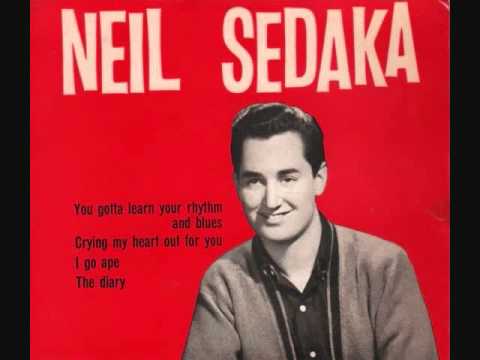
The summer of 1960 belonged, in large part, to a twenty-year-old from Brooklyn who had been writing songs since his early teens and performing since high school. Neil Sedaka had grown up in the Brighton Beach neighborhood, a classical piano student who discovered pop music and never looked back. By the time "You Mean Everything To Me" entered the Billboard charts, Sedaka was already a veteran of the Brill Building songwriting world, the extraordinary concentration of professional songwriters working in offices on West 49th Street in Manhattan who were collectively reinventing American popular music in real time. Sedaka had co-written "Oh! Carol" with his longtime lyrical partner Howard Greenfield, and that record had established him as a performer capable of turning self-penned material into chart success.
The Brill Building Method
Understanding "You Mean Everything To Me" requires understanding the creative environment that produced it. The Brill Building approach to songwriting was collaborative, disciplined, and intensely focused on the teenage listener. Sedaka and Greenfield worked in a tradition that prized melodic accessibility, emotional directness, and a certain kind of romantic idealism that spoke to young people navigating the unfamiliar territory of first love. The pairing of Sedaka's piano training and gift for melody with Greenfield's lyrical sensibility produced an unusually complete pop product. They wrote for themselves and for other artists, building a catalog of songs that shared a consistent emotional vocabulary even as they varied in tempo and arrangement.
The Recording and Its Sound
"You Mean Everything To Me" was released on RCA Victor, Sedaka's label through this period of his commercial peak. The arrangement reflects the production values of the early 1960s pop mainstream: orchestral strings providing warmth and sentimental weight, a rhythm section keeping gentle time, and Sedaka's voice riding above it all with the earnestness that characterized his performance style. The production was helmed within the RCA system, which brought professional New York studio resources to bear on the recording. The result was a polished artifact of its moment, neither raw nor experimental but precisely calibrated for the radio formats and record-buying habits of its audience.
Thirteen Weeks on the Chart
The chart history of "You Mean Everything To Me" illustrates the patient, organic climb that characterized hit records in the pre-album-oriented era of early 1960s pop. The track debuted at number 87 on August 8, 1960, and proceeded to move upward steadily through the summer and early fall, reaching its peak position of 17 on October 3, 1960, after 13 weeks on the chart. That kind of sustained ascent reflected radio play accumulating over time, record stores stocking and selling copies, and word of mouth spreading through the teenage networks that constituted the primary distribution mechanism for pop music in that era. There was no streaming surge, no algorithm, no social media amplification: just radio spins and sales moving a record up the chart week by week.
Legacy in the Arc of a Career
Neil Sedaka's commercial success in the early 1960s would eventually wane as the British Invasion reshaped the American music landscape, but his story took a remarkable second chapter in the early 1970s when he staged a comeback that introduced him to an entirely new generation. The songs he and Greenfield wrote together during their initial partnership remained a durable part of the American popular songbook, covered and reinterpreted across decades. "You Mean Everything To Me" belongs to the first movement of that story, capturing Sedaka at his most commercially potent and stylistically confident, working within the conventions of his moment and bringing real craft to the task.
Go back to 1960 through the needle drop of "You Mean Everything To Me," and hear how a teenager from Brooklyn made a generation feel understood.
"You Mean Everything To Me" — Neil Sedaka's singular moment on the 1960s charts.
02 Song Meaning
"You Mean Everything To Me" — The Vocabulary of Young Devotion
Total Devotion as a Pop Theme
The title of this record announces its emotional territory without ambiguity. "You Mean Everything To Me" is a declaration of total devotion, the kind of absolute romantic commitment that teenage listeners in 1960 recognized immediately as the emotional register they were operating in. Young love tends toward the absolute, toward the feeling that the person across from you contains the entire meaning of existence, and Neil Sedaka and Howard Greenfield understood that emotional reality with precision. The song gives that feeling a formal shape and a melodic vehicle without questioning or complicating it, which is exactly what its audience wanted and needed.
Romantic Idealism in the Early Sixties
The early 1960s represented a specific moment in American youth culture, positioned between the relative innocence of 1950s teenage pop and the more complicated, politically charged consciousness that would arrive with the mid-decade folk revival and subsequent counter-cultural movements. In 1960, the dominant emotional vocabulary of teenage pop was sincerely romantic and largely uncynical, shaped by a cultural moment that had not yet absorbed the disillusionment of the Kennedy assassination, the civil rights confrontations, or the Vietnam escalation. Love songs from this period often reflect that quality of emotional openness, a willingness to commit completely to the feeling without the irony or ambivalence that would become common in subsequent decades.
The Brill Building's Emotional Intelligence
What distinguished the best Brill Building songwriting from more formulaic teen pop was a quality of emotional intelligence, a genuine attunement to the specific textures of young feeling rather than a cynical manufacture of sentiment. Sedaka and Greenfield consistently demonstrated this quality across their collaboration, writing songs that felt lived-in and honest rather than constructed for commercial calculation. "You Mean Everything To Me" benefits from this quality, offering its declaration of devotion in language that sounds natural and felt rather than assembled. The melody reinforces this by moving in shapes that feel inevitable rather than arbitrary, as though the emotional content had found its natural sonic expression.
Resonance Across Time
The endurance of this style of romantic declaration across subsequent decades testifies to its accuracy as emotional description. The feeling the song captures is not specific to 1960 or to any particular generation; total romantic devotion has been a human experience across every era, and the musical forms that give it shape tend to retain their emotional power long after their production style dates them. Listeners who encounter "You Mean Everything To Me" today may hear the orchestration and production as period markers, but the emotional content beneath that period costume remains immediately recognizable. That is the test any love song must pass, and this one passes it.
"You Mean Everything To Me" — Neil Sedaka's singular moment on the 1960s charts.
→ More from Neil Sedaka
View all Neil Sedaka hits →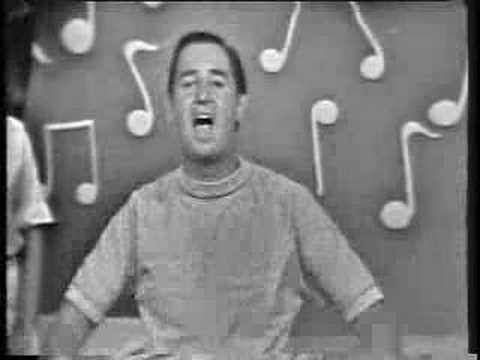

→ More from the 1960s File
View all 1960s hits →




Keep digging