The 1960s File Feature
Some Velvet Morning
"Some Velvet Morning" — Nancy Sinatra Lee Hazlewood's Psychedelic Dialogue The Strangest Experiment on the Reprise Roster Picture the pop landscape of early …
01 The Story
"Some Velvet Morning" — Nancy Sinatra & Lee Hazlewood's Psychedelic Dialogue
The Strangest Experiment on the Reprise Roster
Picture the pop landscape of early 1968: the charts were still recovering from the Summer of Love, radio programmers were wrestling with a new appetite for the surreal, and somewhere in Los Angeles, two performers who had already proved their chemistry decided to push things considerably further. The result was Some Velvet Morning, a song so odd, so structurally unconventional, and so drenched in mythic imagery that it still resists easy classification nearly six decades later. Nancy Sinatra and Lee Hazlewood had made records together before, but nothing quite like this.
Hazlewood's Vision and Its Unusual Architecture
Lee Hazlewood wrote and produced "Some Velvet Morning," as he did with the most striking records in the Sinatra-Hazlewood canon. The song operates on a split-personality structure: Hazlewood sings verses steeped in ancient, quasi-mythological language, invoking a figure named Phaedra, while Sinatra takes the choral sections and delivers them with a dreamy, detached grace. The two voices do not so much harmonize as orbit each other, which was entirely the point. Hazlewood was fascinated by the tension between male and female perspectives, and he built that tension into the song's very architecture rather than resolving it neatly at the end. The production texture is lush and orchestral, with strings and rhythm arrangements that lean toward the psychedelic without fully committing to it, landing somewhere uniquely between country-pop sophistication and late-1960s experimentation.
A Careful Climb on the Hot 100
The single was released on Reprise Records and entered the Billboard Hot 100 on January 6, 1968, debuting at number 72. Over the following weeks it climbed steadily, reaching number 60, then 49, then 39, before peaking at number 26 on February 10, 1968 after eight weeks on the chart. That trajectory, patient and consistent, reflected a song that won listeners over gradually rather than arriving with an immediate commercial hook. It was not designed to hit you between the eyes. It was designed to linger, and it did.
The Partnership Behind the Song
By the time "Some Velvet Morning" appeared, Nancy Sinatra had spent two years refining one of pop's most underrated creative partnerships. She and Hazlewood had already given the world These Boots Are Made for Walkin' and the beautifully strange Jackson, but this track went further into genuinely literary territory. Hazlewood's reference to Phaedra, the tragic figure from Greek mythology who becomes an obsessive presence, was unusual for any mainstream pop single of that era, let alone one released on a major American label. The song's literary ambition set it apart from virtually everything else on the Hot 100 that winter. Most listeners probably did not parse the mythological subtext, but they felt the song's peculiar weight nonetheless.
Legacy as an Art-Pop Touchstone
Decades after its chart run ended, "Some Velvet Morning" accumulated a second life that its original chart position could not have predicted. It has been covered and sampled by artists across genres who recognized its template: the gendered vocal split, the mythic imagery, the unresolved tension as a structural principle. Primal Scream, Lydia Lunch, and numerous others have revisited the song as a primary influence and a template for how pop music can carry genuine lyrical ambition without losing its pulse. It appears on lists of the most influential recordings of the 1960s not because it was a commercial smash but because it demonstrated something that many artists later found useful. The song aged in the way great experimental pop tends to age, gaining meaning as the distance grew.
A Record That Refused to Be Anything Ordinary
What makes "Some Velvet Morning" endure is its refusal. It refused to resolve its tensions, refused to simplify its imagery, and refused to meet the listener halfway on matters of conventional romance. In a year when American pop was beginning to absorb the full shock of psychedelia, political upheaval, and social transformation, here was a record that found its strangeness not in distorted guitars or drug-adjacent soundscapes but in the ancient, the mythic, and the conversational. Hazlewood and Sinatra made something genuinely unlike anything else from that moment, and that quality has kept the record vital long after most of its chart contemporaries have faded from memory. Press play and you are back in a very particular headspace, one that belongs entirely to this song.
"Some Velvet Morning" — Nancy Sinatra & Lee Hazlewood's singular moment on the 1960s charts.
02 Song Meaning
"Some Velvet Morning" — Mythology, Tension, and the Space Between Two Voices
Phaedra and the Power of the Unnamed
At the center of "Some Velvet Morning" sits a literary figure borrowed from Greek tragedy: Phaedra, the mythological queen whose obsessive desire brought catastrophe to everyone around her. Lee Hazlewood reaches for this name not to retell the classical story but to use it as a kind of incantation, a word that carries centuries of weight about forbidden longing and the destructive potential of desire. The song turns mythology into a frame for something intensely personal and unresolved, letting the ancient allusion do emotional work that direct statement could never accomplish. It is an unusually sophisticated lyrical strategy for a pop single of any era, let alone 1968.
Two Perspectives That Never Merge
The structure of the song is its meaning. Hazlewood and Sinatra do not sing to each other the way lovers typically do in pop duets. They sing past each other, trading sections of a conversation that never quite connects. The male voice is heavy with metaphor and myth; the female voice is airy, almost elemental, like a spirit responding to being summoned rather than a person engaged in genuine dialogue. This deliberate non-resolution was a bold artistic choice. Most pop duets of the period worked toward harmony in every sense. This one embraces irresolution and makes that the emotional statement. The listener is left holding the gap between the two voices, which is where the song actually lives.
The Cultural Atmosphere of 1968
Arriving at the start of one of the most turbulent years of the twentieth century, "Some Velvet Morning" caught an audience in a particular state of openness. Psychedelia had expanded what pop listeners expected from a record, and the late-1960s appetite for strangeness created space for something this unusual to find a chart audience. At the same time, the song tapped into a broader fascination with myth, mysticism, and ancient wisdom that ran through the counterculture. It belonged to a moment when the boundary between high art and pop culture felt genuinely porous, when a record could invoke Greek mythology on Top 40 radio without seeming absurd.
Gender, Voice, and the Asymmetry of Desire
The song's gender dynamics reward close attention. The male narrator holds the mythological frame, the controlling narrative context, while the female voice inhabits something closer to nature, an elemental presence that the narrator tries to possess through language. This asymmetry reflects a broader tension in the Sinatra-Hazlewood partnership, where Hazlewood's writing consistently places Sinatra in positions of power that simultaneously depend on male framing. The song raises questions about agency and voice that have become more legible over time, as listeners bring contemporary frameworks to its layered dynamics. Whether those tensions were intentional or simply a product of the era, they give the song a lasting complexity.
Why the Song Has Lasted
Decades after its modest chart run, "Some Velvet Morning" has accumulated cultural authority well beyond what its peak position of number 26 might suggest. It has been embraced by successive generations of artists drawn to its willingness to be genuinely strange, to prioritize atmosphere and literary imagery over hooks and resolution. Its influence on experimental pop, art rock, and avant-garde music is substantial and well-documented. More than anything, the song resonates because it trusts the listener to sit with ambiguity, to find meaning in the space between two voices that never fully meet. That kind of trust is rare in any commercial music, and it is why the record still sounds alive.
→ More from Nancy Sinatra & Lee Hazlewood
View all Nancy Sinatra & Lee Hazlewood hits →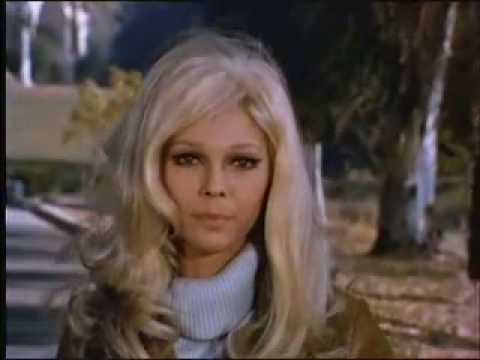

→ More from the 1960s File
View all 1960s hits →




Keep digging