The 1960s File Feature
Oh No Not My Baby
Maxine Brown and the Rise of "Oh No Not My Baby" When Gerry Goffin and Carole King delivered "Oh No Not My Baby" to Maxine Brown in 1964, they were at the ab…
01 The Story
Maxine Brown and the Rise of "Oh No Not My Baby"
When Gerry Goffin and Carole King delivered "Oh No Not My Baby" to Maxine Brown in 1964, they were at the absolute peak of their creative partnership, writing for the Brill Building publishing infrastructure that defined the sound of early-1960s pop. Brown, a South Carolina-born singer who had relocated to New York and found her footing in the city's rhythm-and-blues scene, was known for a voice that combined gospel warmth with a sophisticated pop phrasing rarely heard from Black female vocalists on mainstream radio at the time. The marriage of her voice and the Goffin-King song produced a record that transcended the conventions of both the girl-group format and the standard R&B ballad.
Brown had previously charted with "All in My Mind" and "Funny" in the early 1960s, establishing herself as a reliable recording artist for Wand Records. But "Oh No Not My Baby" represented a significant step forward in terms of production sophistication and emotional depth. The arrangement featured lush strings framed around a rhythm track that was closer to gospel soul than the crisper Motown template, and the orchestration gave Brown's vocal performance enough space to explore the nuances of the lyric without overwhelming the core emotional statement.
The song entered the Billboard Hot 100 on October 24, 1964, debuting at number 96. Its climb was gradual but consistent: number 94 the following week, then 87, then 68, then 53. By the time the record reached its peak of number 24 during the week of January 2, 1965, it had spent thirteen weeks on the chart. The slow build was characteristic of how R&B records crossed over to mainstream pop airplay in that era, accumulating momentum through Black radio and record store sales before breaking into the wider market.
On the R&B chart, the record performed even better, reaching the top ten and confirming Brown's status as a major force in soul music. The song's chart run overlapped with a period of intense activity in the New York soul scene, when artists like Dionne Warwick, Dusty Springfield, and Diana Ross were all competing for the same radio real estate. That "Oh No Not My Baby" managed to establish itself amid that competition is a measure of both the song's quality and Brown's exceptional performance.
Goffin and King's composition is notable for its structural sophistication, building from a quiet verse into a soaring, orchestrated chorus that gave radio programmers a natural moment of dramatic payoff. The writers were specialists in what might be called the architecture of romantic anxiety, constructing songs that mapped the emotional terrain of love and loss with a precision that translated across racial and generational lines.
Brown's recording became a standard of the Northern soul scene in Britain during the late 1960s and 1970s, where it was cherished by collectors and dancers who prized its combination of rhythmic drive and vocal intensity. The British enthusiasm for the record introduced it to a second generation of listeners and ensured that it remained in active circulation long after its original chart run. Rod Stewart recorded a prominent cover version in 1973, bringing the song to an even wider audience and adding another chapter to its legacy.
Maxine Brown continued recording through the 1960s and into the 1970s, collaborating with Chuck Jackson on a series of successful duets and maintaining a presence on the touring circuit. Her contribution to the development of a sophisticated, orchestrated soul sound in New York during the early 1960s is often discussed in tandem with her more celebrated contemporaries, and "Oh No Not My Baby" remains the definitive document of her art: a performance in which technical control and genuine feeling operate in perfect balance, producing a record that has outlasted virtually every contemporaneous release on the Wand label.
02 Song Meaning
The Meaning Behind "Oh No Not My Baby" by Maxine Brown
Gerry Goffin and Carole King wrote "Oh No Not My Baby" as an exercise in romantic self-deception, one of their recurring themes during the early 1960s. The song's narrator refuses to believe that her partner has been unfaithful, constructing an internal argument against the evidence presented by gossip and rumor. The emotional core of the record is not innocence but willful blindness, the particular kind of love that chooses trust over proof because the alternative is too painful to accept.
In the context of 1964 pop songwriting, this was a slightly unusual emotional stance. Many girl-group songs of the era dealt with romantic rivalry, jealousy, or loss, but the narrator of those songs typically had some relationship to the truth, even when that truth was bitter. The narrator of "Oh No Not My Baby" exists in a different psychological register: she knows, on some level, that the accusations might be valid, and yet she pushes them away because her emotional investment in the relationship outweighs her desire for factual certainty.
Maxine Brown's vocal performance is central to the meaning of the song because she does not play the narrator as naive. There is a quality of determination in her voice, a sense that this woman has made a deliberate choice about what to believe, and that the choice costs her something. This distinction between naivety and chosen faith gives the record a psychological depth that elevates it beyond the typical romantic denial song.
The song also participates in the tradition of gospel-influenced testimonial, in which the singer bears witness to something she cannot fully see but deeply feels. Brown's background in gospel music shaped the way she approached every lyric as a statement of conviction, and that orientation transforms what might have been a simple pop confection into something more like a profession of faith in the face of doubt. The result is a song about love that is also, in a quieter register, about the human need to believe in something larger than the available evidence.
For the Northern soul audience that adopted the record in Britain, the appeal was partly rhythmic and partly emotional: the song's swelling arrangement and Brown's controlled intensity made it ideal for the all-night dance halls where northern soul flourished. But it was the emotional content that kept dancers returning to it, the sense that the singer was working something out in real time, not merely performing a sentiment but inhabiting a dilemma that resonated across decades and across the Atlantic.
→ More from Maxine Brown
View all Maxine Brown hits →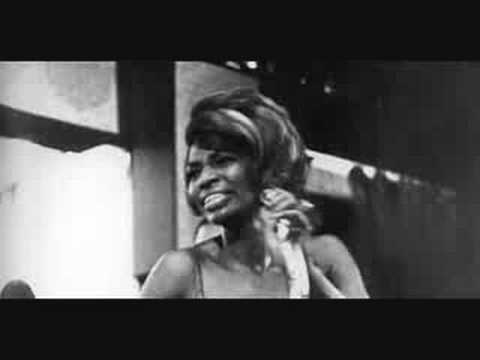


→ More from the 1960s File
View all 1960s hits →




Keep digging