The 1960s File Feature
You
"You" — Marvin Gaye's Quiet Entry into 1968 A Voice That Never Needed the Spotlight to Shine By the time 1968 arrived, Marvin Gaye had already spent several …
01 The Story
"You" — Marvin Gaye's Quiet Entry into 1968
A Voice That Never Needed the Spotlight to Shine
By the time 1968 arrived, Marvin Gaye had already spent several years near the center of Motown's universe. His work on Tamla, the Motown subsidiary label, had brought him consistent commercial success and a devoted following that stretched across racial and generational lines. He was, by any measure, one of the most gifted vocalists in American popular music. Yet not every Gaye release aimed for the commercial summit. Some were more modest in their ambitions, and "You" was one of those: a single that slipped quietly onto radio in the winter of 1968 and found a modest but loyal audience.
The context of that winter matters. The country was fractured by the Vietnam War, by urban unrest, by an election year that would prove historic and tragic. Motown's response to this turbulence was characteristically focused on craft, on melody, on the kind of music that provided emotional shelter without making the storm the subject.
The Sound of Tamla in Its Prime
Gaye's recordings of this period carry the unmistakable fingerprints of the Motown production machine: precise rhythm sections, carefully arranged strings, backing vocals positioned to support and uplift the lead. "You" fits comfortably within that sonic template. The production offers a clean, polished surface that lets Gaye's voice do what it does best, move through a melody with a supple ease that sounds effortless even when the emotional content is anything but simple.
Gaye's voice in 1968 occupied a specific register of controlled feeling, warm enough to feel intimate, disciplined enough to feel professional. He was not yet the raw, searching artist of his later masterworks, but neither was he simply a craftsman running through the motions. There is conviction in even his more commercially oriented recordings of this era.
The Chart Run
The single debuted on the Billboard Hot 100 on January 13, 1968, at position 83, a modest entry that suggested neither blockbuster nor throwaway. Over the following weeks it climbed steadily: 55, 45, 35, and then held at 35 through the following week before beginning to descend. The peak position of number 34, reached during the week of February 17, 1968, represents the song's commercial ceiling, and the track spent 7 weeks on the chart in total. That was respectable for a second-tier Motown release in a competitive era.
It is worth noting that Gaye was releasing singles with considerable frequency during these years, and not every release could be a "Heard It Through the Grapevine." Some were meant to keep the artist present on radio without demanding the full machinery of a major campaign.
Gaye's Career at a Crossroads
Nineteen sixty-eight was a complicated year for Gaye personally and artistically. He was navigating pressures from the label, from his own creative ambitions, and from the cultural upheaval unfolding around him. "You" sits in that transitional space, a professional recording from an artist who was beginning to sense that the pop formula he had been handed might not be sufficient for what he wanted to say.
The years immediately following would bring What's Going On and the transformation of his public artistic identity. Looking back at a single like "You," it is possible to hear an artist who was skilled, disciplined, and perhaps quietly restless, someone storing up reserves for the larger statements that were coming.
A Small Piece of a Larger Portrait
No single piece of Gaye's catalog from this period should be heard in isolation. Each recording is a data point in the larger arc of a career that moved, over two decades, from pop craftsman to soul visionary. "You" does not announce itself as a turning point, nor does it pretend to. It is simply a well-made Motown single, delivered with the grace that Gaye brought to everything he touched, and that is no small thing.
Put it on and listen to what it means for a voice of that quality to settle into a groove and stay there.
"You" — Marvin Gaye's singular moment on the 1960s charts.
02 Song Meaning
"You" — Marvin Gaye and the Language of Devotion
Intimate Address in the Soul Tradition
The title of the song is as direct as a pointed finger: "You." Not a name, not a description, just that second-person pronoun aimed squarely at the object of the narrator's attention. In the tradition of soul music, this kind of direct address carries enormous weight. It collapses the distance between the singer and the listener, making anyone who hears the song feel as though they might be the one being addressed. Marvin Gaye's gift for making a song feel personal is on display throughout this recording, turning what might be a conventional love statement into something that registers as intimate conversation.
The Motown formula of the late 1960s understood the power of this device. Motown records were engineered to make you feel seen, to create the sensation that the artist was speaking directly to your experience. "You" operates squarely within that tradition.
Devotion Without Complication
The emotional territory of "You" is uncomplicated devotion, the expression of feeling for another person rendered simply and sincerely. There is no narrative conflict, no obstacle to overcome, no twist in the story. The song focuses on the feeling itself: the warmth of being oriented toward someone, of centering your emotional world around their presence. This simplicity is the song's strength, not a failure of imagination but a deliberate artistic choice to dwell in the feeling rather than dramatize it.
In a year when much of popular culture was contending with upheaval and uncertainty, there was genuine comfort in a song that offered nothing more complicated than the statement of love honestly expressed.
Gaye as Emotional Interpreter
What elevates a recording like "You" above the level of mere formula is the interpretive quality Gaye brings to the vocal. He was never a singer who simply delivered notes; he inhabited them. His phrasing has a searching quality even in simpler material, as though he is hearing each word freshly as he sings it. The emotional intelligence in his approach to even minor-key recordings is what made him such a distinctive presence in Motown's catalog.
This is why even a mid-chart single from 1968 rewards close listening. The voice is doing something that pure craft cannot fully explain. There is feeling there, genuine feeling, even within the constraints of a professionally produced pop record.
Where This Song Fits in Soul History
The late 1960s were a period of transformation for soul music. Artists like James Brown were pushing toward harder funk, while others were beginning to engage more explicitly with political and social themes. Motown held its own course, maintaining a pop polish that made its records accessible across demographics. A song like "You" represents that Motown middle path: emotionally genuine without being raw, commercially shaped without feeling hollow.
Heard today, the song is a window into a specific moment in American music, when the soul tradition still believed that beauty and simplicity could carry the whole weight of human feeling without needing anything more elaborate.
"You" — Marvin Gaye's singular moment on the 1960s charts.
→ More from Marvin Gaye
View all Marvin Gaye hits →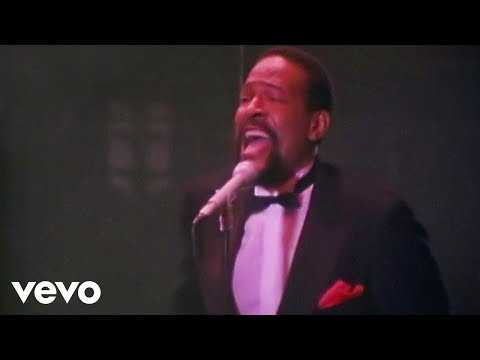




→ More from the 1960s File
View all 1960s hits →




Keep digging