The 1960s File Feature
Ain't No Mountain High Enough
Ain't No Mountain High Enough: Marvin Gaye and Tammi Terrell's Motown Declaration Few recordings in the Motown catalogue carry the emotional power and histor…
01 The Story
Ain't No Mountain High Enough: Marvin Gaye and Tammi Terrell's Motown Declaration
Few recordings in the Motown catalogue carry the emotional power and historical significance of "Ain't No Mountain High Enough," the 1967 duet between Marvin Gaye and Tammi Terrell that announced one of the great vocal partnerships in the history of American popular music. The song was written by the celebrated songwriting and production team of Nickolas Ashford and Valerie Simpson, a couple who would go on to extraordinary careers as both writers and performers, and whose compositional contribution to Motown's output during the mid-1960s constitutes one of the most important bodies of work the label produced.
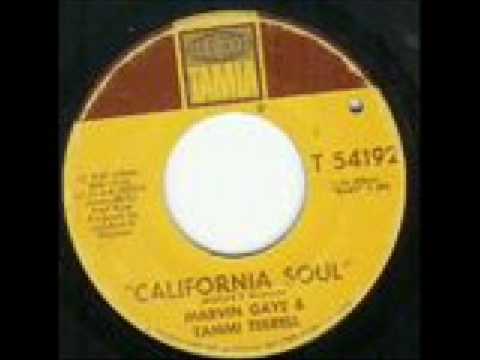
The recording was produced by Harvey Fuqua and Johnny Bristol and released on Tamla Records, the Motown subsidiary that served as the primary home for Marvin Gaye's recordings throughout much of his career at the label. Tamla was one of several Motown subsidiaries, including Gordy and Motown proper, that Berry Gordy used to organize and market his artists, each carrying slightly different brand associations but all operating within the extraordinarily disciplined creative and commercial infrastructure that Gordy had built in Detroit. The single was released in April 1967 and represented the first of several duet recordings that Gaye and Terrell would release together before Terrell's devastating illness ended their performing partnership.
"Ain't No Mountain High Enough" reached number 19 on the Billboard Hot 100 and number 3 on the R&B charts following its release, a strong showing that confirmed the commercial appeal of the Gaye-Terrell pairing. The success encouraged Motown to continue investing in the collaboration, producing a series of follow-up singles including "Your Precious Love," "If I Could Build My Whole World Around You," and "Ain't Nothing Like the Real Thing," each of which reinforced the impression that Gaye and Terrell had achieved a rare vocal chemistry that transcended the individual qualities each brought to the recording studio.
Marvin Gaye, born Marvin Pentz Gay Jr. in Washington, D.C., had by 1967 already established himself as one of Motown's most versatile and commercially successful artists. His recordings ranged from dancefloor-oriented material to the kind of romantic ballads at which he would demonstrate supreme mastery over the following decade. Tammi Terrell, born Thomasina Winifred Montgomery in Philadelphia, had come to Motown after earlier recordings for a smaller label and had demonstrated an extraordinary vocal gift, a voice that possessed both technical precision and a warmth that made every performance feel intimate regardless of the scale of production surrounding it.
The circumstances that would shadow the Gaye-Terrell collaboration emerged in October 1967, when Terrell collapsed onstage during a performance with Gaye at Hampden-Sydney College in Virginia. The collapse proved to be the first symptom of the brain tumor that would claim her life in March 1970 at the age of just 24. The tragedy of Terrell's illness profoundly affected Gaye, by many accounts contributing to the period of withdrawal and reconsideration that preceded his landmark 1971 album What's Going On. The Gaye-Terrell recordings thus carry a retrospective poignancy that was not present at the time of their creation, their celebration of unconditional love shadowed by the knowledge of what was to come.
Diana Ross recorded a notable solo version of "Ain't No Mountain High Enough" in 1970, with an arrangement by Nickolas Ashford and Valerie Simpson that transformed the song from a tight pop-soul duet into an expansive orchestral production. Ross's version reached number one on the Billboard Hot 100 in September 1970, giving the song a second commercial life and introducing it to an audience that may not have encountered the original duet. The success of the Ross version also testified to the compositional strength of Ashford and Simpson's original, which could sustain radically different interpretations without losing its essential emotional power.
The Gaye-Terrell original remains the more artistically essential recording, valued for the interplay between two distinctly individual voices and for the sense of genuine dialogue that their performances create. The song has been covered and sampled extensively in the decades since its original release and continues to appear in film soundtracks, television productions, and advertising campaigns as a signifier of romantic devotion and emotional resilience. Its place in the Motown canon is secure as one of the label's defining artistic achievements, a perfect alignment of exceptional songwriting, exceptional production, and exceptional vocal performance.
02 Song Meaning
Unconditional Promise: Love as Total Commitment in "Ain't No Mountain High Enough"
"Ain't No Mountain High Enough" is organized around one of the most fundamental premises in the literature of romantic love: the idea that genuine devotion abolishes distance, obstacle, and difficulty. The song's two voices, Marvin Gaye and Tammi Terrell, make a series of escalating pledges to each other, declaring that no natural obstacle, whether mountain, valley, river, or desert, is sufficient to prevent their reunion. The emotional logic is one of absolute commitment, a promise that transcends the contingencies and complications that normally qualify human relationship.
The use of natural landscape as a metaphor for the obstacles to love has a deep history in both Western and African American literary and musical tradition. Nickolas Ashford and Valerie Simpson, who wrote the song, drew on this tradition to create a set of images that are simultaneously specific enough to be vivid and general enough to accommodate the full range of what any listener might understand as the obstacles in their own emotional life. Mountains, valleys, and rivers are not merely landscape features but stand-ins for the actual difficulties that separate people who love each other: distance, time, circumstance, misunderstanding, and the ordinary wear of life.
The call-and-response structure of the duet is not simply a production convention but a rhetorical enactment of the song's meaning. The two voices pledge and confirm, declare and reinforce, creating through their dialogue a sense of mutual assurance that the song's premise requires. This is not a solo declaration of love but a shared covenant, a reciprocal commitment in which each party affirms the other's promise and adds their own. The gospel tradition of mutual affirmation between preacher and congregation is clearly present in this structure, as it is in so much of the soul music that Motown produced during this period.
The song operates within the specific emotional register of Motown's most ambitious pop-soul output, which sought to communicate strong emotion with maximum accessibility, avoiding both the harmonic austerity of certain gospel traditions and the genre-specific markers that might limit its audience. Ashford and Simpson's composition is a model of this approach, using simple, declarative language and a clear emotional arc to create something that resonates across the full range of popular music audiences without sacrificing genuine depth.
In the context of both artists' careers, the song occupies a central position. For Gaye, it demonstrated that the romantic and spiritual dimensions of his voice could coexist in secular material without either diminishing the other. For Terrell, it provided the most lasting monument to a career that was tragically cut short, a recording that preserved the exceptional quality of her voice at its peak. The knowledge of Terrell's subsequent illness and death gives the song's promises of unconditional devotion and reunion a retrospective dimension that its composers and performers could not have anticipated: the pledges made in the song's lyrics have outlasted the capacity of one of the singers to fulfill them in any earthly sense, which transforms what was intended as a celebration into something more complex and more deeply moving. The song thus carries both the joy of its original conception and the shadow of what followed, making it one of the most emotionally layered recordings in the Motown catalogue.
→ More from Marvin Gaye & Tammi Terrell
View all Marvin Gaye & Tammi Terrell hits →


→ More from the 1960s File
View all 1960s hits →




Keep digging