The 1960s File Feature
How Sweet It Is To Be Loved By You
How Sweet It Is To Be Loved By You — Marvin Gaye Motown's Prince of Soul at the Crest of His Early Powers Picture the scene: late 1964, and Hitsville U.S.A. …
01 The Story
How Sweet It Is To Be Loved By You — Marvin Gaye
Motown's Prince of Soul at the Crest of His Early Powers
Picture the scene: late 1964, and Hitsville U.S.A. on West Grand Boulevard in Detroit is running at full creative velocity. Berry Gordy's assembly line of hits is producing some of the most irresistible pop music the world has yet heard, and Marvin Gaye, still just twenty-five years old, is one of its brightest and most complicated assets. He had arrived at Motown not as a solo star but as a session drummer, then worked his way into recording contracts and early singles with a combination of vocal talent and sheer relentless ambition. By 1964, he had already scored significant R&B success. The question was whether the crossover pop audience would follow.
Marvin Gaye had an unusual position within the Motown roster: he was more artistically restless than the company's commercial priorities always allowed for, drawn to jazz standards and sophisticated material even as Gordy steered him toward the bright, uptempo formula that sold records. How Sweet It Is To Be Loved By You represented a productive meeting of those sometimes competing impulses, a song commercial enough to satisfy the label's needs but warm and personal enough to let Gaye's natural instincts through.
Holland-Dozier-Holland and the Architecture of Joy
The song was written and produced by the legendary team of Holland-Dozier-Holland, the songwriting and production trio of Lamont Dozier and brothers Brian and Eddie Holland, who were responsible for an extraordinary run of Motown hits throughout the 1960s. Their formula combined melodic hooks of near-mathematical efficiency with rhythmic frameworks that demanded physical response, and they applied that formula here with particularly generous results.
The production that surrounds Gaye's vocal is characteristic Motown in its best mode: tambourine riding the backbeat, a brass section that punches without overwhelming, and a rhythm guitar pattern that locks the whole thing into an irresistible groove. The Funk Brothers, Motown's uncredited house band, provided the instrumental backbone with the combination of precision and feel that made their playing so distinctive across dozens of landmark recordings of the era. Their contribution here is audible in every bar: the way the bass moves under the changes, the way the percussion sits just slightly behind the beat to create that characteristic Motown pocket.
A Chart Run That Carried Through the Winter
The single entered the Billboard Hot 100 on November 21, 1964, debuting at number 88. Its ascent was measured but persistent, climbing through the holiday season as the record found its audience on radio stations across the country. Week by week the numbers improved: 65, 49, 40, 34, continuing upward through December and into the new year. By January 30, 1965, How Sweet It Is To Be Loved By You had reached number 6 on the Hot 100, its peak position in a chart run that extended to 14 weeks in total. On the R&B charts, it performed even more dominantly, reaching number one.
That pop crossover success was exactly what Motown needed from Gaye at this stage of his career, confirming him as a genuine mainstream star rather than merely an R&B specialist.
Gaye's Voice and What It Did to a Song
What Gaye brought to this particular recording was a quality that is difficult to name precisely but immediately recognizable on first listen: a kind of joyful conviction that makes the song's gratitude seem completely genuine rather than performed. His phrasing is relaxed, almost conversational in the verses, and then expands into something more exuberant on the chorus. The ease with which he navigates the vocal dynamics is a marker of his extraordinary natural talent, which Motown was only beginning to fully exploit in 1964.
Gaye's interpretive sensibility was already visible here, the tendency to inhabit a lyric rather than merely deliver it, to find the emotional truth in the words rather than just the notes. That quality would become central to his most celebrated later work, but its roots are audible in this early recording.
The Cover That Proved the Song's Durability
One of the clearest measures of any song's quality is what happens when another artist records it. James Taylor's 1975 cover of How Sweet It Is reached number 1 in the United States, a remarkable second life for a decade-old track, and it introduced the song to a whole generation of listeners who encountered Taylor's version first. The two recordings are so different in feel and texture that they almost seem to be arguing about what kind of song this is, and both arguments are persuasive.
For anyone who has only heard the Taylor version, the Gaye original is an education in how the same melody and lyric can carry an entirely different emotional charge in different hands. Press play and hear what Motown in full flight actually sounded like.
"How Sweet It Is To Be Loved By You" — Marvin Gaye's singular moment on the 1960s charts.
02 Song Meaning
How Sweet It Is To Be Loved By You — Gratitude, Joy, and the Motown Philosophy
Love as Celebration Rather Than Torment
Popular music has always been more comfortable writing about the anguish of love than its satisfactions. Unrequited longing, jealousy, heartbreak, obsession: these emotions generate dramatic tension, and dramatic tension sells records. How Sweet It Is To Be Loved By You makes a different choice. Its subject is not the complexity or the pain of romantic love but the simple, enormous pleasure of being well-loved by another person. That directness, that willingness to celebrate contentment without irony or qualification, is what gives the song its particular warmth.
The lyric is a series of specific acknowledgments: moments of need that were met, gestures of care that were received, the sense of being known and accepted by someone whose love is genuinely sustaining. This is not the infatuated excitement of a new romance but something deeper and more settled, a gratitude that comes from experience. In the context of early 1960s pop, where many love songs still traded in idealized and somewhat abstract imagery, this specificity was refreshing.
Motown's Democratic Vision of Love
One of the most distinctive things about Motown's output during its classic period was the way it presented Black American romantic experience as simply human experience, neither exotic nor exceptional but recognizable and relatable to anyone with a heart. Berry Gordy's crossover ambitions were inseparable from this humanizing project, though the two goals reinforced each other in ways that were commercially as well as culturally significant.
A song like this one participated in that project at the level of pure emotional content. The feelings described, gratitude, security, the pleasure of being cared for, belong to no particular race, class, or cultural context. They are available to everyone, and Motown's achievement was to make that universality audible in music rooted in specifically Black American sonic traditions. The gospel-inflected rhythm, the call-and-response structures, the physical directness of the groove: all of these carry cultural specificity even as the emotional content reaches outward.
The Production as Emotional Architecture
Holland-Dozier-Holland understood that the feeling of a song is produced not just by its lyrics but by its sonic texture, and the production choices on this recording serve the emotional content with great intelligence. The bright, forward-propelling arrangement communicates joy before a single word is sung. The tambourine, the bouncing rhythm guitar, the call of the horns: all of these signal celebration and invite the listener into a space of pleasure before Gaye has opened his mouth.
This is a sophisticated understanding of how pop music works emotionally, and it is one of the reasons the Motown sound was so immediately and broadly effective. The production does not simply support the lyric; it enacts the lyric's emotional argument in purely musical terms.
Why the Song Has Lasted
Decades after its release, How Sweet It Is To Be Loved By You still appears on radio, in films, in television soundtracks, and in the set lists of artists ranging across virtually every genre. Its longevity is a function of its emotional directness. The song does not require any cultural context to appreciate; it requires only the capacity to recognize the feeling it describes. That kind of emotional accessibility is rarer in great pop music than it might seem, and it is one of the marks of genuine artistic achievement.
Marvin Gaye's vocal performance remains the essential ingredient. No other version of this song, however accomplished, has quite matched the quality of ease and warmth he brought to the original. His voice made the gratitude sound true, and that is finally what the song is about.
→ More from Marvin Gaye
View all Marvin Gaye hits →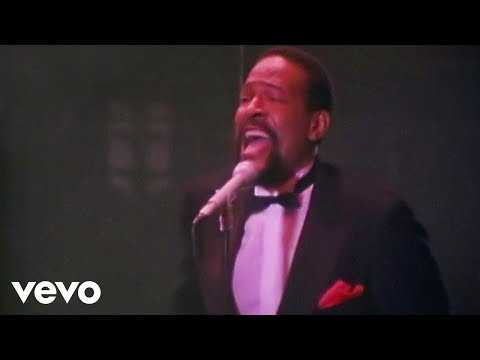




→ More from the 1960s File
View all 1960s hits →




Keep digging