The 1960s File Feature
Turn! Turn! Turn!/To Everything There Is A Season
Turn! Turn! Turn! — Judy Collins Revisits a Biblical Anthem in 1969 A Voice for the Season Late 1969 sat at one of the most charged intersections in American…
01 The Story
Turn! Turn! Turn! — Judy Collins Revisits a Biblical Anthem in 1969
A Voice for the Season
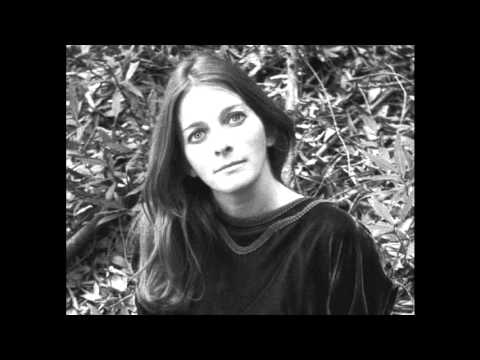
Late 1969 sat at one of the most charged intersections in American cultural history. The counterculture was fracturing. Woodstock had come and gone just months before. Vietnam kept its brutal accounting, and the idealism that had powered the folk revival was beginning to buckle under the weight of events. Into that swirling context, Judy Collins released her interpretation of "Turn! Turn! Turn! (To Everything There Is a Season)," a song whose origins stretched back millennia yet somehow felt urgently present for audiences living through that particular autumn.
Roots Older Than Rock and Roll
The song itself predates rock and roll by thousands of years. Its text is drawn almost entirely from Ecclesiastes, the third chapter of the Hebrew Bible, which catalogs the rhythms of human existence through paired opposites: birth and death, war and peace, planting and harvesting. Pete Seeger adapted the ancient text into a song in the late 1950s, adding an original melody and the repeated refrain that gives the piece its title. The Byrds had already made the song a number-one hit on the Billboard Hot 100 in 1965, turning it into one of the defining anthems of the mid-decade folk-rock moment. By 1969, Collins was working with the material from a different angle, bringing her classical soprano and her distinctly interpretive sensibility to a song the culture already knew.
Collins in Her Prime
Judy Collins had established herself through the 1960s as one of the most important voices in the folk revival, not primarily as a songwriter but as a curator of exceptional material. Her albums introduced mass audiences to songs by Leonard Cohen, Joni Mitchell, and Stephen Sondheim, among others. Her 1967 album Wildflowers had broken commercial ground, reaching the top twenty and earning her a Grammy nomination. By 1969 she was a genuinely significant figure in American popular music, and her interpretations carried real cultural weight. When she turned her voice to a piece, listeners paid attention.
The 1969 Chart Run
Collins's recording of "Turn! Turn! Turn!" entered the Billboard Hot 100 on November 29, 1969, debuting at position 84. Over the following weeks it climbed steadily, reaching position 75 by mid-December and then peaking at number 69 on December 27, 1969, the final chart week of the decade. The single spent five weeks on the chart in total. The numbers tell a modest commercial story, but chart position alone does not capture the resonance the song carried in that cultural moment. The closing weeks of the 1960s, with all their accumulated grief and wonder, gave the piece a particular poignancy.
Legacy Across Generations
Collins's version circulated within an era that was actively seeking frameworks for making sense of upheaval. The Ecclesiastes text, with its insistence that every season has its time and place, offered something to listeners who were exhausted by the pace of change. The song became a touchstone for the peace movement in a way that transcended its chart performance. Over the decades since, Collins's recording has maintained a presence through compilations, documentaries about the 1960s, and her own continued touring and recording career. The YouTube audience for the track now exceeds 6.8 million views, confirming that the song continues to find new listeners across generations who may have no direct memory of the era in which she recorded it.
Spend three minutes with this recording and you can hear what late 1960s folk sounded like when it was most earnest: a voice certain that the words mattered, set against arrangements that stepped back and let the ancient text speak.
"Turn! Turn! Turn!" — Judy Collins's singular moment on the 1960s charts.
02 Song Meaning
Turn! Turn! Turn! — Themes of Cycles, Time, and Acceptance
The Weight of Ancient Wisdom
Few popular songs carry the textual pedigree of "Turn! Turn! Turn!" The lyrics are adapted from one of the most meditated-upon passages in world literature: the third chapter of Ecclesiastes, a book concerned above all with the cycles of existence and the limits of human understanding. The word "season" in that ancient text refers not merely to calendar divisions but to appointed times, moments in the unfolding order of things. Pete Seeger's genius was to recognize that this text, with its balanced antitheses and its cumulative rhythm, was already a song waiting to be sung. He added little beyond a melody and a refrain, because almost nothing needed adding.
Opposites in Balance
The structural heart of the lyric is a long series of paired opposites: being born and dying, tearing down and building up, mourning and dancing, silence and speech. This pairing works on the listener's mind in a specific way. It does not argue that one pole of each pair is good and the other bad. It insists that both belong to the same turning world, that loss and gain are woven together in a pattern larger than any individual moment of suffering or joy. For audiences living through the social convulsions of 1969, that message carried extraordinary weight. The losses were real. The song offered not reassurance that things would improve, but a framework in which loss itself was part of a comprehensible order.
Peace as the Unreachable Note
The refrain gestures toward peace as the destination: a time for peace that the song insists is "I swear it's not too late." That final affirmation, added by Seeger, gives the adapted scripture a 20th-century urgency it did not originally possess. In the context of the Vietnam War, the phrase carried a weight that no amount of chart positioning could measure. Collins, performing as both artist and activist in that period, brought those associations with her whenever she sang the song. The meaning was never purely aesthetic; it was also civic, political, aspirational.
Why It Resonated Across Decades
The song's durability rests on the universality of its subject matter. Grief over loss, the passage of time, the desire for peace: these are not period concerns. Every generation that encounters the song at a moment of personal or collective difficulty finds something in its rhythms that speaks to their situation. Judy Collins's interpretive clarity in her 1969 recording ensures that the ancient text arrives without ornamentation obscuring its lines. The voice is the instrument; the words are the argument. That directness is part of what keeps the recording in circulation more than five decades after its release.
"Turn! Turn! Turn!" — Judy Collins's singular moment on the 1960s charts.
→ More from Judy Collins
View all Judy Collins hits →



→ More from the 1960s File
View all 1960s hits →




Keep digging