The 1960s File Feature
Earth Angel
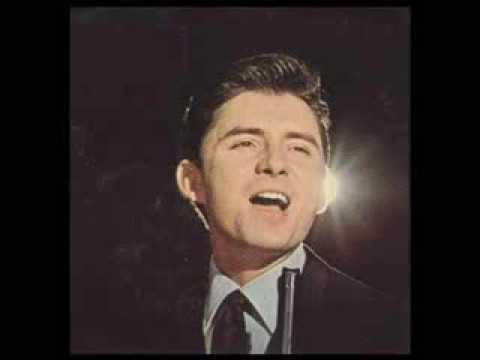
Earth Angel — Johnny Tillotson (1960) Note: "Earth Angel" is associated most prominently with The Penguins, whose 1954 original doo-wop recording became one …
01 The Story
Earth Angel — Johnny Tillotson (1960)
Note: "Earth Angel" is associated most prominently with The Penguins, whose 1954 original doo-wop recording became one of the first rhythm-and-blues records to cross over to mainstream pop success. Johnny Tillotson's 1960 version, released on Cadence Records, revisited the song at the dawn of a new decade and offered a fresh pop interpretation for an audience that had moved on from the original doo-wop context while retaining affection for its melody and sentiment.
Johnny Tillotson was a Florida-born singer who had signed with Cadence in 1958 and was building a reputation as one of the label's most versatile young performers. His voice carried a teenage sincerity that suited the romantic idealism of early rock and roll, and his ability to inhabit a song emotionally without overselling it made him a natural fit for material that depended on genuine feeling rather than vocal pyrotechnics. "Earth Angel" provided an opportunity to demonstrate that quality in a song that audiences already knew and loved, filtering it through Tillotson's particular blend of warmth and restraint.
Cadence Records, founded by Archie Bleyer in 1952, had established a track record of developing young pop talent and placing them in sympathetic contexts that emphasized melody and emotional accessibility. The label's roster during this period included the Everly Brothers, whose harmonics and romantic sensibility shared certain qualities with Tillotson's own approach. By assigning Tillotson to "Earth Angel," Cadence was betting that the song's emotional architecture was durable enough to support a new interpretation and that Tillotson's particular vocal personality would bring something fresh to material that already had a life in the culture.
The original "Earth Angel" by The Penguins had been a number one hit on the Billboard R&B chart in 1954 and crossed over to reach the upper echelons of the pop chart as well, making it one of the early landmarks of the crossover moment that would eventually crystallize into rock and roll. By 1960, when Tillotson recorded his version, the song had been covered multiple times by various artists, most notably by The Crew-Cuts, whose version competed directly with The Penguins' original in the mid-1950s. Tillotson's recording entered a tradition of cover versions and placed itself in the pop context of the early 1960s rather than in the doo-wop world of the mid-1950s.
Tillotson's version reflected the changing production values of the pop market as it moved from the late 1950s into the early 1960s. The arrangement emphasized strings and a clean, studio-polished sound that positioned the record as teen pop rather than rhythm and blues. This repositioning was characteristic of how the major and independent pop labels handled Black popular music in this period, translating the emotional content while adjusting the sonic presentation for what were assumed to be the preferences of mainstream pop radio audiences.
The song's reappearance in Tillotson's hands in 1960 coincided with a period of genuine commercial momentum for the singer. He had already charted with his own compositions and was developing a following that would sustain him through the early 1960s, a period that included his biggest hit, "Poetry in Motion," released later in 1960. The decision to record "Earth Angel" positioned Tillotson as an artist comfortable with both original material and the pop standards tradition, a flexibility that characterized many of the most commercially successful performers of the period.
The legacy of Tillotson's version is inseparable from the broader legacy of "Earth Angel" as a cultural touchstone. The song appeared in films and television productions across the subsequent decades, most memorably in Back to the Future in 1985, where the use of the song as a period piece underscored its status as a 1950s cultural artifact. Each new context in which the song appeared contributed to its accumulating cultural meaning, and Tillotson's recording became one of several versions that listeners encountered in the song's long afterlife.
For collectors and historians of early 1960s pop, Tillotson's "Earth Angel" represents a specific moment in the transition between the doo-wop era and the smoother teen pop that would dominate the charts until the British Invasion. Cadence Records' production approach and Tillotson's natural vocal sincerity combined to create a version that honored the original while translating it into a new sonic vocabulary, demonstrating the durable emotional power of a melody and sentiment that had already proven itself in one generation and was ready to speak to another.
02 Song Meaning
The Romantic Ideal in "Earth Angel"
Note: This analysis concerns Johnny Tillotson's 1960 Cadence Records cover of "Earth Angel," the doo-wop standard originally recorded by The Penguins in 1954. The song's meaning is best understood in the context of both its original doo-wop roots and its translation into early 1960s pop.
"Earth Angel" belongs to the tradition of romantic idealization that runs through American popular music from the parlor ballad to the doo-wop era and beyond. The song's central conceit, that the object of the narrator's love is not merely a person but something angelic, something descended from a higher plane to bless ordinary human existence, represents a kind of romantic mythology that resonated powerfully with teenage audiences in the 1950s and retained that power well into the following decade. Johnny Tillotson's recording brought this mythology into the cleaner sonic world of early 1960s teen pop, preserving its emotional content while adjusting its presentation.
The idea of the "earth angel" as romantic archetype carries specific psychological weight. The beloved is imagined not as a complicated human being with contradictions and flaws but as a spiritual ideal made flesh, a being whose very presence transforms the narrator's experience of existence. This is romantic love as transcendence, as the arrival of something miraculous in an otherwise ordinary world. The doo-wop tradition from which the song emerged had made this kind of elevated romantic feeling one of its central subjects, and "Earth Angel" is among the most perfect expressions of that tradition.
The narrator's voice in the song is one of grateful astonishment, a person who cannot quite believe their good fortune in being loved by someone so clearly beyond ordinary deserving. This combination of desire, gratitude, and slight disbelief at one's own luck gave the song a quality of emotional vulnerability that distinguished it from more confident romantic declarations. The beloved is worshipped rather than pursued, adored rather than merely desired, and the narrator's posture is one of reverence rather than ownership.
For Tillotson specifically, the song's meaning intersects with the broader project of his early career, which was built on emotional sincerity and a kind of unguarded openness about romantic feeling. His vocal approach emphasized vulnerability and genuine feeling over the kind of mannered cool that some of his contemporaries favored, and "Earth Angel" gave that approach ideal material. The song's emotional demands matched his natural performing instincts perfectly.
The song's cultural longevity suggests that it has continued to function as a carrier of romantic meaning well beyond its original context. Its repeated appearances in film and television soundtracks, always as a signifier of innocent romantic idealism, reflect the degree to which "Earth Angel" has become inseparable from a particular image of youthful love as something pure and elevated and slightly miraculous. Tillotson's version contributed to that accumulating cultural meaning, adding one more layer to a song that has always been understood as more than a pop artifact but as a statement about what love, at its most idealized, might actually feel like.
→ More from Johnny Tillotson
View all Johnny Tillotson hits →



→ More from the 1960s File
View all 1960s hits →




Keep digging