The 1960s File Feature
Love Theme From "Romeo And Juliet" (A Time For Us)
Johnny Mathis and His Recording of "Love Theme From 'Romeo And Juliet' (A Time For Us)" In the summer of 1968, Franco Zeffirelli's film adaptation of Shakesp…
01 The Story
Johnny Mathis and His Recording of "Love Theme From 'Romeo And Juliet' (A Time For Us)"
In the summer of 1968, Franco Zeffirelli's film adaptation of Shakespeare's "Romeo and Juliet" arrived in theaters and became one of the most commercially successful art-house productions in Hollywood history. The film's combination of youthful energy, visual lushness, and fidelity to the original play's emotional intensity resonated with audiences in ways that neither critics nor distributors had fully anticipated. Central to the film's impact was the musical score composed by Nino Rota, the Italian composer whose collaborations with Federico Fellini had established him as one of the most distinctive film composers of the postwar era. Rota's main theme for the Zeffirelli film possessed a melodic beauty so immediate and so perfectly matched to the emotional content of the narrative that it almost instantly became one of the most recognized film themes of its decade.
The commercial potential of a melody with that degree of melodic accessibility and emotional resonance was immediately apparent to the popular music industry, and multiple artists moved to record versions of the theme. Henry Mancini, himself one of the most distinguished film composers of the era, recorded an instrumental version that found significant commercial success. When the melody was given English lyrics by Larry Kusik and Eddie Snyder, retitled "A Time For Us," the material became available to the vast community of pop and adult contemporary vocalists who were always in search of melodic vehicles of proven quality.
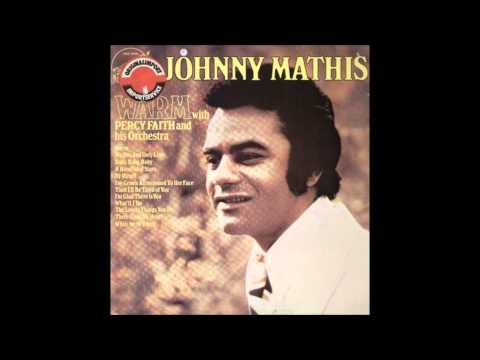
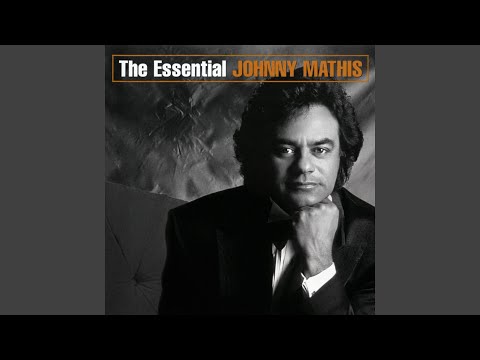
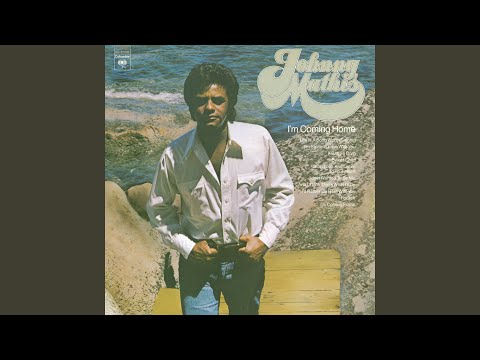
Johnny Mathis was among the most logically suited of all active recording artists to this material. Born in Gilmer, Texas, in 1935 and raised in San Francisco, Mathis had been signed to Columbia Records in 1956 after producer George Avakian heard him performing at a local club. His debut recordings established his signature approach: a pure, crystalline tenor voice of almost otherworldly smoothness, deployed in the service of melodic content with an interpretive sophistication that drew as much from his classical vocal training as from the pop tradition in which he worked commercially. Mathis's voice was sui generis in American popular music; no other singer of his generation possessed quite its combination of physical beauty, technical control, and emotional warmth.
By 1969, when his recording of the "Love Theme From 'Romeo And Juliet' (A Time For Us)" was released on Columbia Records, Mathis had been a consistent chart presence for more than a decade. His early albums, including "Wonderful! Wonderful!" and the compilations that Columbia had assembled from his singles and recording sessions, had been among the best-selling albums in the early history of the long-playing format, spending hundreds of weeks collectively on the album charts. His particular gift for romantic balladry had found an audience of remarkable loyalty, primarily among adult listeners who responded to the combination of vocal excellence and emotional refinement his recordings consistently offered.
The "Romeo And Juliet" theme suited Mathis with exceptional precision. The melody's long, arching phrases demanded the kind of sustained breath control and smooth legato phrasing that were among his greatest technical strengths. The material's emotional content, the tragedy of young love thwarted by forces beyond the lovers' control, engaged the interpretive empathy that distinguished his best performances from merely technically proficient ones. The Columbia production gave the recording a string-dominated orchestral setting that complemented the film's visual lushness while remaining fully in the adult contemporary idiom that Mathis's audience expected and valued.
The record reached number ninety-six on the Billboard Hot 100, a pop placement that somewhat understated its impact on the adult contemporary market, where Mathis remained a dominant figure throughout this period. The Hot 100's composition, weighted toward the youth-oriented formats that were the dominant commercial force of the late 1960s, did not always accurately reflect the commercial performance of adult-targeted material in its actual primary market contexts.
Mathis continued recording for Columbia through the subsequent decades, releasing albums with remarkable consistency and maintaining his commercial viability into the twenty-first century through a combination of new recordings and catalog reissues. His longevity as a recording and performing artist stood as a testament to the enduring appeal of genuine vocal excellence. "A Time For Us" remained one of the more celebrated recordings in his extensive catalog, a meeting of extraordinary source material and an interpreter uniquely suited to do justice to its melodic and emotional ambitions.
02 Song Meaning
Timelessness, Tragedy, and the Endurance of Love in "Love Theme From 'Romeo And Juliet' (A Time For Us)"
The survival of the "Romeo And Juliet" story across four centuries of retelling, adaptation, and reinvention attests to the degree to which it has come to function as one of Western culture's primary myths about the relationship between love and death, between the intensity of young passion and the hostile world that surrounds it. When Nino Rota composed the theme that would carry this narrative content in Franco Zeffirelli's 1968 film, he was working with source material whose emotional freight had been accumulating for hundreds of years. The melody he created needed to be worthy of this weight, and it achieved that requirement through a simplicity and emotional directness that proved universally accessible without sacrificing genuine musical quality.
The lyric title "A Time For Us" compressed the story's emotional core into a deceptively simple formulation. The phrase implies a future that the narrative structure has already made tragically impossible, a time together that both characters believe is coming but that the audience knows will never arrive. This dramatic irony, fundamental to the tragedy's structure, is present in the title phrase in a form that carries its full weight even without the context of the specific narrative. The lovers' certainty that their time together is coming constitutes both the most beautiful and the most heartbreaking element of their situation, and "A Time For Us" holds both qualities simultaneously.
Johnny Mathis's voice was an almost ideally suited instrument for the emotional content this material required. His tenor possessed a quality that music critics have often described in terms of purity, a clarity and smoothness that suggested something approaching the ideal rather than the actual. This quality, which in lesser material might seem merely pretty, became deeply appropriate in the context of the Romeo and Juliet theme, where the beauty of the love being described was precisely the point: these were not ordinary people experiencing an ordinary attachment, but exceptional individuals whose capacity for feeling was as extreme as the circumstances that destroyed them.
The Zeffirelli film's decision to cast actual teenagers in the leading roles, rather than the adult actors who had typically played the parts in earlier theatrical productions, gave the 1968 adaptation a quality of authentic youthful vulnerability that resonated powerfully with late-1960s audiences navigating their own generational conflicts. The film and its music arrived at a historical moment when young people were experiencing acute tension between their own values and the demands of the social structures that surrounded them, and the Romeo and Juliet narrative of young love destroyed by forces beyond the lovers' control carried an obvious contemporary resonance.
Mathis's recording connected this film-derived meaning to the adult contemporary tradition in which he worked, translating the material from one audience context to another without losing its essential emotional content. The adult listeners who were Mathis's primary audience brought their own accumulated experience of love and loss to the recording, hearing in the tragedy's narrative contours something that resonated with their own emotional histories. The Romeo and Juliet story accommodated this reading as readily as it accommodated the youth-oriented interpretation, precisely because its fundamental subject, love that cannot survive the conditions the world imposes on it, is not limited by age or circumstance but speaks to the universal human experience of desire and limitation.
→ More from Johnny Mathis
View all Johnny Mathis hits →

→ More from the 1960s File
View all 1960s hits →




Keep digging