The 1960s File Feature
I'll Say Forever My Love
Jimmy Ruffin and the Quiet Ache of I'll Say Forever My Love Picture a Detroit winter giving way to spring in early 1968, the Motown machine humming at full t…
01 The Story
Jimmy Ruffin and the Quiet Ache of "I'll Say Forever My Love"
Picture a Detroit winter giving way to spring in early 1968, the Motown machine humming at full tilt down on West Grand Boulevard, churning out hit after hit with assembly-line precision. Into that golden run steps Jimmy Ruffin, a voice both tender and weathered, carrying a small heartbreak of a song that asks for nothing but patience and devotion. "I'll Say Forever My Love" never roared up the charts. It glowed instead, a slow ember in a catalog stacked with bonfires, and that gentle persistence is exactly what makes it worth rediscovering all these decades later.
A Brother in the Shadow of a Giant
By 1968, Jimmy Ruffin already knew exactly where he stood in the Motown universe. His younger brother David fronted The Temptations, one of the most celebrated vocal groups on earth, while Jimmy carved out a quieter path as a solo artist. He had tasted real success two years earlier with the aching "What Becomes of the Brokenhearted", a record that became one of soul's enduring touchstones. The trouble with a song that big is the long shadow it casts. Everything afterward gets measured against it, and Ruffin spent the late sixties searching for a follow-up that could carry the same emotional weight. He kept releasing fine singles, kept touring, kept that warm, slightly bruised voice in service of love songs, and audiences who paid attention were rewarded.
The Sound of Restraint
What makes this record linger is its refusal to oversell. The arrangement is plush in the classic Motown manner, strings and backing voices wrapped around a steady, unhurried groove, yet Ruffin sings as though he is speaking directly across a kitchen table. There is no grandstanding here, no belted climax begging for attention. The performance trusts the listener to lean in. That trust is the whole point of a song built on the promise of a love that outlasts every doubt. You can hear the craftsmanship of the Motown studio in every bar, that signature blend of polish and feeling, but the emotional center is all Ruffin, a man making a vow and meaning it.
A Modest Run on the Hot 100
The chart story is brief but honest. "I'll Say Forever My Love" debuted on the Billboard Hot 100 on March 9, 1968, entering at number 85. It climbed steadily, week by week, never lurching, until it reached its peak of number 77 on April 6, 1968. In total it spent just five weeks on the Hot 100. Those are gentle numbers, the kind that mark a record beloved by a devoted core rather than a nation. The single fared considerably better across the Atlantic, where British audiences had taken a particular shine to Ruffin's brand of yearning soul. In the United Kingdom, his reputation ran deep, and songs that barely registered at home became cherished staples on British dance floors and radio.
The Long Afterlife of a Soft Hit
Songs like this one age in unexpected ways. While "I'll Say Forever My Love" stayed a footnote on the American charts, it found new life among collectors and fans of vintage soul, the sort who treasure the deep cuts as much as the smashes. Ruffin himself remained a respected figure for decades, touring and recording, his voice a reliable vessel for heartbreak and hope alike. He spent much of his later career in Britain, embraced by a public that never stopped loving his particular gift for melancholy. The song endures as proof that a career has many textures, and that a number 77 record can carry just as much feeling as a chart-topper.
Why It Still Deserves a Listen
Set against the louder triumphs of the Motown era, this is a record that rewards patience. It does not announce itself; it settles in slowly, the way a quiet promise does. There is a dignity to its understatement that feels increasingly rare, a sense that the singer has nothing to prove and everything to give. For anyone willing to slow down and listen closely, the reward is a small masterclass in restraint, the sound of a great soul voice working in a minor key.
Cue it up on a grey afternoon and let that warm, patient voice do its work. Few records ask so little and give back so much.
"I'll Say Forever My Love" — Jimmy Ruffin's singular moment on the 1960s charts.
02 Song Meaning
What "I'll Say Forever My Love" Is Really About
Strip away the lush Motown production and you find something almost startlingly simple at the heart of this song: a vow. Not a dramatic, fireworks-and-thunder declaration, but the quieter and arguably braver kind, the promise to stay even when staying is hard. It is a love song built not on passion's first rush but on the long arithmetic of commitment.
The Language of Constancy
The lyrics circle one central idea, that love worth having is love that endures past the easy days. Ruffin's narrator is not asking for grand romance. He is offering steadiness, a commitment that holds firm through doubt and distance. In an era of soul music often built on passion and heartbreak, there is something disarming about a song that leans instead on loyalty, on the willingness to wait and to keep faith. The promise he makes is not flashy, and that is precisely what gives it weight.
Emotion Carried in the Voice
Much of the meaning here lives in the delivery rather than the words. Ruffin sings with a tenderness that suggests hard-won wisdom, the sound of someone who knows love can disappoint yet chooses to believe in it anyway. The restraint becomes the message. By refusing to oversell his devotion, he makes it feel more real, more like a promise a person might actually keep through years of ordinary life. There is maturity in that approach, an understanding that the deepest feelings often speak softly.
A Reflection of Its Moment
The late 1960s were a turbulent time, the culture cracking open with change and uncertainty, protests in the streets and old certainties dissolving. Against that backdrop, a song about unwavering personal devotion offered a kind of refuge. Motown specialized in this emotional intimacy, the small human scale of love and longing set against polished, irresistible arrangements. "I'll Say Forever My Love" fits squarely in that tradition, a private comfort in a public moment of upheaval. While the world outside felt unstable, the song promised one fixed point: a love that would not move.
Why It Still Lands
The reason this modest single still resonates is that its promise never goes out of style. Everyone, at some point, wants to hear that someone will stay. Ruffin delivers that reassurance without theatrics, and the honesty of it is exactly why listeners keep returning. A vow of constancy, sung plainly and beautifully, turns out to be timeless. In a world that often rewards the loud and the new, there remains something deeply moving about a voice that simply pledges to remain, and means it for good.
→ More from Jimmy Ruffin
View all Jimmy Ruffin hits →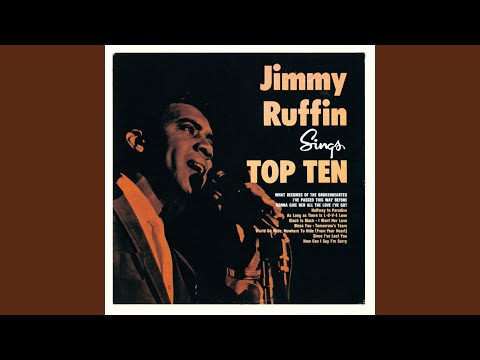


→ More from the 1960s File
View all 1960s hits →




Keep digging