The 1960s File Feature
Big Boss Man
"Big Boss Man" — Jimmy Reed The Blues Before the Chart In the summer of 1961, when "Big Boss Man" entered the Billboard Hot 100, Jimmy Reed was already somet…
01 The Story
"Big Boss Man" — Jimmy Reed
The Blues Before the Chart
In the summer of 1961, when "Big Boss Man" entered the Billboard Hot 100, Jimmy Reed was already something of an anomaly in American popular music. He was a blues singer in an era when the blues had largely been displaced from the mainstream pop chart by rock and roll, which had borrowed so much from the blues tradition that the original was now commercially invisible to many radio programmers and record buyers. Reed was one of the few artists working squarely in the blues idiom who managed to register on the pop chart at all, and the fact that he did so spoke to the accessibility of his particular approach.
Reed's sound was not the intense, technically demanding blues of Muddy Waters or Howlin' Wolf. Those artists were revered by a cognoscenti that increasingly included young British musicians absorbing American blues through imports and bootlegs, but they were not landing on the American pop chart. Reed's approach was more relaxed, more repetitive in a hypnotic rather than a demanding way, built around simple chord structures and lyrics that communicated their meaning immediately without requiring the listener to do interpretive work.
A Song of Workplace Frustration
Written by Al Smith and Luther Dixon, "Big Boss Man" addressed a subject with universal resonance in working-class American life: the experience of being under the authority of someone who treats that authority as license for arbitrary behavior. The narrator is speaking directly to an employer who has made his working life difficult, asserting with quiet defiance that despite the economic power the boss holds, his own dignity and self-worth remain intact.
The lyric operates in the tradition of blues complaint, a mode that simultaneously acknowledges constraint and refuses submission. The narrator is not rebelling in any concrete sense; he is not quitting or organizing or confronting. He is doing something more psychologically subtle: he is asserting to himself, and to the listener, that the boss's power over his labor does not constitute power over his personhood. That distinction, modest as it might seem, carried enormous emotional weight for audiences who lived that dynamic every day.
Reed's vocal delivery, characteristically relaxed and almost conversational, suited the material perfectly. There was no theatrical anguish in the performance, no histrionic proclamation. The indignation was conveyed in the tone of someone stating a simple fact that everyone already knows to be true, which made it land harder than a more demonstrative approach would have.
Three Weeks on the Hot 100
The single made its Hot 100 debut on May 29, 1961, entering at number 93. The chart run was brief: by June 12, 1961, it had reached its peak of number 78, spending three weeks total on the pop listing. Those numbers do not convey the song's actual cultural reach, which extended far beyond its chart performance. On the R&B chart, where its primary audience lived, the record had significantly stronger traction. And its influence on the British musicians who were building their careers around American blues material was entirely invisible to the American charts but would prove enormously consequential.
The pop chart appearance was notable precisely for how unusual it was. Blues records simply did not chart in 1961 with any regularity. The fact that this one did reflected both the accessibility of Reed's sound and the degree to which the line between blues and rock and roll remained permeable in the early 1960s, before genre boundaries hardened and radio formats became more rigidly defined.
The British Invasion's Blueprint
The long afterlife of "Big Boss Man" in popular music is inseparable from what happened in Britain during the late 1950s and early 1960s, when a generation of young musicians were discovering American blues through whatever means they could find. Jimmy Reed's recordings were among the most widely circulated and imitated. The simplicity of his guitar work made it accessible; the emotional directness of his lyrics made it immediately meaningful; and the hypnotic quality of his rhythmic approach was perfectly suited to bands learning to play together in small venues and rehearsal spaces.
Elvis Presley covered "Big Boss Man" in 1967, bringing the song to an entirely new audience and demonstrating how effectively its blues architecture could be adapted for mainstream pop presentation. The Grateful Dead played it regularly, finding in its repetitive structure something congenial to their improvisational approach. The song accumulated an extraordinary range of covers across genres precisely because its underlying construction was so clear and so strong.
The Sound of Patient Authority
What you hear in Jimmy Reed's original recording, under all the historical significance and the influence and the subsequent cover versions, is simply a man making a very good blues record with complete naturalness. The guitar interplay between Reed and his regular collaborator Eddie Taylor, the easy swing of the rhythm, the unhurried vocal delivery: these qualities have not aged. Put this record on and it occupies the room with the same authority it had in 1961, because authority earned through that kind of genuine simplicity does not require updating.
"Big Boss Man" — Jimmy Reed's singular moment on the 1960s charts.
02 Song Meaning
"Big Boss Man" — Meaning and Legacy
The Blues Complaint Tradition
American blues music developed a specific mode of address for the experience of powerlessness: the complaint delivered not to someone who can fix the situation but to an audience that recognizes the situation from their own lives. The complaint tradition in blues served a social and psychological function, giving voice to experiences that the dominant culture did not acknowledge and creating solidarity among listeners who shared those experiences without having a legitimate public forum for them.
"Big Boss Man" sits squarely in this tradition, addressing an employer whose behavior has become intolerable but who cannot be directly confronted without serious personal cost. The narrator's strategy is to transform private frustration into public expression through the blues song itself, to make the injustice audible and thereby partially redress it through the act of naming it. The record becomes, in this reading, a form of testimony as much as entertainment.
Class, Work, and Dignity
The song's central subject is the relationship between economic power and personal dignity, and its argument is that the first does not necessarily determine the second. The boss has the power to assign work, set hours, determine pay, and make the working day comfortable or miserable. What the boss cannot do, the lyric insists, is own the narrator's self-regard. That assertion of inner freedom within outer constraint has roots in African American experience that go far deeper than the specific workplace context of the lyric, and listeners in 1961 would have heard those deeper resonances even when the surface was simple and direct.
The universality of the workplace frustration theme also gave the song enormous crossover potential. White listeners who had never experienced the specific dimensions of racial inequality in the American workplace could still recognize the emotional territory of the overbearing boss and the injustice of arbitrary authority. That accessibility is part of why the song traveled so far beyond its original audience.
Simplicity as Strength
It is worth resisting the temptation to over-intellectualize a record that was, in the first instance, built for maximum simplicity. Jimmy Reed's approach to the blues was not ironic or complex; it was direct and unpretentious in ways that sophisticated rock critics of subsequent eras sometimes found difficult to value. The simplicity was a form of mastery, not a limitation. Creating a three-chord blues performance that holds the listener's attention, communicates genuine feeling, and remains satisfying on repeated plays requires more skill than it appears to require, precisely because the skill is devoted to concealing itself.
Reed's apparent ease was the product of years of performing and recording, of understanding exactly how much pressure to apply and when to pull back, of knowing that the blues is a music where restraint carries as much emotional weight as intensity.
An Influence Larger Than Its Chart Performance
The gap between "Big Boss Man" and what Jimmy Reed's recording numbers in 1961 and its actual cultural influence is extreme. The song shaped the vocabulary of British blues-rock in the early 1960s more substantially than almost any other single American blues recording of the era, filtered through dozens of young British musicians who built their technique on Reed's deceptively simple templates. The record's direct musical descendants include enormous portions of the Rolling Stones, the Animals, and the Yardbirds' early catalogs, and through those bands the Reed influence runs through the entire history of rock guitar.
A chart peak of 78 does not begin to describe the reach of a song that helped teach a generation of British musicians how to play.
→ More from Jimmy Reed
View all Jimmy Reed hits →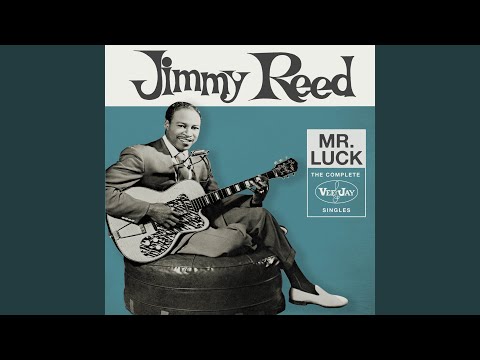

→ More from the 1960s File
View all 1960s hits →




Keep digging