The 1960s File Feature
You've Got My Mind Messed Up
James Carr Pours His Soul Into You've Got My Mind Messed Up Deep in the heart of 1960s Southern soul lived James Carr, a singer whose voice carried an ache s…
01 The Story
James Carr Pours His Soul Into "You've Got My Mind Messed Up"
Deep in the heart of 1960s Southern soul lived James Carr, a singer whose voice carried an ache so profound it could stop a room cold. Recording for a Memphis label that specialized in raw, gospel-rooted soul, Carr was one of the genre's most gifted and most heartbreaking interpreters. "You've Got My Mind Messed Up" arrived in the spring of 1966 as an early entry in his catalog, a deep soul ballad that showcased the trembling intensity that would make him a cult legend among devotees of the form.
A Voice From the Deep Soul Tradition
Carr came to this song as one of the great voices of Southern soul. He recorded for the Memphis-based Goldwax label, becoming one of the most powerful and emotionally raw singers in the deep soul tradition. His style drew heavily on gospel, channeling that spiritual intensity into songs of earthly heartbreak and longing. Though he never achieved the mainstream fame of some of his peers, his recordings earned him deep respect among soul aficionados. "You've Got My Mind Messed Up" captures him early in his run, already in full command of his devastating gift.
The Sound of Raw Emotion
Musically the song is pure Southern soul, built on a slow, aching arrangement that gives Carr's voice room to convey its full anguish. The instrumentation is warm and understated, leaning on the kind of churchy intensity that defined the Memphis sound. Carr's vocal sits at the heart of it all, trembling with emotion, pushing toward the edge of control without ever losing its power. There is a rawness to the performance that feels almost too intimate, the sound of a man laying his heartbreak completely bare. This was soul music at its most emotionally unguarded.
A Steady Climb on the Hot 100
The chart story reflects Carr's status as a respected but not chart-dominating artist. "You've Got My Mind Messed Up" debuted on the Billboard Hot 100 dated April 9, 1966, at number 95. It held there briefly before climbing, moving to 84, then 75, before peaking at number 63 on the chart dated May 7, 1966. The song spent six weeks on the Hot 100 in total. A peak in the sixties was a respectable showing for a deep soul ballad, the kind of intense, uncompromising record that resonated more powerfully with dedicated soul audiences than with the broad pop mainstream.
A Treasure for Soul Devotees
Whatever the modest chart numbers, James Carr's reputation among soul lovers is towering. He is widely regarded as one of the most gifted and underappreciated voices in the history of Southern soul. "You've Got My Mind Messed Up" stands as an essential entry in his catalog, a track that captures the raw, gospel-fired emotion that made him so revered. For listeners willing to explore beyond the soul hits everyone knows, it offers a profound and moving discovery, the sound of a true master at work.
The Memphis Soul Tradition
To fully appreciate Carr's gift, it helps to understand the world that produced him. The Memphis soul scene of the 1960s was one of the most fertile musical environments in American history, a place where gospel fervor, blues feeling, and pop craftsmanship fused into something extraordinary. The studios of the region turned out some of the most enduring soul recordings ever made, built on the interplay of gifted singers and superb session musicians. Carr belonged to that tradition, his recordings carrying the unmistakable warmth and grit of the Memphis sound. "You've Got My Mind Messed Up" bears all the hallmarks of that golden era, a product of a scene that took soul music to its deepest emotional heights.
A Talent Shadowed by Struggle
Part of what makes Carr's story so poignant is that his immense talent never translated into the lasting fame it deserved. His career was hampered by personal difficulties that kept him from sustaining the momentum his gifts warranted, and he never became the household name that lesser singers did. That gap between his ability and his recognition has only deepened the devotion of those who know his work. Listening to a performance like this one, it is impossible not to hear a voice that should have been far more celebrated, which lends his recordings an extra layer of bittersweet power for the soul fans who treasure them.
Drop the needle and let that voice break your heart; this is deep Southern soul at its most powerful and unguarded.
"You've Got My Mind Messed Up" — James Carr's singular moment on the 1960s charts.
02 Song Meaning
The Consuming Heartbreak of "You've Got My Mind Messed Up"
"You've Got My Mind Messed Up" is a song about love so overwhelming it scrambles the mind and unsettles the soul. The title says it plainly: this is the portrait of a man undone by his feelings, unable to think straight because of the hold someone has on him. James Carr delivers that emotional chaos with a rawness that makes the heartbreak feel utterly real and immediate.
Love That Overwhelms
The central theme is the disorienting power of love and desire. The lyrics describe a state of emotional turmoil, a man so consumed by his feelings that he can barely function. There is a sense of helplessness in the sentiment, of being at the mercy of an emotion too strong to control. The song paraphrases the universal experience of being completely captivated by someone, to the point where everything else fades and the mind simply will not settle.
Vulnerability as the Message
Emotionally, the song lives in a place of raw exposure. Carr holds nothing back, conveying the full weight of his anguish with trembling, unguarded intensity. There is no posturing or pride here, only the naked truth of a heart in distress. That vulnerability is the source of the song's power, a willingness to be completely honest about how much love can hurt and overwhelm. It is the kind of emotional nakedness that defined the deepest soul music.
A Song From the Soul Tradition
The cultural context grounds the song in a rich lineage. Southern soul drew deeply on gospel, treating romantic suffering with the same intensity once reserved for spiritual devotion. Carr's performance channels that tradition, blurring the line between sacred and secular passion. The song belongs to a body of music that took heartbreak seriously, that found in personal anguish a subject worthy of total emotional commitment. That seriousness gives the song its lasting weight.
Why It Resonated
The song connected with listeners who valued raw emotional truth. Audiences responded to the unflinching honesty and the sheer power of Carr's delivery. Everyone has felt the disorienting pull of love, the way it can take over your thoughts entirely. By voicing that experience with such conviction, Carr offered listeners a profound sense of recognition, a feeling that their own emotional turmoil had been understood and given voice.
An Enduring Intensity
What endures is the song's emotional honesty. It does not soften or simplify the experience of overwhelming love; it lays it bare in all its disorienting power. The meaning is rooted in the timeless reality of being consumed by feeling, and the courage it takes to express that vulnerability. That raw sincerity is exactly why James Carr remains so cherished among those who know his work, a singer who told the unvarnished truth about the heart.
→ More from James Carr
View all James Carr hits →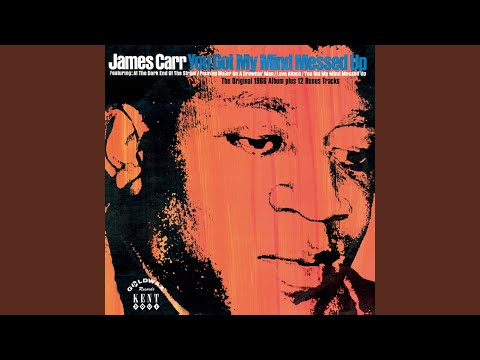
→ More from the 1960s File
View all 1960s hits →




Keep digging