The 1960s File Feature
Prisoner Of Love
James Brown And The Famous Flames Take "Prisoner Of Love" to the Hot 100 "Prisoner Of Love" carries a distinguished pedigree that predates James Brown And Th…
01 The Story
James Brown And The Famous Flames Take "Prisoner Of Love" to the Hot 100
"Prisoner Of Love" carries a distinguished pedigree that predates James Brown And The Famous Flames by three decades. The song was written by Russ Columbo, Leo Robin, and Clarence Gaskill in 1931, and it became closely associated with Columbo, whose romantic baritone style made him one of the defining popular vocalists of the early sound era. Perry Como later recorded the song in 1946 and took it to number one, cementing its status as a standard that could survive multiple eras and multiple interpreters. When James Brown And The Famous Flames recorded their version in 1963, they were entering a conversation about this song that had already lasted more than thirty years.
The decision to record a pop standard was not incidental. In 1963, James Brown And The Famous Flames occupied an interesting commercial position: enormously successful on the rhythm and blues charts and increasingly known for the explosive live performances that were building their reputation across the country, but not yet fully established as a crossover pop act. Recording a ballad drawn from the American songbook was a deliberate strategy aimed at demonstrating the breadth of Brown's vocal capabilities and reaching audiences beyond the core rhythm and blues market.
King Records, the Cincinnati-based independent label that had been central to Brown's career since the late 1950s, released the recording. Syd Nathan had founded King in 1943 and built it into one of the most significant independent labels in the country, with particular strength in country and rhythm and blues. The label had a track record of working with artists who could navigate between genre categories, and the decision to record Brown singing a pop standard fit within that commercial logic. Producer and arranger Bert Berns contributed to the orchestral framing that surrounded Brown's vocal, giving the record a lushness that differentiated it from Brown's more percussive rhythm and blues sides.
The recording featured Brown delivering the lyric with a sustained, emotionally committed vocal that revealed capacities his uptempo material rarely showcased at length. His ability to control dynamics, to drop to near-whispers before expanding to full-throated declarations, demonstrated that the showmanship evident in his live performances had a genuine technical foundation. The Famous Flames provided harmonies and support that placed the recording within the gospel quartet tradition that had shaped so much of Brown's early musical development, even as the orchestral accompaniment pushed the record toward mainstream pop conventions.
"Prisoner Of Love" entered the Billboard Hot 100 on April 20, 1963, debuting at number 89. It climbed through the spring to reach its peak position of number 18 during the week of June 15, 1963, spending eleven weeks on the chart in total. The number 18 peak marked one of Brown's strongest showings on the pop chart to that point in his career, confirming that his crossover potential was real and commercially viable. Simultaneously, the record performed extremely well on the rhythm and blues chart, where it reached number one, demonstrating that the pop ballad approach did not alienate his core audience.
The year 1963 was a period of rapid change in American popular music. The British Invasion had not yet arrived, but the pop landscape was shifting as various forces competed for audience attention. In this environment, Brown's version of a pre-war standard represented a thoughtful assessment of where genuine commercial opportunities existed. By reaching back to the songbook that Perry Como and his generation had popularized, Brown was signaling both his vocal versatility and his awareness that proven material could open doors with radio programmers and record buyers who might not have engaged with his harder rhythm and blues recordings.
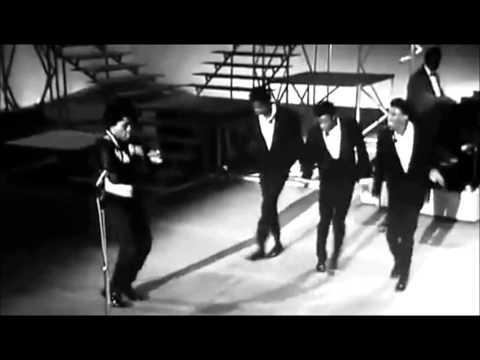
The success of "Prisoner Of Love" helped consolidate Brown's status as a complete entertainer rather than a specialist in one particular style. It ran concurrent with his reputation as the most electrifying live performer in American music, a reputation that his legendary live recording from the Apollo Theater had begun documenting the previous year. Together, these different facets of his public identity were assembling the complex portrait of an artist who would eventually be recognized as one of the most important figures in the history of popular music. The ballad recording demonstrated that behind the showmanship was a vocalist of genuine range and sensitivity, qualities that would remain present even as his music grew harder and more funk-oriented in subsequent years.
02 Song Meaning
The Emotional Depth of James Brown And The Famous Flames' "Prisoner Of Love"
"Prisoner Of Love" presents one of popular music's most enduring emotional metaphors: the experience of romantic attachment as captivity. The song describes a state in which the narrator recognizes the irrationality of remaining devoted to a relationship that causes suffering but finds himself unable to exercise the will required to leave. This paradox of chosen captivity sits at the heart of the song's emotional power, and it had resonated with audiences across multiple decades before James Brown And The Famous Flames brought their interpretation to it in 1963.
The metaphor of the prisoner is particularly rich because it collapses the distinction between external constraint and internal compulsion. A prisoner in the literal sense is held against his will by outside force, but the prisoner of love suffers from a captivity that is self-maintained, sustained by feeling rather than circumstance. James Brown's vocal delivery on the recording makes this distinction audible: there is no bitterness toward the beloved who could theoretically be blamed for the situation, only a kind of awed recognition of the depth of his own attachment.
Brown's interpretation departed in important ways from earlier versions while maintaining fidelity to the song's emotional core. Where Perry Como's 1946 recording emphasized the smooth, resigned acceptance that characterized the crooner tradition, Brown brought a more raw, gospel-inflected urgency. The techniques he employed, the dynamics, the carefully deployed moments of vocal intensity, communicated something more active than resignation. His narrator is not merely accepting his captivity but wrestling with it, feeling its weight with an immediacy that made the standard feel contemporary rather than nostalgic.
The gospel underpinning of Brown's approach gave the song a quality of testimony, as though the narrator were not merely describing his situation but bearing witness to it before an audience expected to understand and empathize. This connection to the church tradition, in which emotional confession before a congregation was a form of spiritual practice, invested the secular romantic content with a quality of genuine earnestness. Listeners familiar with that tradition would have recognized the emotional register even if they had never consciously analyzed its origins.
The song's placement in Brown's catalog in 1963 also carries meaning beyond the musical content itself. At this stage in his development, Brown was actively expanding the emotional vocabulary of his public persona. The explosive showman who shook stages across the country was demonstrating through this recording that his emotional range extended into territory requiring stillness and sustained vulnerability rather than kinetic energy. That range would prove essential to his subsequent artistic development as he moved through soul and ultimately into the more percussive and rhythmically complex territory of funk.
The Famous Flames' harmonic support on the recording adds a communal dimension to what might otherwise read as a purely individual emotional confession. The presence of other voices agreeing with and reinforcing the narrator's testimony suggests that this experience of romantic captivity is shared rather than eccentric, that what the narrator describes is a recognizable human situation rather than an idiosyncratic one. This communal affirmation is a structural feature borrowed directly from gospel practice, and it works to universalize what the lyric presents in first-person terms. The result is a recording that feels simultaneously intimate and broadly applicable, which accounts in significant part for why the emotional content of "Prisoner Of Love" remained viable across the thirty years between its composition and Brown's interpretation of it.
→ More from James Brown And The Famous Flames
View all James Brown And The Famous Flames hits →

→ More from the 1960s File
View all 1960s hits →




Keep digging