The 1960s File Feature
Ain't It Funky Now (Part 1)
"Ain't It Funky Now (Part 1)" — James Brown's Late-1969 Groove Dispatch By the closing weeks of 1969, James Brown had already changed the course of popular m…
01 The Story
"Ain't It Funky Now (Part 1)" — James Brown's Late-1969 Groove Dispatch
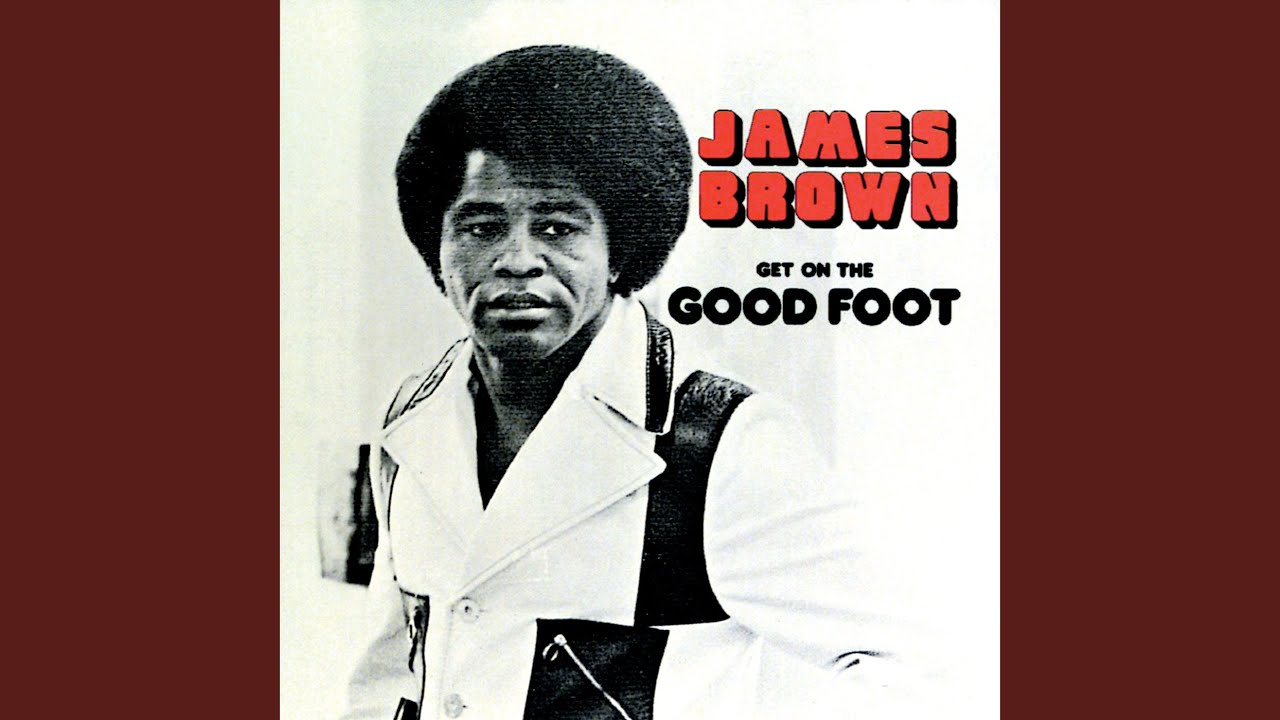
By the closing weeks of 1969, James Brown had already changed the course of popular music multiple times. He had helped invent soul, had pioneered the live R&B revue format, and, with his recordings from 1965 onward, had been methodically building the rhythmic language that would become known as funk. "Ain't It Funky Now" arrived in November 1969, one of the more understated entries in a catalog of extraordinary density, but it captures Brown and his band at a moment when the language they had invented was at its most fluid and self-assured.
James Brown in 1969
By the end of the 1960s, James Brown occupied a position in American music that had no real precedent: he was simultaneously the most commercially successful Black performer in the United States, a cultural and political figure of genuine significance to the civil rights movement and to Black Power politics, and the most rhythmically innovative bandleader working in any popular genre. His recording pace in this period was extraordinary, releasing singles with a frequency that would have exhausted most other artists, each one adding something to the evolving vocabulary of funk. His band, the JBs, was in the process of becoming one of the tightest and most rhythmically sophisticated ensembles in popular music.
The Funk Formula in Practice
What made the James Brown sound of this period remarkable was its discipline. Funk's complexity, the interlocking rhythmic parts, the syncopated bass lines, the horn accents landing on beats that traditional pop music ignored, was achieved through an almost military precision in the band's collective timing. "Ain't It Funky Now" demonstrates this precision: the groove is deep and insistent, with each instrument contributing to a rhythmic architecture that creates more forward momentum through its locked-in precision than through any individual virtuosity. The track is a demonstration of ensemble playing at its most coordinated, which is what made the James Brown band's recordings so immediately influential on musicians in multiple genres.
Six Weeks to Number 36
The song debuted on the Billboard Hot 100 on November 22, 1969, at position 71. It climbed: to 49, then 43, then 40, before reaching its peak of 36 on the week of December 20, 1969. Six weeks on the Hot 100, peaking at number 36 on December 20, 1969: a solid mid-chart performance that represents the typical range for James Brown's singles in this period. His primary commercial territory was the R&B chart, where he dominated with a consistency that the pop chart did not always reflect; many of his most significant recordings reached higher on R&B than on the broader pop chart.
Funk as a Musical Argument
The emergence of funk as a dominant form in African-American music in the late 1960s was not merely a stylistic development; it was a philosophical one. Funk emphasized the body, the groove, the physical sensation of music in ways that soul's more melodic and harmonically rich approach did not. It was music that said that the body and its pleasures were legitimate subjects for art, that the rhythmic pleasure of a well-executed groove was its own justification. Brown was the primary author of this argument, and his recordings from this period are its most complete expression.
The Influence That Outlasted the Chart
The Hot 100 chart position of any James Brown recording from this period is almost entirely irrelevant to understanding its significance. The influence of his late-1960s recordings on subsequent music, from hip-hop to disco to R&B to rock, is simply immeasurable. "Ain't It Funky Now" has been sampled many times, its constituent parts extracted and repurposed by artists who recognized in the original the fundamental building blocks of a new musical language. Brown created a vocabulary that other musicians have been using ever since, and the chart positions of the individual tracks that built that vocabulary are footnotes to the larger story.
Turn the volume up and feel the groove that changed everything downstream.
"Ain't It Funky Now (Part 1)" — James Brown's singular moment on the 1960s charts.
02 Song Meaning
The Announcement in the Title: What "Ain't It Funky Now" Declares
The title of this recording is less a question than a declaration. The interrogative form, "ain't it," is operating in the rhetorical register of affirmation rather than genuine inquiry: it assumes agreement, invites the listener to confirm what the music itself is demonstrating, and positions the funk as something so self-evident that asking about it is really just a way of celebrating it. James Brown was, by 1969, past the point of needing to explain or justify funk. He was announcing it.
Funk as Self-Affirmation
In the late 1960s cultural context, the emergence of funk as a dominant mode in Black popular music carried specific cultural weight. The genre's emphasis on Black rhythmic traditions, its deployment of a musical vocabulary that had deep roots in African and African-American cultural history, and its explicit celebration of body and groove were all assertive acts in a cultural environment where those traditions were frequently marginalized or appropriated without credit. When James Brown titled a track "Ain't It Funky Now," he was making a statement about cultural ownership: this is ours, it is here, and it is undeniable.
The Body's Intelligence
Funk music operates on the premise that the body has its own intelligence, one that responds to rhythmic patterns in ways that precede and exceed cognitive processing. When the James Brown band locked into a groove of the kind that characterizes "Ain't It Funky Now," they were activating something in the listener that did not require interpretation or understanding; it simply required a body willing to respond. This directness of physical address is one of funk's most significant contributions to the broader vocabulary of popular music, and it is present on this track with the full commitment of one of the most precisely rehearsed bands in American music.
The Part 1 Designation
The "Part 1" in the title reflects the common practice in funk and soul of releasing extended performances in radio-friendly segments. The full studio version of a James Brown track might be considerably longer than any radio station would play; the "Part 1" designation indicated that this was the radio edit, with the implied existence of additional material that was part of the full performance. This structure acknowledged the gap between the studio performance and radio requirements, and it allowed the label to release more of the material without confining the artist to three-minute discipline.
Innovation and Tradition
One of the qualities that made James Brown's funk innovations so influential was that they were clearly connected to recognizable traditions even as they departed from them. The rhythmic sophistication of his late-1960s recordings drew on blues, gospel, R&B, and African rhythmic traditions in ways that were legible to listeners familiar with those contexts. The departure was radical but the roots were audible, which allowed the new language to spread more rapidly than a complete departure from existing vocabulary would have allowed. Musicians who heard the JBs could identify the elements they recognized even as they heard them assembled in entirely new ways.
Funky as a Standard of Excellence
The title's assertion that things are funky now positions "funky" as a term of high praise rather than mere description. In the vocabulary Brown was helping to establish, "funky" meant not just that a piece of music had the particular rhythmic quality associated with the genre, but that it had achieved a kind of excellence specific to that quality: it was good at being funky, it was funky in the way that mattered, it was funky enough to deserve the announcement. That standard of excellence is what the track sets out to meet and does, in the most direct and unambiguous way Brown and his band knew how to produce.
→ More from James Brown
View all James Brown hits →



→ More from the 1960s File
View all 1960s hits →




Keep digging