The 1960s File Feature
I Heard It Through The Grapevine
I Heard It Through The Grapevine — Gladys Knight And The Pips' Definitive 1967 Recording The Song Motown Almost Buried In the autumn of 1967, a record was re…
01 The Story
I Heard It Through The Grapevine — Gladys Knight And The Pips' Definitive 1967 Recording
The Song Motown Almost Buried
In the autumn of 1967, a record was released on the Soul subsidiary of Motown Records that would go on to become one of the defining singles of the decade. But the story of how it got there is as much about institutional hesitation as about artistic vision. "I Heard It Through The Grapevine" had been recorded multiple times within the Motown system before Gladys Knight and the Pips ever got their hands on it, and there were people at the company who doubted whether any version of the song was worth releasing at all.
The song had been written by Norman Whitfield and Barrett Strong, two of Motown's most prolific and inventive songwriting and production teams. Whitfield had a distinctive vision for where soul music could go, pushing harder, more psychedelic, more rhythmically intense, than the smooth product that Motown had built its commercial empire on. "I Heard It Through The Grapevine" was among the first full expressions of that vision.
Gladys Knight and the Pips Take Their Shot
By 1967, Gladys Knight And The Pips were an established group within the Motown family, but they had not yet achieved the level of commercial success that would define their later career. Knight herself was already a vocalist of extraordinary power and emotional intelligence, developed through years of performing from childhood. The Pips, her brother and two cousins, provided the tight harmony and choreography that gave the group their visual and sonic identity.
When Norman Whitfield produced the Gladys Knight version, he brought a different rhythmic approach than he had used on earlier attempts. The track had a deeper, darker groove, with a rhythm section that felt slightly more ominous than the brighter Motown productions of the period. Knight's vocal responded to that darkness with the full weight of her instrument, bringing a dramatic intensity to the betrayal narrative that made the listener feel the protagonist's shock and devastation rather than merely comprehend it.
The Pips' background contributions on the record were also exceptional, providing the rhythmic punctuation and harmonic support that made Knight's lead lines feel both supported and isolated, carried along by her backing group even as she delivered the painful news of romantic betrayal on her own.
Seventeen Weeks on the Hot 100
The single debuted on the Billboard Hot 100 on October 21, 1967, entering at number 74. It climbed steadily through the autumn: 54, 32, 27, 21, and continuing upward through November and December as the song built radio momentum across the country. It reached its peak position of number 2 on December 16, 1967, after an outstanding 17 weeks on the chart.
Reaching number 2 on the Hot 100 in December 1967 was an extraordinary commercial achievement for a group on a Motown subsidiary. The 17-week run established the record as one of the year's most durable hits, outlasting many records by more prominent Motown acts. On the R&B chart, the record reached number 1, confirming that its appeal was most intense within the soul audience even as it crossed over broadly to the pop chart.
The Record That Should Have Stayed in the Vault
The institutional irony around "I Heard It Through The Grapevine" is significant. Motown founder Berry Gordy had initially shelved the song multiple times, unsure that it fit the polished, optimistic image the label had cultivated. The fact that it became one of the biggest records in the label's history, in Knight's version and then in Marvin Gaye's even more celebrated version the following year, suggested something important about the limits of institutional taste in predicting commercial and artistic success. Records that make people inside the system uncomfortable sometimes make listeners outside it feel exactly seen.
Legacy as the First Voice on the Grapevine
Marvin Gaye's 1968 version of the song would eventually eclipse Knight's in public memory, becoming one of the most celebrated singles in soul history. But Knight's version remains the one that got there first, that proved the song worked commercially, and that gave it its initial momentum. Her vocal performance is fully realized in its own right. Press play on the 1967 recording and you will hear a singer at the height of her powers bringing everything she had to a song that deserved exactly that commitment.
"I Heard It Through The Grapevine" — Gladys Knight And The Pips' singular moment on the 1960s charts.
02 Song Meaning
I Heard It Through The Grapevine — Betrayal, Rumor, and the Architecture of Suspicion
The Specific Cruelty of Secondhand News
What Norman Whitfield and Barrett Strong understood when they wrote "I Heard It Through The Grapevine" was that romantic betrayal has different emotional textures depending on how you find out about it. A direct confrontation has one emotional register; a confession has another. But learning the truth through rumor, through the network of whispered information that moves through communities before the principals in any drama have had a chance to control the narrative, has a particular sting of its own. The song is not really about betrayal; it is about the humiliation of being the last to know.
The grapevine of the title is a social infrastructure, the informal communication network of a community that carries information, true and false, faster than official channels. To hear something "through the grapevine" means that your private life has already become public property, that other people have been processing your pain before you even knew you were in pain.
The Political Dimension in 1967
The phrase "through the grapevine" had specific resonance in 1967 for Black American listeners. The grapevine had historically served Black communities as an information network that operated outside white-controlled media and institutions, carrying news, warnings, and community intelligence through informal channels. The song's use of that specific phrase tapped into a long history of communal information-sharing that carried meaning beyond the romantic context the lyrics placed it in.
For Gladys Knight and the Pips' audience in 1967, the dual register of the phrase, both romantic metaphor and cultural reference, may not have been fully conscious but was certainly felt. The song was about a personal betrayal, but it was also situated within a larger framework of how communities learn what they know and how that knowledge circulates.
Gladys Knight's Emotional Approach
Knight brought a specific interpretive choice to the lyric. Where some performers might have emphasized the anger of betrayal, Knight's performance centered the devastation of loss. The emotional dominant in her reading is grief rather than fury, which made the record more complex and ultimately more moving than a more straightforward expression of romantic anger would have been. You believe this narrator not because she is righteously indignant but because she is genuinely heartbroken.
That interpretive choice was not incidental; it reflected Knight's particular gifts as a vocalist, her ability to make loss feel immediate and unprocessed, as if the news had just arrived in the moment of the performance. Soul music at its best achieves exactly this quality: the sense that the emotion being expressed is happening now, not being remembered.
Why Both Versions Endure
The existence of two great recordings of the same song by different artists raises an interesting question about what a definitive version means. Marvin Gaye's 1968 recording is more celebrated in most critical contexts, and its languid, almost resigned quality is artistically extraordinary. But Knight's version has its own irreplaceable qualities: the sharpness of the rhythm section, the Pips' tight backing work, and Knight's full-frontal emotional engagement with the material.
The two recordings do not compete; they illuminate different aspects of the same lyric. Knight's version asks you to feel the shock of discovery. Gaye's asks you to feel the long slow absorption of a painful truth. Norman Whitfield and Barrett Strong wrote a song capacious enough to contain both, which is a measure of how well they understood the emotional landscape they were mapping.
→ More from Gladys Knight And The Pips
View all Gladys Knight And The Pips hits →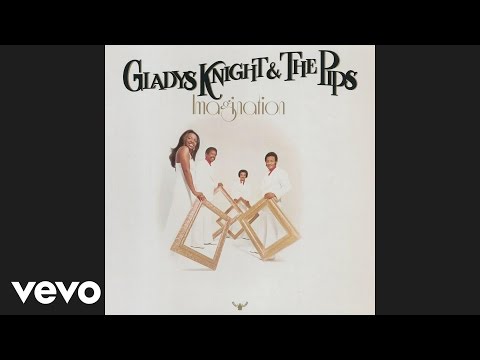



→ More from the 1960s File
View all 1960s hits →




Keep digging