The 1960s File Feature
I'm Telling You Now
Freddie And The Dreamers Bounce to the Top With I m Telling You Now Cast your mind back to the spring of 1965, when America was still giddy with Beatlemania …
01 The Story
Freddie And The Dreamers Bounce to the Top With "I'm Telling You Now"
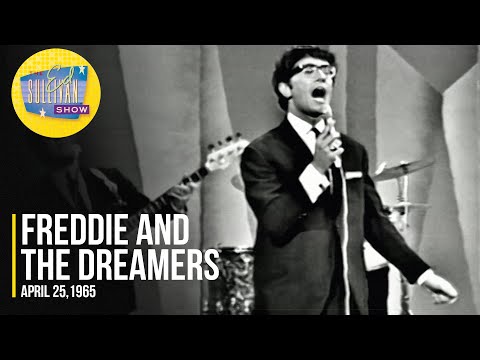
Cast your mind back to the spring of 1965, when America was still giddy with Beatlemania and radio programmers were snapping up nearly anything with a British accent and a catchy chorus. Into that frenzy leapt one of the most improbable and delightful acts of the entire British Invasion: Freddie And The Dreamers, fronted by the bespectacled, rubber-limbed Freddie Garrity, a man who danced like a jubilant scarecrow and sang with unshakeable good cheer. Their goofy charm and irresistible bounce turned "I'm Telling You Now" into a genuine phenomenon, and for one glorious week they sat atop the American pop world.
The British Invasion's Comic Sweethearts
Where many of their Invasion peers projected cool sophistication or moody intensity, Freddie And The Dreamers offered something entirely different: pure, unpretentious fun. Freddie Garrity was a natural comedian, prone to wild leaps and flailing arm movements that would soon inspire a dance craze of their own. The band embraced their novelty appeal without apology. They were not trying to be profound. They were trying to make you smile, and in the crowded field of 1965, that lighthearted approach became their calling card and their competitive edge.
A Delayed American Explosion
The song had already been a hit in Britain before it crossed the Atlantic, but its American life was a slightly delayed affair, catching fire once the Invasion floodgates were fully open. When it did land, it landed hard. "I'm Telling You Now" debuted on the Billboard Hot 100 at number 71 on March 13, 1965, and then began a dizzying ascent. Within a few weeks it had rocketed up the chart, leaping into the top twenty and then the top three. It reached number 1 on the Billboard Hot 100 during the week of April 10, 1965, giving the band the ultimate American prize. All told, the song spent eleven weeks on the Hot 100, a healthy run that cemented its status as a bona fide smash rather than a fleeting curiosity.
The Sound of Pure Cheer
Musically, the record is an exercise in exuberant simplicity. It rides a jaunty, upbeat melody, built around a warm and direct declaration of affection, delivered in Garrity's bright, unmistakable voice. There is nothing complicated here, and that is exactly the point. The arrangement is tight, tuneful, and utterly infectious, the kind of song that lodges in your head after a single listen and refuses to leave. In an era of increasingly ambitious pop, its unabashed simplicity felt refreshing rather than slight.
Riding the Wave to a Dance Craze
The band's success in America fueled the brief but memorable craze for "The Freddie," a dance based on Garrity's signature flailing moves. For a moment, they were everywhere, appearing on television and delighting audiences with their antics. The chart-topping success of this single made them one of the few Invasion acts to score a number one in the United States, a distinction that not even some far more critically lauded groups managed to achieve. Their moment in the sun was intense and, as it turned out, relatively brief.
A Joyful Footnote With Staying Power
History has tended to file Freddie And The Dreamers under novelty, and there is truth in that. Their fame did not have the staying power of the Invasion's giants. But a number one hit is a number one hit, and this song remains a joyful artifact of a specific, effervescent moment in pop history. Its roughly 70,000 YouTube views keep the good cheer flowing for new listeners stumbling upon it decades later.
Press Play and Try Not to Grin
Cue it up and let the bounce take over. It is impossible to stay glum through this one, and that, more than any chart statistic, is the enduring gift of Freddie And The Dreamers.
"I'm Telling You Now" — Freddie And The Dreamers' singular moment on the 1960s charts.
02 Song Meaning
The Simple Joy of "I'm Telling You Now"
Not every great song needs hidden depths, and "I'm Telling You Now" is proof. Its meaning sits right on the surface, plainspoken and unguarded: it is a straightforward, exuberant declaration of love, the kind of confession delivered with a grin rather than a tremble. In its uncomplicated sincerity lies its entire charm.
Love Stated Plainly
The lyric does exactly what its title promises. The narrator is telling his sweetheart, directly and without hesitation, that he loves her. There is no ambiguity, no game-playing, no elaborate metaphor. The central message is a joyful confession of affection, offered with the eager confidence of young love. That plainness is refreshing. In a pop landscape often filled with heartbreak and longing, here is a song that simply celebrates the happiness of being in love and wanting to say so out loud.
The Charm of Youthful Enthusiasm
What gives the song its personality is its infectious energy. This is not a mature, contemplative love song. It is the sound of youthful excitement, of feelings too big to keep inside. The bright, bouncy delivery embodies the giddiness of new romance, matching the words perfectly. Freddie Garrity's cheerful voice sells the sentiment completely, turning a simple statement into a burst of pure delight that audiences found impossible to resist.
A Reflection of Its Optimistic Era
The song's sunny disposition fit its cultural moment beautifully. The mid-sixties pop scene, especially the lighter side of the British Invasion, prized fun, melody, and good spirits. The track captured the era's appetite for cheerful, danceable pop, arriving when audiences were hungry for exactly this kind of feel-good entertainment. Its success was inseparable from that climate of youthful optimism sweeping across the Atlantic.
Why Simplicity Won Hearts
The song connected because it asked nothing of the listener except to enjoy it. Its message was universal and its mood irresistible. Everyone understands the impulse to declare love, and everyone responds to a melody that makes them want to bounce along. That combination of relatable feeling and pure fun proved to be a winning formula.
A Message That Travels Well
Part of the reason the sentiment landed so broadly is that it needs no translation. A declaration of love, offered plainly and happily, means the same thing in any language and in any decade. The song does not rely on clever wordplay or of-the-moment slang that might date it. It trusts the oldest emotional currency there is, and that trust is exactly why audiences on both sides of the Atlantic embraced it so eagerly and why it still charms listeners who were not even born when it first climbed the charts.
The Lasting Appeal of Feeling Good
Decades later, the song still works its modest magic. It reminds us that pop music does not always need to be deep to be meaningful. Sometimes the point is simply to make people happy, and by that measure, this cheerful little declaration succeeds completely. In an age when so much music strives to impress, there is something quietly radical about a song whose only ambition is to spread joy, and that unpretentious generosity keeps it welcome on any playlist. The best proof of its warmth is how hard it is to hear it without smiling, a small everyday miracle that no amount of chart analysis can fully explain.
→ More from Freddie And The Dreamers
View all Freddie And The Dreamers hits →
→ More from the 1960s File
View all 1960s hits →




Keep digging