The 1960s File Feature
When I Was Young
When I Was Young: Eric Burdon and The Animals Reinvent Themselves in Psychedelia By the spring of 1967, Eric Burdon had already demonstrated a willingness to…
01 The Story
When I Was Young: Eric Burdon and The Animals Reinvent Themselves in Psychedelia
By the spring of 1967, Eric Burdon had already demonstrated a willingness to evolve well beyond the rhythm-and-blues roots that had made the original Animals one of the defining acts of the British Invasion. The band that recorded When I Was Young was in many respects a different entity from the group that had stormed the American charts in 1964 with the House of the Rising Sun. The lineup had changed substantially, the musical influences had shifted dramatically toward American psychedelia and acid rock, and Burdon's lyrical preoccupations had moved from the relatively straightforward narrative concerns of early British R&B toward something more introspective and philosophically ambitious.
The new incarnation of the Animals, officially billed as Eric Burdon and the Animals, recorded When I Was Young for MGM Records in early 1967. The session reflected the profound influence that American West Coast rock had begun to exert on British acts visiting California. Burdon had spent considerable time in San Francisco and Los Angeles, absorbing the sounds emerging from those cities' rapidly developing rock scenes. The production on When I Was Young bears clear traces of this exposure, featuring a fuzz-heavy guitar tone, a drone-like rhythmic foundation, and an arrangement that owes more to the emerging conventions of psychedelic rock than to the Chicago blues and soul that had originally defined the Animals' sound.
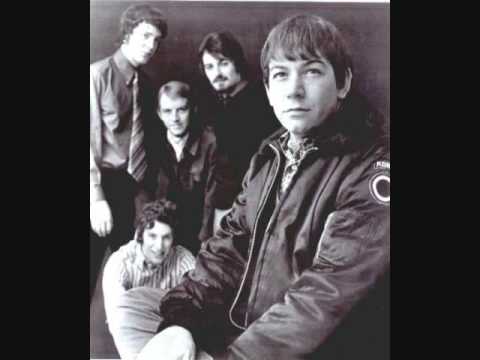
The lineup for the recording included Vic Briggs on guitar, Danny McCulloch on bass, John Weider on guitar and violin, and Barry Jenkins on drums. This ensemble was technically accomplished and stylistically versatile, capable of sustaining the kind of extended, texture-focused arrangements that psychedelic rock demanded. The guitar work on When I Was Young is particularly notable, using fuzz and sustain to create a dense, hypnotic quality that was significantly different from the clean, punchy guitar tones characteristic of earlier British Invasion recordings.
When I Was Young was released as a single in May 1967 and performed impressively on the Billboard Hot 100, reaching number fifteen in the United States. This was a meaningful chart achievement for a band that was effectively relaunching itself under a modified name with a substantially altered sound. The American market's receptiveness to the new direction was an encouraging signal, suggesting that Burdon's gamble on reinvention was commercially viable as well as artistically satisfying. The single also performed well in the United Kingdom and across Europe, where the band retained a strong following from their earlier success.
The album Eric Is Here, released on the same label earlier in 1967, had already suggested the direction Burdon was moving, but When I Was Young was the track that fully crystallized the new approach. Its success led to a productive period for the reformed lineup, with the single Monterey following later in the same year as a tribute to the Monterey International Pop Festival, which Burdon had attended and which had profoundly affected his sense of what popular music could accomplish as a cultural force.
MGM Records was enthusiastic about the commercial potential of the new direction and provided the band with resources for recording that had not always been available during the earlier Animals period. The label's American orientation also meant that the band had access to American session musicians and studios when required, giving the recordings a sonic character that bridged the British and American approaches to rock production in ways that were relatively uncommon for 1967.
Critical reception at the time was generally positive, with reviewers noting that Burdon had successfully navigated the transition from beat group to psychedelic rock act without sacrificing the raw vocal authority that had always been his primary musical asset. His voice, with its distinctive rasp and emotional directness, remained the central element of the recording even as everything surrounding it had changed. This continuity of vocal character gave the new material a connection to the band's earlier work that pure stylistic description might have suggested was absent.
The song's place in the broader narrative of British psychedelia is somewhat underacknowledged compared to the canonical status accorded to recordings by the Beatles, Pink Floyd, and others from the same period. When I Was Young demonstrates that the psychedelic moment was more widely distributed across the British music scene than the canonical account acknowledges, reaching acts with very different origins and commercial profiles than those usually celebrated as the movement's primary exponents.
In subsequent decades, the Eric Burdon and the Animals recordings of 1967 and 1968 have been periodically reassessed by critics interested in the full breadth of late-1960s British rock. When I Was Young consistently receives mention as one of the period's more successfully executed fusions of British rock intensity with American psychedelic influence, a recording that rewards the kind of close attention that canonical reassessment brings.
02 Song Meaning
Nostalgia as Critique: The Meaning of When I Was Young
When I Was Young is a song about the gap between remembered experience and present reality, a gap that the narrator perceives as loss even as the lyric suggests the earlier state was defined primarily by suffering. This is one of the more psychologically interesting aspects of the song: the childhood being mourned was not particularly happy, and yet it is mourned anyway, because the pain of youth was at least pure and uncomplicated in a way that adult life has failed to be.
Eric Burdon's vocal delivery makes this paradox viscerally audible. His performance communicates genuine grief for a past that his own lyric acknowledges was difficult. This is recognizable as a particular form of nostalgia, not for happiness itself but for the intensity of feeling that youth makes available before the accrual of experience begins to dull emotional response. The song thus addresses a specifically adult condition: the sense that feeling itself has become less available, that the very capacity for suffering has diminished along with the capacity for joy.
The psychedelic production context is not incidental to these themes. The fuzz guitar, the drone, and the generally hypnotic rhythmic quality of the recording all serve to locate the song in an altered state that mirrors the kind of consciousness Burdon's lyric is attempting to recover or at least describe. The production is itself a kind of nostalgic act, attempting to create through sonic means a state of heightened perception that the lyrics identify as the defining quality of youth. This coherence between form and content is one of the reasons the recording holds up well despite its obvious period character.
In 1967, the theme of lost innocence was central to the cultural conversation in both Britain and America. The counterculture was simultaneously celebrating youth and mourning its passage, insisting on the value of childlike perception while also recognizing that the social and political conditions of the late 1960s were destroying innocence at an accelerating rate. When I Was Young participates in this conversation without being reducible to a simple statement about it. The song is too personal in its emotional register to function as social commentary, and yet it is clearly speaking to anxieties that extended well beyond Burdon's individual biography.
The fact that Eric Burdon himself had recently reinvented his musical identity gives the lyric an additional autobiographical resonance. A man who has just shed one version of himself in favor of another is naturally preoccupied with questions of what is preserved and what is lost in such transitions. The mourning for youth in the lyric might also be read as a mourning for the earlier Eric Burdon, the rhythm-and-blues shouter who had defined the original Animals, now replaced by a psychedelic philosopher with broader and less certain ambitions. This reading is speculative but not unreasonable given the biographical context.
Within Eric Burdon and the Animals' catalog, When I Was Young functions as the track that most definitively announced the new direction and demonstrated that it was capable of generating genuine emotional impact rather than merely fashionable stylistic novelty. Its Hot 100 success meant that the reinvention was commercially validated, but the song's enduring reputation rests on more than its chart performance. It is a recording with sufficient emotional and thematic depth to sustain engagement from listeners who have no particular investment in the sociology of the British Invasion's later phases, and that kind of crossover appeal is the truest measure of a song's durability.
→ More from Eric Burdon & The Animals
View all Eric Burdon & The Animals hits →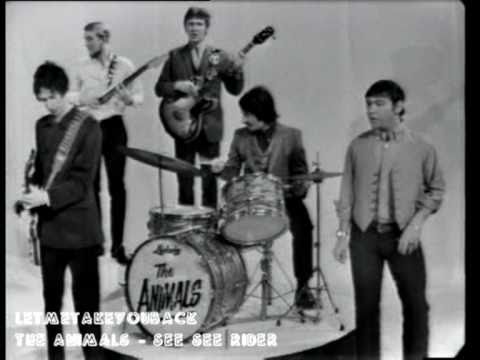

→ More from the 1960s File
View all 1960s hits →




Keep digging