The 1960s File Feature
Mack The Knife
Mack The Knife by Ella Fitzgerald By 1960, Ella Fitzgerald had earned a title that was hers without dispute: the First Lady of Song. Her voice was an instrum…
01 The Story
"Mack The Knife" by Ella Fitzgerald
By 1960, Ella Fitzgerald had earned a title that was hers without dispute: the First Lady of Song. Her voice was an instrument of impossible precision and warmth, capable of swinging the hardest bebop and caressing the tenderest ballad. When she took on "Mack The Knife," a song already made famous in English by Bobby Darin and reaching back to the German theatrical work of Kurt Weill and Bertolt Brecht, she did something only she could do. She turned a near-disaster into one of the most celebrated live recordings in jazz history.
The First Lady of Song at Her Peak
Fitzgerald had spent the 1950s recording her landmark songbook series, definitive interpretations of the great American composers that cemented her status as a vocal titan. She was a master of phrasing and swing, and crucially a fearless improviser. Her version of "Mack The Knife" came from a celebrated live performance captured in Berlin, the very city tied to the song's theatrical origins. That setting added a layer of meaning to an already loaded performance.
The Famous Forgotten Lyrics
What makes this recording legendary is what went wrong. Partway through, Fitzgerald forgot the words. Rather than stop, she did what only a true improviser could: she invented new lyrics on the spot, joking about forgetting the song, scatting through passages, and acknowledging the famous singers who had performed it before her. The audience adored every second of it. Her grace under pressure transformed a memory lapse into a showcase of pure musical wit, and the recording won her a Grammy Award. It stands as proof that a great artist's mistakes can be more thrilling than other performers' perfection.
A Hit From the Stage
The live recording crossed over to the pop audience. On the Billboard Hot 100, Fitzgerald's "Mack The Knife" debuted at number 94 on May 2, 1960 and climbed quickly, jumping to number 65, then 52, then 47 over the following weeks. It reached its peak of number 27 on June 27, 1960 and proved durable, spending 14 weeks on the chart. For a jazz vocalist working in a pop market increasingly dominated by rock and roll, that was a notable showing and a testament to her broad appeal.
Jazz Vocals in a Changing Market
The early 1960s were a complicated time for a jazz singer chasing pop success. Rock and roll had upended the music business, and the smooth standards that once dominated the airwaves were increasingly competing with a younger, louder sound. For a vocalist of Fitzgerald's generation, crossing over to the Hot 100 was no longer a given. That context makes her chart showing all the more impressive. A live jazz recording, built on improvisation and a decades-old theatrical song, finding a place among the pop hits of 1960 spoke to the sheer force of her artistry and the affection audiences still held for her. She proved that excellence could still cut through, even as the ground shifted beneath the entire industry.
A Cornerstone of Her Legacy
The performance has become one of the defining moments of Fitzgerald's storied career, endlessly cited as an example of improvisational genius. It captures everything that made her extraordinary, namely the joy, the swing, the quick thinking, and the sheer command of the stage. Decades later, the recording still delights newcomers and devotees alike, frequently held up in music classrooms and documentaries as a textbook case of grace under pressure. Its modest YouTube view count for an artist of her stature only reflects how its true legend lives in the world of jazz appreciation rather than viral fame.
Press play and listen to a master turn a stumble into a triumph in real time. Few recordings capture the magic of live jazz quite this vividly.
"Mack The Knife" — Ella Fitzgerald's singular moment on the 1960s charts.
02 Song Meaning
The Meaning Behind "Mack The Knife"
To understand "Mack The Knife," you have to look past its breezy swing to its surprisingly dark origins. The song began life as a number from The Threepenny Opera, the German theatrical work by Kurt Weill and Bertolt Brecht, and it introduces a charming, murderous criminal. The contrast between its cheerful melody and its sinister subject is the entire point.
A Portrait of a Charming Villain
The lyrics describe Macheath, a smooth and dangerous figure who moves through the underworld leaving violence in his wake. The genius of the writing is its lightness. It catalogs terrible deeds with a wink and a swing, presenting a murderer as a debonair man about town. That unsettling cheerfulness forces the listener to confront how easily charm can disguise cruelty.
Satire Beneath the Swing
In its original context, the song was pointed social commentary. Brecht used the figure of the gentleman criminal to critique a society that romanticizes the powerful and excuses the wealthy. The bouncy tune is a deliberate trick, luring you into tapping your foot to a story about a killer. That subversive layer gives the song a depth that its pop-hit popularity sometimes obscures.
What Fitzgerald Brought to It
In Ella Fitzgerald's hands, the song gained another dimension entirely. By forgetting and reinventing the lyrics, she turned the performance into a playful meta-commentary, joking about the song itself and the singers who came before her. Her version foregrounds joy and spontaneity, layering warmth and humor over the song's darker bones and making it an entirely different kind of statement. The menace of Macheath recedes, replaced by the delight of watching a great artist think on her feet.
Melody Against Menace
The enduring fascination of the song lies in the friction between its form and its content. A bouncy, almost vaudevillian tune carries a catalog of crimes, and that mismatch is no accident. By making something terrible sound delightful, the writers force the audience to examine its own willingness to be charmed. We tap our feet to a killer's exploits, and in doing so we become complicit in the very glamorization the song critiques. That uneasy pleasure is the engine of the piece, a trick that works on listeners whether or not they realize it is being played.
Why It Endures
The song has lasted because it works on multiple levels at once. It is a catchy standard, a piece of biting satire, and in Fitzgerald's case a display of live brilliance. That richness is why it keeps getting reinterpreted across generations and genres. Whether you hear it as a fun jazz number or a sly indictment of glamorized villainy, it rewards your attention, and that flexibility is the secret of its long life.
→ More from Ella Fitzgerald
View all Ella Fitzgerald hits →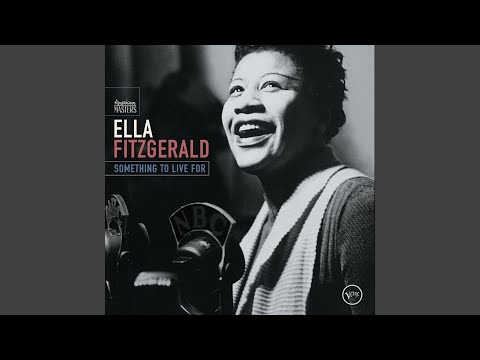
→ More from the 1960s File
View all 1960s hits →




Keep digging