The 1960s File Feature
My Cup Runneth Over
My Cup Runneth Over: Ed Ames and the Broadway Ballad That Became a Pop Standard In early 1967, Ed Ames released "My Cup Runneth Over," a song drawn from the …
01 The Story
My Cup Runneth Over: Ed Ames and the Broadway Ballad That Became a Pop Standard
In early 1967, Ed Ames released "My Cup Runneth Over," a song drawn from the Broadway musical I Do! I Do!, and watched it climb to number 8 on the Billboard Hot 100, where it remained for thirteen weeks. The achievement was notable on multiple levels: Ames was primarily known as a member of the Ames Brothers vocal group, a television personality from the long-running series Daniel Boone, and an occasional recording artist — not an obvious candidate for a significant solo pop hit. But "My Cup Runneth Over" was the right song at exactly the right moment, and its success reflected both the quality of the material and Ames's particular gifts as an interpreter of melodically rich, emotionally direct popular song.
The song was written by Tom Jones and Harvey Schmidt, the same creative team behind The Fantasticks, which holds the distinction of being the longest-running musical in history. I Do! I Do! was their 1966 Broadway production based on the play The Fourposter, following a married couple across fifty years of their life together. The original cast featured only two performers — Mary Martin and Robert Preston — and the intimate scale of the production gave its songs a personal, confessional quality that translated powerfully to the recording studio. "My Cup Runneth Over" was one of the show's central romantic statements, articulating a kind of overwhelmed gratitude for the presence of a beloved person in one's life.
Ames was born Edmund Dantes Urick in Malden, Massachusetts, in 1927, the son of immigrant parents. He and his siblings formed the Ames Brothers in the late 1940s, achieving significant commercial success throughout the 1950s with hits including "Rag Mop" and "You, You, You." When the vocal group sound fell out of fashion in the wake of rock and roll, Ames transitioned to solo work and acting, landing the recurring role of Mingo on the television series Daniel Boone from 1964 to 1968. His visibility as a television personality gave him a platform that many pure recording artists lacked, and he used it effectively to build an audience for his solo recordings.
The recording of "My Cup Runneth Over" was produced by Joe Reisman for RCA Victor, with an arrangement that balanced orchestral warmth against the intimate scale that the song's original Broadway context demanded. The key challenge was preventing the production from becoming so large that it overwhelmed the song's fundamental quality — its sense of private, almost inexpressible feeling. Reisman's arrangement walked that line successfully, providing enough orchestral support to give Ames's baritone a sympathetic frame without dwarfing it.
Ames's voice was particularly well suited to this material. His baritone had a quality of settled warmth , not the dark richness of a classical bass-baritone but something more accessible and personal, with enough tonal variation to communicate emotional nuance without resorting to theatrical exaggeration. The song's somewhat unusual structure, with its repeated title phrase serving as a returning emotional anchor, gave Ames multiple opportunities to shade the same words differently, and he took advantage of those opportunities with skill.
The commercial success of "My Cup Runneth Over" opened a brief but productive period for Ames as a solo recording artist. RCA Victor followed the hit with additional singles and albums, and Ames became a regular presence on television variety programs, performing material that drew on the Broadway, easy listening, and adult contemporary traditions. His subsequent hit "Who Will Answer?" reached number 19 in 1968, confirming that his appeal was genuine and sustained rather than a product of single-record luck.
The song's title draws on the biblical phrase from Psalm 23, "my cup runneth over," which describes a condition of abundance so complete that it exceeds the container meant to hold it. This allusion gives the song a depth of resonance that extends beyond its immediate romantic context, connecting the narrator's feeling of gratitude and fullness to a long tradition of language about grace and blessing. Many listeners may not have consciously registered the biblical reference, but its presence in the cultural unconscious gave the title phrase an additional emotional charge.
"My Cup Runneth Over" remains one of the more graceful examples of a Broadway song making a successful transition to mainstream pop , a transition that required both the quality of the original material and the right performer to render it accessible without diminishing it. Ed Ames provided exactly that, and the song's thirteen weeks on the Hot 100 documented an intersection of theatrical craft and popular taste that, at its best, produces something genuinely lasting.
02 Song Meaning
Grace in the Ordinary: The Meaning of "My Cup Runneth Over"
"My Cup Runneth Over" is a love song about the condition of feeling so fortunate in a relationship that the emotion exceeds one's ability to fully articulate or contain it. The governing image of the title, drawn from Psalm 23's description of abundance overflowing its vessel, gives the song an emotional register that sits at the intersection of romantic love and spiritual gratitude. It is not merely a declaration of affection but an expression of something closer to wonder — the sense that one has been given more than one expected or perhaps deserved.
The song's origins in I Do! I Do!, the Tom Jones and Harvey Schmidt musical about fifty years of married life, shape its thematic concerns in important ways. Unlike most pop love songs, which tend to focus on early romantic stages — attraction, pursuit, the excitement of new connection — "My Cup Runneth Over" belongs to a tradition of songs about sustained, mature love. It is addressed to someone the narrator knows deeply and has lived with long enough to understand the full dimensions of what that person means to him. The gratitude it expresses is not the gratitude of new love but the settled, reflective appreciation of someone who has had time to understand what he has.
This temporal depth is unusual in popular song and accounts for much of the song's emotional distinctiveness. Most love songs freeze time — they inhabit a particular moment of romantic intensity. "My Cup Runneth Over" is aware of time's passage and finds in that awareness not loss but enrichment. The love it describes has been tested by the ordinary demands of shared life and has been found not merely adequate but genuinely abundant. The cup that runneth over is one that has been filled by years of accumulated experience, not simply by the initial rush of romantic feeling.
Ed Ames's vocal performance brings a quality of mature sincerity to the material that is essential to its success as a recording. The song does not work if it sounds performed , if the listener senses that the singer is presenting emotion rather than expressing it. Ames's baritone has a quality of directness that makes the sentiment feel earned and genuine, not theatrical. This is a difficult tonal balance to strike, and his success in achieving it is central to why the recording connected with such a large audience.
The song also engages with a kind of verbal inadequacy that is itself a form of emotional authenticity. The narrator acknowledges, explicitly, that words are insufficient to express what he feels , that the fullness of his love exceeds his capacity to describe it. This is a sophisticated rhetorical move: by admitting that language fails, the song actually communicates more vividly than it could through confident description. The inadequacy of words becomes the most precise available index of the feeling's magnitude.
The biblical allusion in the title adds a layer of meaning that operates whether or not the listener consciously registers it. Psalm 23's language of abundance, of a table prepared in the presence of enemies and a cup overflowing, carries centuries of association with grace, protection, and the experience of being cared for beyond one's circumstances. Applying that language to romantic love elevates the relationship to something beyond mere human affection , it becomes a form of grace, an unearned gift. Tom Jones and Harvey Schmidt's decision to place that imagery at the center of a love song was both culturally literate and emotionally wise.
In the landscape of 1967 popular music, "My Cup Runneth Over" stood apart from the more turbulent sounds and more explicitly countercultural themes that were reshaping the pop mainstream. Its audience was real and substantial, however, because the emotional experience it described , of finding in a long-term relationship a source of joy that exceeded expectation , was universal enough to transcend any particular demographic or cultural moment. The song's nine weeks on the Hot 100 documented an appetite for music that celebrated the richness of ordinary domestic love, a subject that pop music has always needed and has always, in its best moments, honored.
→ More from Ed Ames
View all Ed Ames hits →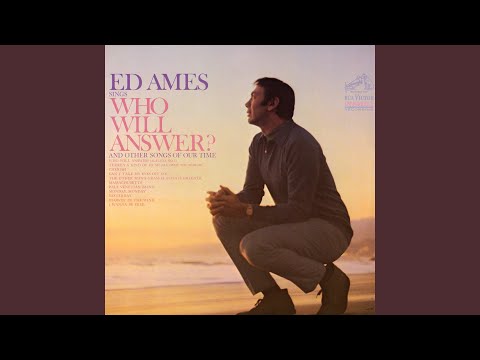

→ More from the 1960s File
View all 1960s hits →




Keep digging