The 1960s File Feature
Colours
Donovan's "Colours": A Gentle Manifesto at the Dawn of British Folk-Pop's American Arrival In the summer of 1965, a young Scottish singer-songwriter named Do…
01 The Story
Donovan's "Colours": A Gentle Manifesto at the Dawn of British Folk-Pop's American Arrival
In the summer of 1965, a young Scottish singer-songwriter named Donovan Leitch was navigating one of the more peculiar positions available to a British musician of his generation: simultaneously celebrated and condescended to. His resemblance to Bob Dylan, both in acoustic guitar-and-harmonica aesthetic and in his self-presentation as a troubadour of social conscience, had made him a target for critics who dismissed him as derivative even as audiences on both sides of the Atlantic responded to his work with genuine warmth. "Colours" was released as a single in 1965, entering the Billboard Hot 100 on August 14 of that year at number 95 and climbing to its peak of number 61 on September 18. It was one of his first significant American chart placements, arriving alongside "Catch the Wind," and it announced the American presence of a voice that, whatever its debts to Dylan, possessed its own distinctly lyrical and gently psychedelic quality.
Donovan had signed with Pye Records in the United Kingdom, and his recordings reached the United States through arrangements that were common in the mid-1960s, when the British Invasion had made American labels intensely interested in whatever was emerging from the UK folk and pop scenes. The timing of "Colours" American release placed it squarely in the middle of a transitional moment in folk music on both sides of the Atlantic: Bob Dylan had just released "Bringing It All Back Home" and was about to unleash "Highway 61 Revisited," moves that electrified the acoustic folk scene in the most literal sense and generated enormous controversy among purists who felt that rock instrumentation betrayed the music's social mission.
Donovan's response to this moment was characteristically oblique. Rather than following Dylan into electric territory, he continued for a period with the acoustic approach that had defined his early recordings, and "Colours" belonged to that phase. The song's production, featuring Donovan's acoustic guitar and vocals with relatively sparse accompaniment, positioned it clearly within the folk tradition while the lyrical content moved in a more impressionistic, less politically engaged direction than the protest song conventions that had dominated the genre in the early 1960s. The British spelling "Colours" in the title was a small but deliberate marker of the song's cultural origin, a detail that American radio programmers left intact when the record crossed the Atlantic.
The songwriting on "Colours" demonstrated that Donovan, whatever his surface similarities to Dylan, was pursuing a fundamentally different poetic project. Where Dylan was moving toward dense allegorical complexity and social critique delivered with bristling irony, Donovan was exploring a gentler, more sensory mode of expression, one rooted in the natural world, in color and light and the quiet dramas of the changing seasons and times of day. This impressionistic approach would eventually feed into the psychedelic sound he developed with producer Mickie Most, but in 1965 it existed in a relatively pure acoustic form.
Mickie Most, who would become Donovan's most important production collaborator and the architect of his greatest commercial successes, was not yet involved with "Colours," which represented an earlier phase of the artist's recording career. The production credited to Terry Kennedy for the UK release was characteristically simple, designed to let the voice and the guitar carry the primary burden of expression. This approach suited the material well: the song's delicacy required space rather than density, and the spare arrangement gave Donovan's vocal phrasing room to breathe and the lyrical images room to resonate.
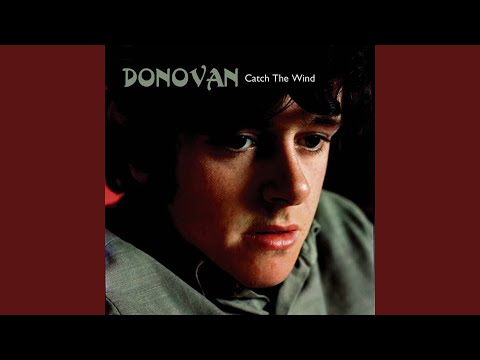
The Billboard Hot 100 performance of "Colours," while modest by the standards of Donovan's later commercial peaks, was significant as an early indicator of the American audience's receptiveness to his particular brand of gentle folk poetry. "Catch the Wind," released in the same period and climbing to number 23 on the American chart, outperformed "Colours" commercially, but both records together established Donovan's American identity at a critical moment when the market for acoustic singer-songwriters was being shaped by multiple competing forces.
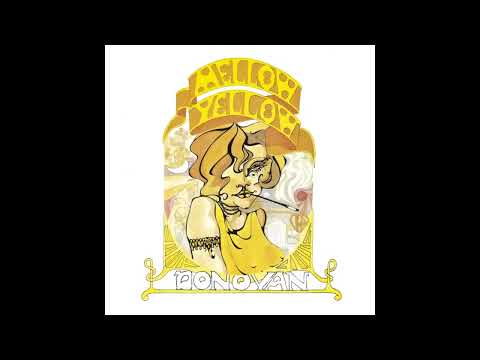
Donovan's career would evolve dramatically over the following two years, as his collaboration with Mickie Most and his embrace of more elaborate production values transformed him from an acoustic folk artist into a pioneer of a distinctly British psychedelic-pop sound. Songs like "Sunshine Superman," "Mellow Yellow," and "Hurdy Gurdy Man" would represent his commercial peak, but "Colours" remained an important document of his folk origins and of the particular moment in mid-1960s music when the boundaries between folk, pop, and the emerging psychedelic aesthetic were at their most fluid and generative.
The record's position in the broader history of the British Invasion is an interesting one. Donovan was not part of the initial wave of British acts who had followed the Beatles into American consciousness in 1964, and his acoustic folk aesthetic placed him at some distance from the beat group sound that had dominated that initial wave. He was, in a sense, part of a second, more diverse wave of British talent that demonstrated the range and depth of what British popular music was producing in the mid-1960s. "Colours" was a quiet but genuine contribution to that larger story.
02 Song Meaning
Light, Time, and Feeling: The Sensory Language of Donovan's "Colours"
"Colours" belongs to a tradition of poetry and song that approaches emotional experience through the mediation of sensory perception rather than through direct statement. Rather than describing love or longing in abstract terms, Donovan uses the concrete imagery of morning light, yellow and green and red and white, as a vehicle for something essentially ineffable: the quality of a particular feeling at a particular moment in time. This approach, which connects the song to the Imagist tradition in twentieth-century poetry and to a longer lineage of lyric poetry that uses natural imagery as emotional language, was central to Donovan's artistic identity from the very beginning of his career.
The use of color as an expressive device has deep roots in Western culture. Colors carry associative emotional weights that operate partly through cultural convention and partly through some more primary visual-emotional connection, and poets and songwriters have exploited these associations throughout the history of lyric composition. Donovan's particular use of color in the song moves beyond simple association, however, allowing different colors to mark different emotional states or different moments in the relationship's arc, creating a kind of emotional grammar built from light and shade.
The song's temporal structure is also worth examining. "Colours" moves through different times of day, using the changing quality of light at different hours as a way of charting the emotional rhythm of a relationship or a state of mind. This technique connects the song to a long tradition of aubades and nocturnes, compositions organized around the transition between light and darkness, and gives it a cyclical quality that suggests the continuity of feeling across time rather than locating it in a single dramatic moment. The emotional experience the song describes is not a crisis or a revelation but something more ongoing and pervasive, woven into the fabric of daily experience.
The folk music tradition that shaped Donovan's early work had always valued simplicity and directness, privileging clarity of expression over ornamentation or complexity. But "Colours" demonstrates that simplicity need not mean obviousness, that the most apparently straightforward lyric can contain considerable depth when its imagery is chosen with sufficient care and precision. The song's apparent simplicity is, on examination, an achieved quality rather than a default one, the result of careful selection rather than absence of thought.
The song also participates in a specific cultural moment in which the natural world was being rediscovered as a source of value and meaning in opposition to the increasing urbanization and mechanization of modern life. The folk revival of the early 1960s had drawn in part on this impulse, connecting audiences to older musical traditions rooted in rural and communal experience, and the songs that emerged from that revival often used natural imagery to mark their distance from the pressures and alienations of contemporary urban culture. Donovan's "Colours" fits within this broader cultural project while also doing something more personal and intimate with its natural imagery.
The decision to retain the British spelling of the title, with its distinctive "u," is a small but telling detail. It marks the song as coming from a specific cultural tradition, one shaped by a particular linguistic and literary heritage, and it reminds American listeners that they are encountering a voice formed by influences and experiences different from those of domestic American folk artists. That difference was part of what made Donovan's early work interesting to American audiences: it offered a version of the folk aesthetic that was recognizable in its broad outlines but inflected by something distinctly other, a quality of light and feeling that seemed to come from a different landscape and a different tradition of lyric expression.
In the end, "Colours" earns its place in the canon of mid-1960s folk-pop not through formal ambition or conceptual complexity but through the simple effectiveness of its sensory language, its ability to make a listener feel the quality of a particular kind of morning light or evening mood through the precision of its imagery. That achievement, modest in scale but genuine in its execution, represents the song's deepest contribution to the art form it inhabits.
→ More from Donovan
View all Donovan hits →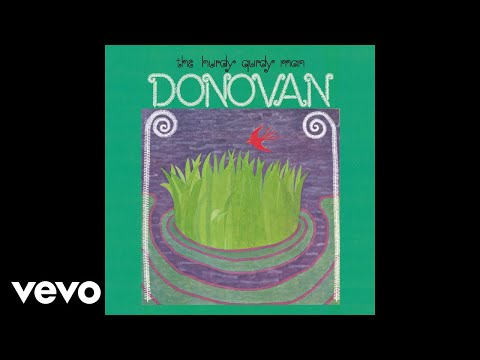

→ More from the 1960s File
View all 1960s hits →




Keep digging