The 1960s File Feature
(There's) Always Something There To Remind Me
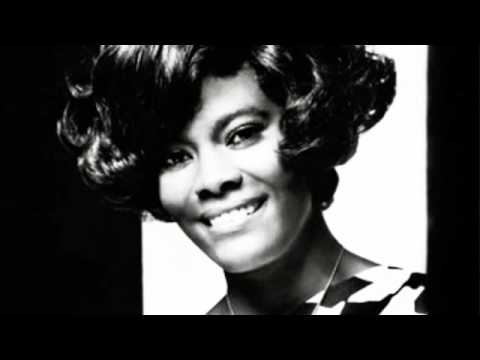
"(There's) Always Something There To Remind Me" — Dionne Warwick A Song With Multiple Lives Some songs are born more than once. The Burt Bacharach and Hal Da…
01 The Story
"(There's) Always Something There To Remind Me" — Dionne Warwick
A Song With Multiple Lives
Some songs are born more than once. The Burt Bacharach and Hal David composition that became "(There's) Always Something There To Remind Me" had already had a significant commercial life before Dionne Warwick recorded her version in 1968. Sandie Shaw had taken it to number one in the United Kingdom in 1964, making it one of the era's defining recordings of wistful romantic memory. Lou Johnson had also recorded it for the American market in that same year. By the time Warwick approached the material, the song had a history, a set of associations, a reputation.
What Warwick brought to the track was the full weight of her singular relationship with the Bacharach-David songwriting partnership. By 1968, she had already recorded some of the most celebrated interpretations of their work: Walk On By, Anyone Who Had a Heart, Do You Know the Way to San Jose. Her voice had become, in a very real sense, the defining sound of Bacharach's sophisticated harmonic language and David's emotionally precise lyrics. For her to record (There's) Always Something There To Remind Me was to bring the song home to its most natural interpreter.
The Scepter Records Era
By 1968, Warwick had been recording for Scepter Records since 1962, making her one of the label's flagship artists through the mid-decade period when Bacharach and David were producing a sustained run of hits for her. The creative triangle of Warwick, Bacharach, and David represented one of the most productive and creatively distinctive relationships in 1960s American pop: a songwriter-producer team who wrote specifically for a single artist's voice, and a singer who had grown into those compositions with increasing sophistication.
The late-1960s recordings from this period carry a particular elegance. The arrangements, with their sophisticated use of strings, brass, and rhythm section, reflected Bacharach's training in classical music and his ear for unusual chord movements. The production placed Warwick's voice in a space that was simultaneously intimate and cinematic, a quality that made her recordings work equally well on a car radio and through headphones.
The 1968 Chart Run
Warwick's recording debuted on the Hot 100 on August 31, 1968, entering at position 85. Over the following weeks, it climbed through the chart, reaching its peak position of number 65 on September 21, 1968, spending five weeks on the chart in total. The chart performance was modest by the standards of Warwick's biggest hits, but it represented consistent radio presence for an artist who at that point had an established audience ready to receive new material with enthusiasm.
The summer and fall of 1968 was an extraordinarily eventful moment in American cultural history. The assassination of Robert Kennedy, the unrest at the Democratic National Convention, and the broader turbulence of a deeply divided country created a particular emotional climate around music consumption. Songs about memory and lingering emotional connection resonated differently against that backdrop than they might have in quieter times, offering listeners a privately scaled emotional shelter from the publicly scaled upheavals around them.
The Bacharach-David-Warwick Creative Triangle
This recording stands as one example of the remarkable consistency with which Bacharach and David tailored their compositions to Warwick's voice. The song's melodic line moves in ways that showcase her particular strengths: her precise intonation on complex intervals, her ability to bring intimacy to a lyric without sentimentality, and her natural warmth of tone that prevents sophisticated material from feeling cold or academic. These qualities, which Bacharach had identified and built around from their earliest collaborations, were fully developed by 1968, and the recording reflects a performer at the height of her powers working with material perfectly suited to those powers.
Press play and hear what it sounds like when a great song finds its perfect voice.
"(There's) Always Something There To Remind Me" — Dionne Warwick's singular moment on the 1960s charts.
02 Song Meaning
"(There's) Always Something There To Remind Me" — Memory, Loss, and the Persistence of Love
The Inescapable Past
The central emotional territory of this song is one of the most universally recognized experiences in human life: the way that a former relationship persists in the present through sensory triggers, places, objects, and unexpected associations that ambush the mind without warning. The narrator of the lyric cannot escape their former love because the world is saturated with reminders. Every corner of the environment, every familiar sight and sound, carries the imprint of the person who is no longer there.
Hal David's lyrical approach to this theme is characteristically precise without being clinical. He identifies specific kinds of remembering, the songs on the radio, the places you used to visit together, the faces in the crowd that recall the absent person, and assembles them into a portrait of how memory actually works: involuntarily, associatively, resistant to the conscious mind's desire to move on.
Bacharach's Musical Architecture of Longing
Burt Bacharach set David's lyric to music that encodes the emotional experience it describes at every level. The harmonic language is rich with unexpected chord movements that create a sense of emotional instability, of ground that shifts beneath the feet. These are not the simple chord progressions of folk or early rock and roll; they are sophisticated constructions that keep the listener slightly off-balance, which is exactly the emotional state the lyric describes.
The song's structure also deserves attention. The melodic line breathes in a way that feels conversational, rising to moments of heightened emotion and settling back into quieter registers in a pattern that mirrors the rhythm of memory itself: sudden surges of feeling followed by attempts at composure. This structural intelligence is one of the reasons Bacharach-David compositions have remained in active performance and recording rotation long after many of their contemporaries have faded.
1968: Romance in a Year of Turmoil
The year in which this recording charted was one of the most politically and culturally turbulent in American history. The assassinations of Martin Luther King Jr. and Robert Kennedy, the Vietnam War's mounting toll, and the social upheaval visible on television every evening created a collective atmosphere of anxiety and grief. Popular music in this environment served multiple functions: as commentary on the turmoil, as escape from it, and as a space where more personal and private emotions could be processed.
Songs about romantic loss provided that private emotional space. When public grief was so pervasive and so politically charged, the more intimate grief of a ended relationship offered listeners a controlled emotional environment in which to experience sadness, one that was personal and manageable rather than historical and overwhelming. Warwick's recording met that need with particular grace.
Warwick as Interpreter
Dionne Warwick's interpretive gifts are fully deployed in this recording. She possesses a quality that the best vocal interpreters share: the ability to make a lyric feel simultaneously universal and deeply personal, as though she is singing both for herself and for everyone who has ever felt what the song describes. Her tone carries warmth without sentimentality, and her phrasing reveals the intelligence behind the emotion rather than obscuring it.
The Bacharach-David-Warwick collaboration produced a body of work that stands as one of the signal achievements of 1960s American popular music, and recordings like this one demonstrate why. The sophistication of the composition, the precision of the lyric, and the warmth of the performance combine into something that exceeds any of its individual elements.
The song has survived multiple decades and multiple cover versions because the emotional experience it describes is permanent. People will always be ambushed by memory, will always encounter the ghost of someone they loved in unexpected places. The song gives that experience a form, and Warwick's recording gives that form its most fully realized expression.
→ More from Dionne Warwick
View all Dionne Warwick hits →



→ More from the 1960s File
View all 1960s hits →




Keep digging