The 1960s File Feature
Alfie
"Alfie" — Dionne Warwick A Film, a Question, and a Voice That Could Carry the Weight The year 1966 produced a British film that asked one of the most uncomfo…
01 The Story
"Alfie" — Dionne Warwick
A Film, a Question, and a Voice That Could Carry the Weight
The year 1966 produced a British film that asked one of the most uncomfortable questions a mainstream movie had dared to pose in some time: what is it all for? Michael Caine played the title character, a charming, self-serving London womanizer who drifted through life using people and evading consequence, and the film's final scene left audiences staring at a kind of moral emptiness. The song written to accompany that film asked the same question in a different form, setting it to a melody of aching beauty and entrusting that melody to one of the finest voices in popular music. Burt Bacharach and Hal David wrote "Alfie" for the film, and Dionne Warwick's recording of it became the version American audiences embraced most fully.
Warwick had been one of the defining voices of the early-to-mid 1960s, her partnership with Bacharach and David producing a remarkable sequence of hits that showcased both her technical precision and her emotional range. By the time Alfie arrived in 1967, she was established as one of the most sophisticated pop vocalists working, capable of navigating the demanding melodic contours that Bacharach composed with what seemed like effortless grace. The song gave her something that suited her gifts perfectly: a lyric of genuine philosophical depth, wrapped in a melody that required real skill to perform without over-sentimentalizing it.
Bacharach and David at Their Peak
By 1967, Burt Bacharach and Hal David had developed one of the most distinctive compositional voices in American popular music. Their songs moved in unexpected rhythmic patterns, modulated to keys that felt surprising but inevitable on arrival, and carried melodies of genuine sophistication that nevertheless lodged immediately in the listener's memory. Alfie represented their craft at a particularly high level. The melody is not easy: it moves through a wide range, lingers in the upper register in ways that expose a vocalist's technical limitations, and demands emotional commitment across a long sustained arc. Lesser singers had recorded the song; Warwick made it hers.
Hal David's lyric for Alfie was unusual for a film song in that it didn't describe the plot or celebrate the characters. Instead, it asked the question the film raised and let it hang. The language is simple and the questions are fundamental, addressing the nature of kindness, love, and whether a life lived purely for oneself constitutes any kind of life at all. That a song with this kind of content could reach the upper levels of the pop charts in 1967 says something about the audience's appetite for substance at that particular moment.
The Chart Story
Warwick's recording of Alfie debuted on the Billboard Hot 100 on April 8, 1967, entering at number 95 and beginning one of the longer chart runs of her career to that point. The ascent was gradual rather than meteoric, which suited the song's reflective character. It climbed steadily through the spring, reaching its peak of number 15 on July 1, 1967, after spending seventeen weeks on the chart. Seventeen weeks is a remarkable duration that speaks to sustained radio support and listener attachment rather than a short burst of novelty appeal.
The song won Warwick a Grammy Award for Best Female Pop Vocal Performance in 1968, one of several Grammy recognitions in her career and a confirmation that industry peers recognized the achievement the recording represented. In a year crowded with landmark releases, the recognition stood out.
Warwick, Bacharach, and the Legacy
The Warwick-Bacharach-David partnership is one of the most celebrated in pop history, producing a catalog that has proven genuinely durable. Dionne Warwick's discography from this period reads like a master class in sophisticated pop: melodically ambitious, lyrically intelligent, and performed with a consistency that almost defies the pace at which the material was produced. Alfie sits near the top of that catalog, the song that perhaps most clearly demonstrated what the partnership was capable of when the material demanded everything they had to offer.
The Cilla Black version was released first in the UK and performed well there, but in America it was Warwick who defined the song. That kind of ownership is rare and speaks to how completely her performance aligned with what the song required. There are songs that could be improved by a different performance and songs that feel as though the singer and the material found each other at exactly the right moment. Alfie, as sung by Dionne Warwick, is the second kind.
A Song That Outlasts Its Era
Decades removed from its chart run, Alfie continues to be performed, covered, and cited as an example of what popular songwriting can accomplish when it reaches for something beyond the ordinary. The question it asks has not become easier to answer. The combination of Bacharach's melody, David's lyric, and Warwick's voice produced something that transcended the commercial context in which it appeared and became part of the permanent furniture of American song. Put it on in a quiet room and the question comes at you fresh.
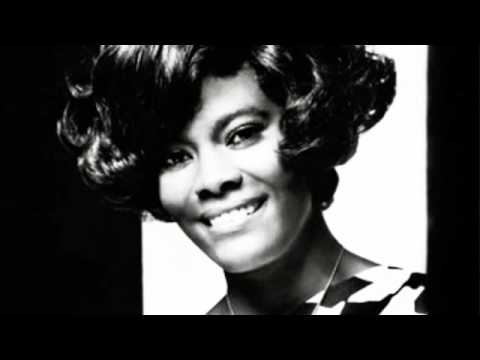
"Alfie" — Dionne Warwick's singular moment on the 1960s charts.
02 Song Meaning
"Alfie" — The Question Behind the Song
Philosophy in a Pop Melody
There is something genuinely unusual about a major pop hit organized around a philosophical question rather than a narrative or an emotional declaration. Alfie doesn't tell a story in the conventional sense; it poses an inquiry into the nature of a life, asking whether existing without love, kindness, or genuine connection amounts to anything meaningful. Hal David's lyric frames the question with deceptive simplicity, using plain language to approach something that moral philosophers have debated for centuries. The genius of the song is that it makes this inquiry feel personal and immediate rather than abstract.
The film that inspired it presented a character who had organized his entire existence around pleasure and self-interest, and the song asks, quietly and without condemnation, whether that constitutes a sufficient reason for being. This is not a rhetorical question with an obvious answer. The lyric holds genuine space for ambiguity, which is part of why the song retained its resonance long after the film it accompanied had faded from immediate memory.
Themes of Loneliness and Self-Deception
Beneath the graceful surface of the melody, Alfie is a song about a particular kind of loneliness: the kind that comes from living entirely on one's own terms, taking without giving, moving through relationships without genuine investment. The lyric does not lecture. It simply asks what a person is left with when the pleasures and the conquests and the clever evasions add up. That question sat at the emotional center of a particular mid-1960s anxiety about what the loosening of traditional social bonds actually produced for the individual.
The counterculture was arguing that freedom from convention was liberating. The film, and by extension the song, examined what that freedom looked like from the inside when the surface glamour had worn away. This gave the recording a complexity that pop songs rarely attempted, and it found an audience because the question was one many listeners were asking themselves, even if they wouldn't have phrased it in those terms.
Dionne Warwick's Emotional Architecture
The meaning of Alfie is inseparable from the way Warwick sings it. A different performance could have made the song feel accusatory, preachy, or maudlin. Warwick's vocal approach is compassionate and searching, as though she is genuinely puzzling over the question rather than delivering a verdict. This interpretive choice is crucial. The song becomes an act of inquiry rather than judgment, and that posture made it accessible to listeners who might have resisted a more moralistic delivery.
The technical demands of the melody also served the emotional content. The song climbs into registers that require effort, and that effort is audible in performance. When a melody is physically demanding to sustain, the act of sustaining it communicates something about the weight of what is being said. Warwick made that weight felt without letting it become burden.
Resonance Across Generations
The question Alfie poses has not become less urgent. If anything, the cultural emphasis on individual fulfillment, personal branding, and self-optimization that has accelerated in subsequent decades gives the song's central inquiry fresh relevance. A generation raised on social media performance and curated self-presentation might find the Alfie question more pressing, not less, than audiences did in 1967. Whether any of it amounts to a genuine life is the kind of question the song refuses to answer definitively, and that refusal is a mark of its seriousness.
Numerous artists have recorded and performed Alfie in the decades since Warwick's version topped out on the Hot 100. Cher's recording for the 2004 film remake introduced the song to another generation. Each revival confirms that the song's themes are not period-specific but structural to the human situation. Songs that ask the right question outlast songs that deliver easy answers, and Alfie has always known which kind of song it is.
"Alfie" — Dionne Warwick's singular moment on the 1960s charts.
→ More from Dionne Warwick
View all Dionne Warwick hits →
→ More from the 1960s File
View all 1960s hits →




Keep digging