The 1960s File Feature
After Loving You
"After Loving You" — Della Reese's 1965 Hot 100 Entry The summer of 1965 was an extraordinary season for American popular music. Bob Dylan went electric at N…
01 The Story
"After Loving You" — Della Reese's 1965 Hot 100 Entry
The summer of 1965 was an extraordinary season for American popular music. Bob Dylan went electric at Newport. The Beatles released Help!. Soul was cresting with artists like Otis Redding, Sam Cooke's recordings were still in wide circulation after his death the previous December, and the pop mainstream was absorbing more Black music than at perhaps any previous moment. Into this rich environment came Della Reese with "After Loving You," a sophisticated adult ballad that placed her very briefly on the Hot 100 and demonstrated the breadth of the market that existed for serious, fully developed vocal performances.
Reese's Foundation as a Vocalist
By 1965, Della Reese had been a professional singer for more than a decade. She had roots in gospel music, having sung with Mahalia Jackson's group as a teenager in Detroit, and that training gave her voice a depth and authority that distinguished her from pop singers with more purely commercial backgrounds. She had scored significant chart success in the late 1950s with songs like "Don't You Know" in 1959, which reached number 2 on the Hot 100, establishing her as a serious commercial presence in the adult pop market. By 1965 she was a known quantity, respected as a craftsperson with genuine emotional range.
Chart Performance
"After Loving You" debuted on the Billboard Hot 100 on July 31, 1965, entering at position 99. The following week it climbed to its peak of number 95 on August 7, 1965, and then departed the chart, yielding a total run of two weeks. These numbers reflect a modest commercial showing for a single from an established artist; the record found its primary audience on adult contemporary and pop radio formats rather than on the youth-oriented stations that were driving Hot 100 action in the summer of 1965.
Adult Contemporary Before the Format
Della Reese's commercial home was what would later be formally defined as the adult contemporary market: listeners who wanted sophisticated vocal performances, melodic songs, and production values that prioritized clarity and emotional expressiveness over raw energy or rhythmic excitement. This market was substantial in the mid-1960s, fed by buyers who had grown up on the popular standards tradition and who were not particularly engaged by the British Invasion or folk rock. Reese served this audience reliably through the 1960s, and "After Loving You" was consistent with the kind of material that she handled with particular skill.
A Career Larger Than Any Single
Reese's significance extends far beyond any individual chart placement. She had a remarkable career arc that moved from gospel to pop to jazz to television, eventually becoming widely recognized for her role in the television drama Touched by an Angel from 1994 to 2003. As a singer she left a body of work that showcases what first-class vocal training applied to emotionally intelligent material sounds like. "After Loving You" is a small but characteristic piece of that body of work, and it repays the few minutes it takes to press play on it. Reese's career continued through decades of change in the music and television industries, and she maintained artistic credibility in each new context she entered. Her gospel roots gave her a center of gravity that purely commercial entertainers often lack, and recordings like this one reflect that groundedness: the technique is deployed in service of genuine feeling rather than as a display of skill for its own sake. The two-week Hot 100 appearance was not the measure of her artistic achievement; it was simply the commercial register of a moment in a career that operated at a higher level than any single chart position could indicate. Her 1959 pop breakthrough with "Don't You Know" had placed her in a select group of artists who successfully navigated between the gospel tradition and the mainstream pop market, and she continued that navigation with sophistication through the 1960s without compromising either the craft or the emotional honesty that her gospel background demanded.
"After Loving You" — Della Reese's singular moment on the 1960s charts.
02 Song Meaning
Loss and Aftermath in Della Reese's "After Loving You"
The emotional territory of "After Loving You" is the period that comes after love has ended rather than the love itself. This is psychologically specific and often underrepresented in popular song, which tends to favor either the height of romantic feeling or the acute pain of fresh heartbreak. The "after" in the title suggests something more sustained: the changed landscape of a person who has loved deeply and must now navigate life without that presence. This particular emotional focus suited Della Reese's vocal capabilities, which tended toward the reflective and the fully inhabited rather than the dramatically explosive.
Adult Emotional Intelligence
The song belongs to a tradition of pop balladry aimed at adult listeners who have enough experience to recognize the specific feeling of emotional aftermath. The teenage pop market that dominated the Hot 100 in the mid-1960s generally dealt in anticipation and the intensity of new feeling. Songs for adults often operated differently, addressing the emotions that follow experience rather than those that precede it. Reese was primarily an artist for adult listeners, and her interpretive approach in "After Loving You" reflected that orientation: unhurried, emotionally precise, technically confident. She did not need to perform urgency because the song was about something that had already passed.
Gospel Roots and Secular Application
Reese's gospel training is audible even in a secular love song. Gospel performance cultivates the ability to inhabit a lyric completely, to sound as though the words being sung are being experienced in real time rather than performed from a position of comfortable distance. This quality, which Mahalia Jackson embodied supremely and which Reese absorbed through direct contact with that tradition, gives secular love songs an added emotional dimension when it is applied to them. The sense that something real is at stake in the performance elevates material that might otherwise feel conventional.
The 1965 Context
In the mid-1960s, serious adult pop ballads competed for attention with a music scene that was generating considerable excitement and novelty from younger artists. The cultural energy was flowing toward rock and soul experimentation, and adult contemporary pop risked sounding staid by comparison. But the audience for carefully crafted, emotionally mature vocal performance never disappeared, and artists like Reese served that audience faithfully. Her brief Hot 100 appearance in 1965 reflects both the commercial reality (a smaller mainstream audience for this material in that particular season) and the genuine artistic quality that made her recordings worth seeking out.
A Vocal Tradition
The lineage that runs from gospel to pop balladry, through artists like Reese, leads directly to the sophisticated soul and R&B vocal traditions that followed. Understanding what Reese was doing in the mid-1960s helps illuminate what became possible later. Her approach to emotional material treated it as worthy of the full application of technique and feeling, without apology for the sophistication involved. That combination of seriousness and accessibility remains the standard for this kind of singing.
→ More from Della Reese
View all Della Reese hits →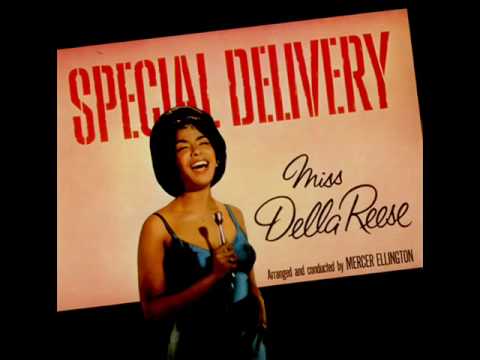



→ More from the 1960s File
View all 1960s hits →




Keep digging