The 1960s File Feature
In The Chapel In The Moonlight
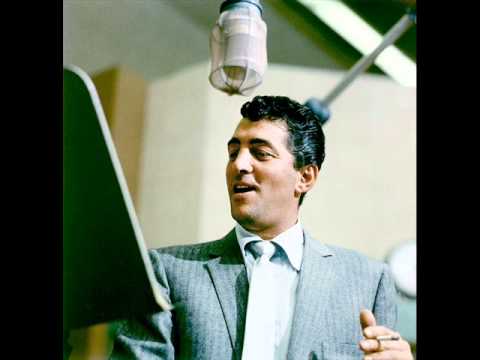
"In the Chapel in the Moonlight" — Dean Martin's Summer of Romance The Last of the Great Saloon Singers By the summer of 1967, Dean Martin had achieved somet…
01 The Story
"In the Chapel in the Moonlight" — Dean Martin's Summer of Romance
The Last of the Great Saloon Singers
By the summer of 1967, Dean Martin had achieved something that most entertainers only dream of: an air of effortless permanence. His weekly television show was one of the most-watched programs in America. His recording career had survived the British Invasion largely intact, sustained by an audience that was not particularly interested in guitars played aggressively and preferred their pop with a martini glass in hand. Martin was, by this point, less a recording artist in the competitive commercial sense and more a cultural institution, someone who showed up on the charts not because he was chasing hits but because his audience showed up for him regardless of what he released.
In the Chapel in the Moonlight is a song with deep roots in the American popular songbook. The composition dates to 1936, written by Billy Hill, and had been recorded by multiple artists before Martin came to it. Shep Fields and his Rippling Rhythm Orchestra had scored a hit with it in the original year of its composition. Martin's approach was to treat it as a vehicle for the kind of intimate, slightly world-weary romantic feeling that he projected more convincingly than almost anyone else working in pop.
The Recording and Its Sound
Martin's version carried the warm, unhurried production that characterized his Reprise Records output of the mid-to-late 1960s. The label, which Martin had co-founded with Frank Sinatra and Sammy Davis Jr. in 1960, gave him considerable creative latitude, and his recordings from this period reflect an artist who knew exactly what he wanted and had the professional relationships to get it. The arrangement surrounding In the Chapel in the Moonlight is lush without being heavy, romantic without tipping into sentimentality.
Martin's vocal technique by 1967 was something close to perfection within its specific register. He sang with a naturalness that sounded like conversation rather than performance, a quality that took years of craft to achieve and which he made look laughably simple. The chapel setting of the lyric, with its imagery of moonlight and quiet devotion, was exactly the kind of material that let that naturalism shine.
Chart Performance in a Changing Landscape
The single debuted on the Billboard Hot 100 on July 8, 1967, entering at position 60. It climbed steadily through July and into August, moving through the high 30s and 20s before reaching its peak of number 25 on August 12, 1967. The song spent seven weeks on the chart, a solid run for a ballad release by an artist whose primary audience skewed older than the typical Hot 100 listener base.
The chart in the summer of 1967 was a fascinating document of a music industry in transition. The psychedelic rock of the Summer of Love was making itself felt, but so were the remnants of the pre-rock pop tradition, and a healthy adult contemporary market continued to generate chart activity for artists like Martin, Williams, and their contemporaries. Number 25 in that environment represented real commercial traction, not just nostalgia.
Martin's 1960s Recording Legacy
The years between 1963 and 1969 were unexpectedly productive for Dean Martin on the charts. Everybody Loves Somebody had knocked the Beatles from the number one spot in 1964, a feat that still astonishes when you consider the context. Martin placed more than a dozen singles in the top 40 during the decade, a record that speaks to the breadth and loyalty of his audience. In the Chapel in the Moonlight is a smaller chapter in that story, but a characteristic one.
His approach to material like this was never to overcook it or to push emotionally harder than the song required. He trusted the inherent strength of the composition, applied his voice with relaxed authority, and let the result be what it was. That economy of effort, which in lesser hands would be laziness, was in Martin's case a form of sophistication.
The Enduring Appeal
The image the song constructs, of love consecrated by moonlight in a quiet chapel, belongs to a romantic vocabulary that was already classic by 1967. Dean Martin made those images feel fresh through the specificity of his vocal personality, his particular combination of warmth, dry wit, and genuine tenderness. Listen to that recording now and you hear an artist completely at home in his material, relaxed in a way that only real mastery allows.
Put it on late at night, when the world has quieted down, and let Martin do what he always did best: make you feel, for a few minutes at least, that everything is exactly as it should be.
"In the Chapel in the Moonlight" — Dean Martin's singular moment on the 1960s charts.
02 Song Meaning
"In the Chapel in the Moonlight" — Sacred Spaces, Romantic Longing, and Timeless Imagery
The Chapel as Emotional Architecture
The setting that Billy Hill chose for this song is not accidental. A chapel in moonlight combines two of the most powerful image systems available to a popular songwriter: religious sanctity and romantic night. The chapel is a place where serious commitments are made, where the ordinary is elevated to the sacred. Moonlight, in the long tradition of love songs, is the light of romance, of private feeling, of the world transformed by desire. Placing love inside a chapel, under moonlight, doubles the weight of the emotional claim being made.
The song asks its listener to imagine a devotion so serious that it belongs in sacred space, yet so personal that it exists in the intimate privacy of moonlight rather than the public light of day. That combination of the solemn and the intimate is emotionally powerful, and it is why the song survived from its 1936 origins through to its 1967 revival with its appeal essentially undimmed.
Longing and the Space Between People
At its emotional core, the song is about the space between where the narrator is and where he wishes to be. The chapel, the moonlight, the beloved: these are evoked as things the narrator imagines or hopes for, not things fully possessed in the present moment. This quality of longing, of love as aspiration rather than accomplished fact, gives the lyric its particular tenderness.
Dean Martin's performance underscores this quality beautifully. His vocal style, with its conversational intimacy and its slightly rueful warmth, suits a narrator who is reaching toward something rather than celebrating something already achieved. He sounds like a man in love, which is harder to simulate convincingly than it sounds.
The Songbook Tradition and Its Values
A song written in 1936 and still generating chart success in 1967 is a document of the persistence of a particular set of aesthetic values. The American popular songbook, built through the 1920s, 30s, and 40s by writers like Cole Porter, Irving Berlin, and Hoagy Carmichael, established melodic and lyrical standards that proved remarkably resistant to displacement even as rock music transformed the commercial landscape around them.
The Great American Songbook tradition valued craftsmanship over novelty: melodies that had shape and resolution, lyrics that used concrete images to capture abstract feelings, arrangements that served the song rather than overwhelming it. A number like In the Chapel in the Moonlight exemplifies these values without irony or apology, and Dean Martin's willingness to record it in 1967 says something about both his artistic confidence and his genuine love of the material.
Why Religious Imagery Works in Love Songs
The crossover between sacred and romantic language runs through centuries of Western poetry and song. The impulse to describe intense feeling in religious terms reflects a genuine psychological truth: that the experience of love can feel, from the inside, like a transformation of ordinary perception into something elevated and extraordinary. The beloved seems different from other people; the world around them seems changed.
Religious metaphor gives love songs permission to make large claims, to describe experiences that ordinary vocabulary cannot quite contain. A chapel, in this song, is not merely a building; it is a space where the difference between the mundane and the transcendent becomes momentarily permeable. That is a profound and enduring artistic insight, and Billy Hill encoded it in a melody simple enough to sing along with after a single hearing.
→ More from Dean Martin
View all Dean Martin hits →



→ More from the 1960s File
View all 1960s hits →




Keep digging