The 1960s File Feature
Commotion
"Commotion" — Creedence Clearwater Revival Creedence in Full Stride The summer of 1969 belonged to Creedence Clearwater Revival in a way that few bands have …
01 The Story
"Commotion" — Creedence Clearwater Revival
Creedence in Full Stride
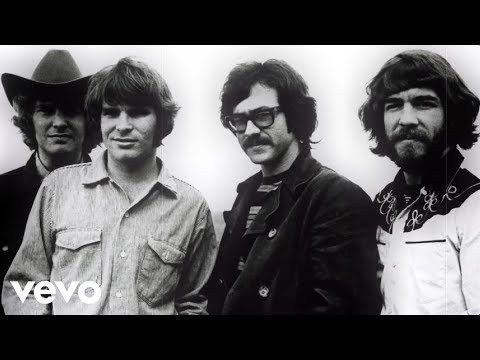
The summer of 1969 belonged to Creedence Clearwater Revival in a way that few bands have ever owned a season. While Woodstock was drawing hundreds of thousands to a New York farm, while the moon landing was being broadcast into living rooms across the country, John Fogerty and his bandmates from El Cerrito, California, were releasing records at a pace that modern audiences would find almost incomprehensible. Green River, the album that contained "Commotion," came out in August 1969, and it was their third album of the calendar year. The band was operating at full creative velocity, and Fogerty's songwriting was producing material faster than the industry's ordinary release cycles could accommodate.
Creedence Clearwater Revival had signed with Fantasy Records in Berkeley, a jazz label that had pivoted to accommodate the band's commercial potential. Their regional California roots, combined with Fogerty's instinct for writing about the American South despite never living there, had produced a sound that felt both timeless and immediate. The swampy guitar work, the churning rhythms, and the blue-collar imagery placed them in a tradition that connected back through rock and roll to Delta blues, even as they were fully a product of their era.
The Song's Argument Against the Modern World
"Commotion" is essentially a complaint, delivered with the band's characteristic propulsive energy. The narrator catalogues the frictions of contemporary life: traffic, crowds, queues, the grinding inefficiency of systems that seem designed to exhaust rather than serve the people moving through them. The lyric's cumulative effect is one of mild but genuine exasperation, a portrait of someone who finds the texture of modern urban life more draining than enlivening. Fogerty's vocal delivery, rough-edged and slightly contemptuous, suited the material perfectly.
The recording itself was produced by John Fogerty, as were all of Creedence's key recordings from this period. His production philosophy was economical: rhythm section locked in, guitars mixed to cut through, vocals pushed to the front, very little studio ornamentation. The result was a sound that translated powerfully to AM radio, which was still the dominant delivery mechanism for pop music in 1969, but also held up at significant volume in larger spaces. The band was, by this point, a formidable live act, and the recordings reflected the directness that comes from being a unit that spends most of its time playing in rooms together.
The Chart Story
Released as the B-side to "Bad Moon Rising" in the United States, "Commotion" appeared on the Billboard Hot 100 on August 2, 1969, entering at number 71. It climbed steadily through August, reaching positions in the low thirties, and peaked at number 30 during the week of September 13, 1969. Its run on the chart lasted eight weeks total. The song charted largely on the strength of radio play in markets where DJs chose to flip the single and play it over "Bad Moon Rising," itself a massively successful track that reached number 2 on the Hot 100.
The coexistence of multiple Creedence Clearwater Revival tracks on the chart during this period was not unusual. By mid-1969, the band had established enough commercial momentum that their releases moved consistently without requiring aggressive promotional campaigns. Radio programmers trusted them, and audiences bought both albums and singles with a loyalty that their label and management were still learning how to properly value.
The Green River Album and Its Place in the Catalog
The album Green River appeared in August 1969 and reached number 1 on the Billboard Top LPs & Tapes chart, establishing Creedence as one of the premier album acts in American rock alongside their singles success. The LP contained some of Fogerty's most focused writing from this period. "Commotion" served as a window into his more sardonic side, a counterpoint to the atmospheric menace of "Green River" or the mythological dimensions of "Wrote a Song for Everyone." Taken together, the album presented a songwriter capable of working across multiple registers without losing his essential voice.
The band's remarkable productivity in 1969 was partly a function of having a leader in Fogerty who controlled the creative process so completely that decisions that might take other bands months of negotiation could be resolved quickly. This efficiency served them commercially. It also stored up tensions that would contribute to the band's dissolution just a few years later.
Permanence in the Catalog
Half a century on, "Commotion" occupies an interesting position in the Creedence catalog. It is not among their most celebrated recordings; those honors go to "Proud Mary," "Bad Moon Rising," "Fortunate Son," and a handful of others that have achieved the status of American standards. But the song demonstrates the consistency of the band's quality at a specific, exceptional moment, and its lyrical concerns remain durable. The modern world's capacity to generate commotion, to fill every hour with friction and noise and queuing, has not diminished since 1969. If anything, it has intensified, which gives the song a relevance its author could not have anticipated.
The band's 1969 run of recordings represents one of the most sustained creative periods in American rock history, and "Commotion" is a persuasive part of that argument. Turn it up and feel the engine of a band in full command of what they were doing.
"Commotion" — Creedence Clearwater Revival's singular moment on the 1960s charts.
02 Song Meaning
"Commotion" — Themes and Meaning
The Complaint as Art Form
There is a long tradition in American popular music of the working-person's grievance set to a compelling beat, and "Commotion" stands comfortably within it. John Fogerty's lyric catalogues the irritants of modern life with the specificity of someone who has spent too many mornings stuck in traffic or too many afternoons waiting in line for something that should not require waiting. The genius of the approach is that the music contradicts the complaint. While the lyrics describe frustration and stasis, the band plays with urgent, forward-propelled energy. The form itself argues against the conditions the content describes.
This tension between what the song says and how it sounds is central to its meaning. "Commotion" does not make you feel stuck; it makes you feel like moving. The irony seems deliberate, a rock band's inherent answer to the grinding mediocrity of modern systems. You can describe the traffic; you can also play your way through it.
The Texture of Urban Life in 1969
The song's subject matter touched a nerve with an audience that was, in 1969, navigating significant social turbulence. American cities were overcrowded, infrastructure was straining, and the post-war optimism about technological and organizational progress was beginning to curdle. The experience of being caught in systems that felt designed for the benefit of bureaucracies rather than individuals was familiar to virtually every working adult who heard the record on the radio. Fogerty's catalogue of modern frustrations did not need to be personally directed to land; the specificity of the imagery was enough to trigger recognition.
This social-texture quality was one of Fogerty's gifts as a songwriter. He could write about distinctly American experiences, not the grand ideological arguments of protest music, but the granular everyday realities of life in a complicated country, and make those experiences feel worth singing about. The mundane, in his hands, carried weight.
Fogerty's Working-Class Voice
There is a class dimension to "Commotion" that is worth naming. The narrator is not someone with the leisure to opt out of the systems he finds frustrating. He cannot afford to avoid the traffic or the queues or the crowded spaces; he is moving through them because he has to. This grounded, economically specific perspective was characteristic of Creedence Clearwater Revival's best work, setting them apart from contemporaries who were exploring more psychedelic or abstract lyrical territory. Fogerty wrote about people who were embedded in ordinary life, not escaping from it.
That perspective had an obvious appeal to a large segment of the American listening public that felt underrepresented in the increasingly adventurous, counterculturally inflected pop music of the late 1960s. Creedence gave them something recognizable, a sound rooted in American musical tradition and a set of concerns drawn from recognizable daily experience.
A Minor Key in a Major Body of Work
Within the Creedence catalog, "Commotion" functions as a revealing minor document. The band's most celebrated songs tend to deal with weightier or more atmospheric material: the draft, the river as a mythological space, portents and foreboding. "Commotion" is lighter, more irritable than tragic, more sardonic than angry. It reveals a more ironic register in Fogerty's songwriting, one that sometimes gets overlooked in retrospective accounts that emphasize the band's harder political edges.
That ironic register is worth preserving in the full account of what Creedence was. They were not only a band that wrote about Vietnam and the American South with heavy symbolic intent; they were also a band that could channel everyday exasperation into three minutes of driving, uncomplicated rock and roll. Both things are true, and both things matter.
"Commotion" — Creedence Clearwater Revival's singular moment on the 1960s charts.
→ More from Creedence Clearwater Revival
View all Creedence Clearwater Revival hits →


→ More from the 1960s File
View all 1960s hits →




Keep digging