The 1960s File Feature
Wolverton Mountain
Wolverton Mountain: Claude King's Country-Pop Crossover Triumph of 1962 In the summer of 1962, a baritone voice from Shreveport, Louisiana, sang a story abou…
01 The Story
Wolverton Mountain: Claude King's Country-Pop Crossover Triumph of 1962
In the summer of 1962, a baritone voice from Shreveport, Louisiana, sang a story about a possessive mountain man and his daughter, and the American record-buying public responded with a enthusiasm that surprised nearly everyone in the music industry, including the artist himself. "Wolverton Mountain" by Claude King became one of the most significant country-pop crossover hits of the early 1960s, a record that demonstrated the commercial potential of traditional country storytelling when packaged with the right production and placed before a mass audience. The song's success was neither accidental nor easily replicated, but its achievement was real and substantial.
Claude King was a Columbia Records artist from Arkansas who had been working the regional circuit for years before "Wolverton Mountain" arrived. He was thirty-four years old when the song charted, an age that made him something of an anomaly in a pop market increasingly obsessed with youth. But the song was not trading on youth or novelty; it was trading on character, narrative, and a particular strain of American rural mythology that resonated deeply with a broad audience at a moment when country music was beginning to compete seriously with pop on the national charts.
The song was written by King and Merle Kilgore, a Nashville songwriter and performer who had already demonstrated a gift for strong narrative material. Kilgore would later write other notable country songs, and his collaboration with King on "Wolverton Mountain" showed his talent for constructing a story with vivid characters and a memorable setting. The narrative centered on a legendary mountain man named Clifton Clowers, said to inhabit the real Wolverton Mountain in Arkansas, who was so protective of his beautiful daughter that no man dared court her. The singer, in the song's telling, intends to do precisely that despite the danger.
Released on Columbia Records in 1962, "Wolverton Mountain" achieved something relatively rare for a country record in that era: it crossed over to mainstream pop audiences in substantial numbers. The song reached the top 10 of the Billboard Hot 100, peaking at number six, a remarkable achievement for a record that made no stylistic concessions to pop conventions beyond its clean studio production. At the same time, it was a dominant presence on the country charts, where it performed at an even higher level. The simultaneous success in both markets was the defining commercial fact of the record's release.
The production reflected the Nashville Sound aesthetic that had become dominant in country recording by the early 1960s. Owen Bradley and the Nashville production community had developed an approach that smoothed country's rougher edges without eliminating its storytelling core, making country records more accessible to pop radio without alienating the core country audience. "Wolverton Mountain" benefited from this aesthetic environment, featuring production that was polished enough for Top 40 play while retaining the narrative drive and melodic directness that country audiences expected.
King's baritone voice was the essential element. Deep, authoritative, and expressive without being theatrical, it was precisely the right instrument for a narrative about masculine pride and romantic courage. The voice conveyed both the danger of the mountain man and the determination of the suitor, giving the story its necessary dramatic tension. A lighter or more conventionally pop voice would have drained the song of its character.
The song spent more than twenty weeks on the Billboard country charts, an extended run that reflected the depth of its country audience appeal even as it was simultaneously performing on pop radio. This dual chart presence was the commercial fulfillment of the Nashville Sound's promise: a record that could speak to multiple audiences without losing its identity in the process.
The cultural context of 1962 was favorable to this kind of material. The folk revival had given the mainstream audience a renewed appetite for narratives rooted in American rural experience, and "Wolverton Mountain," while strictly a country commercial product rather than a folk record, tapped into similar cultural energies. Its story of isolated mountain communities, protective fathers, and determined suitors touched mythological archetypes that had deep roots in American regional identity.
King would continue recording for Columbia through the decade, though none of his subsequent releases matched the commercial scale of "Wolverton Mountain." The song remained the defining artifact of his career, the record that introduced him to a national audience and established his name in the broader story of early-1960s country-pop crossover. For scholars and enthusiasts of the period, it represents a moment when country storytelling found an unexpectedly wide audience without compromising the qualities that made it distinctively country.
02 Song Meaning
Myths of the Mountain: Storytelling, Masculine Honor, and Regional Identity in "Wolverton Mountain"
"Wolverton Mountain" belongs to a narrative tradition in American vernacular music that reaches back centuries, the tradition of songs about dangerous places, dangerous men, and the courage required to transgress the boundaries they enforce. The mountain of the title is not merely a geographical feature; it is a symbol of a social order governed by a particular code of masculine honor and territorial authority. The song's storytelling power derives from its engagement with those deep cultural archetypes, which is why it resonated far beyond the country music audience for which it was primarily intended.
The central figure of Clifton Clowers, the mountain man who guards his daughter from suitors, belongs to a type well established in American regional mythology, the patriarch who controls access to women in his household as an extension of his control over his physical territory. This figure appears in Appalachian ballads, in folk tales from the Ozarks, and in the broader tradition of Southern Gothic storytelling. Merle Kilgore and Claude King were drawing on this tradition consciously, and their decision to ground the story in a real Arkansas location, the actual Wolverton Mountain, gave the narrative an additional layer of documentary authority.
The narrator's perspective is crucial to the song's emotional dynamics. He is not portrayed as reckless or foolish; he approaches the situation with full awareness of the danger. The mountain man's fierce reputation is described with respect, even admiration, before the narrator announces his intention to court the daughter anyway. This structure positions the act of romantic pursuit as a form of courage, a willingness to risk physical danger in service of romantic desire. That positioning appealed strongly to young male listeners who could identify with the narrator's position.
Claude King's vocal performance reinforced these meanings at every level. His deep baritone carried a quality of gravitas that made the narrator's courage feel credible rather than comic. A lighter or more youthful voice might have played the material for charm or irony, but King sang it as if the danger were real and the decision to proceed with courtship despite that danger were genuinely significant. This sincerity of delivery was essential to the song's emotional impact.
The daughter in the narrative occupies a relatively passive position typical of traditional country storytelling of the era. She is the prize, the object of both the father's protective instinct and the narrator's romantic ambition, rather than an active agent in her own story. This aspect of the song's gender dynamics reflects the cultural assumptions of its time and place. Heard today, it serves as a document of how romantic and familial relations were narrated in country music at the dawn of the 1960s, before feminist perspectives began to reshape popular music's engagement with gender.
The regional dimension of the song's meaning deserves emphasis. In 1962, the American South and the rural Midwest were still understood by mainstream American culture as places of both romantic appeal and cultural distinctness, territories where older codes of honor and behavior persisted in ways that urban modernity had displaced elsewhere. "Wolverton Mountain" both exploited and reinforced this perception, offering urban and suburban listeners a window into a world that felt simultaneously exotic and authentically American. The song's crossover success to the pop charts suggests that this window was appealing to a much broader audience than the song's strictly country elements might suggest.
The song's meaning within Claude King's artistic identity was equally significant. It established him as a storyteller rather than a romantic crooner, a distinction that mattered in country music, where narrative craft was the primary measure of artistic seriousness. The song's success gave King a commercial identity anchored in the qualities most valued in the country tradition, and that identity defined his career long after the record's chart run concluded.
→ More from Claude King
View all Claude King hits →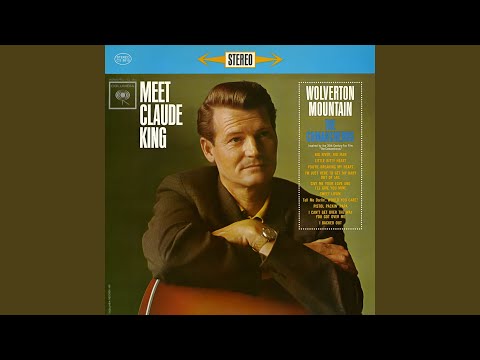

→ More from the 1960s File
View all 1960s hits →




Keep digging