The 1960s File Feature
Time Was
"Time Was" — Canned Heat's Blues-Rock Meditation on the 1969 Billboard Hot 100 The Los Angeles Blues Revival and Canned Heat's Place in It Imagine the Califo…
01 The Story
"Time Was" — Canned Heat's Blues-Rock Meditation on the 1969 Billboard Hot 100
The Los Angeles Blues Revival and Canned Heat's Place in It
Imagine the Californian rock scene in early 1969. The optimism of 1967's Summer of Love had curdled somewhat, the utopian energies of Haight-Ashbury had collided with harder realities, and the music pouring out of Los Angeles and San Francisco was beginning to reflect a more complex emotional landscape. Into this environment, Canned Heat occupied a position both central and slightly eccentric: a blues-revival band built around genuine scholarship and affection for the music's original sources, committed to the Chicago and Mississippi blues tradition in an era when much of rock was straining toward psychedelic abstraction or ambitious studio complexity.
Canned Heat had already established themselves as genuine presences in the American rock landscape. Their 1968 singles "On the Road Again" and "Going Up the Country" had given them significant chart success and enormous visibility at Woodstock, which would take place later in 1969. Bob Hite and Alan Wilson, the band's distinctive co-vocalists, brought very different personalities to the microphone, Hite's large physical presence and booming delivery contrasting with Wilson's more delicate, high tenor and deep musicological knowledge. That contrast gave the band's records a richness that pure imitation of older blues styles would never have achieved.
The Sound of "Time Was"
"Time Was" emerged as a different kind of statement from the band's more upbeat boogie material. Where tracks like "Going Up the Country" had the lightness and momentum of music made for open roads and festival fields, "Time Was" operated in a more reflective and mournful register, drawing on the blues tradition's capacity to hold loss and longing with genuine depth rather than theatrical performance. The track's tempo and emotional temperature suited the title's backward-looking implication: this is music about something that has passed, handled with the kind of careful attention that past things deserve.
The production placed Canned Heat's instrumental interplay at the center, with Alan Wilson's guitar and harmonica work providing the melodic and emotional spine of the arrangement. Wilson was a musicologist as much as a musician, and his understanding of the blues' technical conventions gave his playing a specificity and authenticity that distinguished Canned Heat from many of their contemporaries who were working adjacent territory with considerably less detailed knowledge of the source material.
Five Weeks on the Billboard Hot 100
The single entered the Billboard Hot 100 on March 15, 1969, debuting at number 94. Progress was gradual through the first three weeks, with the track moving to 93 and then 84. In the week of April 5, 1969, the single reached its peak at number 67 on the Billboard Hot 100, where it held for a second consecutive week before exiting the chart. The total chart presence covered five weeks.
The spring 1969 pop chart was a reflection of the genre's fascinating plurality at that moment: Sly and the Family Stone, the Beatles, Marvin Gaye, and Creedence Clearwater Revival were all operating at commercial peaks while the blues-rock revival generated consistent radio interest. Canned Heat's five-week run at number 67 confirmed that their audience extended beyond the hardcore blues faithful to include a broader rock constituency that appreciated the authenticity of their approach.
Alan Wilson and the Shadow Over Canned Heat's Legacy
Any discussion of Canned Heat's 1969 output is shadowed by the knowledge of what followed. Alan Wilson died in September 1970, part of the tragic sequence of rock losses that year that also took Jimi Hendrix and Janis Joplin. He was 27. His death robbed the band of its most distinctive musical intelligence and the blues world of one of its most serious and gifted interpreters. His contributions to tracks like "Time Was" take on additional poignancy in the knowledge that his active recording career lasted only a few years.
The band continued in various configurations after Wilson's death, with Hite keeping Canned Heat's name active until his own death in 1981. But the recordings from the band's peak years, including the 1969 singles that bracketed "Time Was" in their discography, remain the essential documents of what Canned Heat at full power sounded like: passionate, rooted, musically educated, and genuinely moved by the blues tradition they had devoted themselves to honoring.
A Record Worth Revisiting
For listeners who know Canned Heat primarily through "Going Up the Country" or "On the Road Again," "Time Was" offers a different and complementary experience. The quieter, more introspective mood reveals another dimension of the band's range, their capacity to sit with melancholy as patiently as they sat with boogie. In the spring of 1969, that capacity earned them five weeks on the most competitive pop chart in the world. Put this one on and let the blues do what blues has always done best.
"Time Was" — Canned Heat's singular moment on the 1960s charts.
02 Song Meaning
"Time Was" — Loss, Memory, and the Blues Tradition in Canned Heat's 1969 Meditation
The Blues and the Grammar of Time
The blues has always been, at its philosophical core, a music about time. Specifically, it is about the difference between how things were and how they are now, about the gap between a remembered wholeness and a present condition of loss or longing. Every twelve-bar blues that ever sounded from a Mississippi juke joint or a Chicago club was grappling with this fundamental human problem: time takes things, and music is one of the few tools we have to hold them, however briefly, in place. Canned Heat's "Time Was" engages directly with this tradition, its title announcing the temporal displacement that will be the song's primary emotional subject.
The use of past tense in the title is itself a compressed philosophical statement. "Time was" is an idiom that means "there was a time when," and it implies that that time has ended. Whatever followed those two words originally, the phrase now stands alone as a unit of meaning, a shorthand for the whole category of experience it names: the recognition that something good has passed beyond recovery.
Alan Wilson as Blues Scholar and Artist
What gave Canned Heat's engagement with these themes unusual depth was the nature of the musicians involved. Alan Wilson, who contributed so substantially to the band's musical identity, was a genuine scholar of American blues with an understanding of its history, its techniques, and its emotional grammar that went considerably beyond the knowledge of most rock musicians who were working adjacent territory in the late 1960s. His approach to the blues was rooted in love and study rather than in the exploitation of a fashionable sound.
That depth of knowledge meant that when Canned Heat addressed themes of loss and time, they were doing so within a tradition that had already developed sophisticated and tested tools for exactly those subjects. The blues had been working on the problem of loss for decades before Wilson picked up a guitar, and his playing showed the benefit of engaging with those accumulated solutions rather than inventing new ones from scratch.
The Cultural Context of 1969
The spring of 1969 was a moment of significant cultural disorientation. The Vietnam War was continuing at enormous human cost, the optimism of the mid-1960s counterculture had been damaged by the events of 1968, and a generation that had believed in the possibility of radical cultural transformation was beginning to process the gap between aspiration and reality. In that context, a blues meditation on what has passed carried particular resonance.
Music about loss and temporal displacement tends to find receptive audiences when the cultural moment is itself one of disillusionment, when listeners have personal experience of the gap between a hoped-for future and a more complicated present. The spring 1969 audience for "Time Was" would have brought its own versions of that experience to the listening.
Why the Theme Endures
The appeal of "Time Was" across the decades since its chart appearance comes from the permanence of its emotional subject. The experience of looking back at something lost, of feeling the distance between a remembered past and a less complete present, is one that every person who lives long enough encounters in some form. Music that addresses this experience honestly and with genuine craft never fully dates because the emotion it handles never fully disappears from human life.
Canned Heat at their best offered exactly that combination of honesty and craft, grounded in a blues tradition that had been developing its tools for expressing these feelings for generations. "Time Was" is a small but genuine contribution to that long lineage, a 1969 document of musicians taking seriously both the tradition they loved and the emotional truths that tradition had always been designed to carry.
→ More from Canned Heat
View all Canned Heat hits →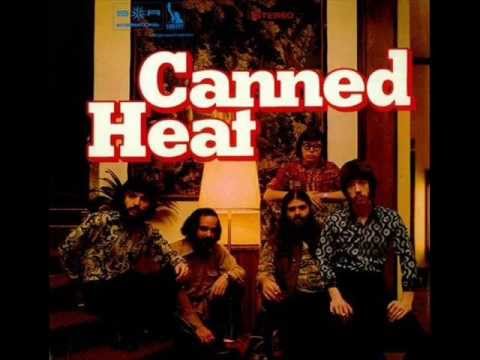
→ More from the 1960s File
View all 1960s hits →




Keep digging