The 1960s File Feature
I've Got A Tiger By The Tail
I've Got A Tiger By The Tail — Buck Owens Bakersfield's Answer to Nashville Early 1965 was the moment when the Bakersfield Sound arrived as a genuine nationa…
01 The Story
I've Got A Tiger By The Tail — Buck Owens
Bakersfield's Answer to Nashville
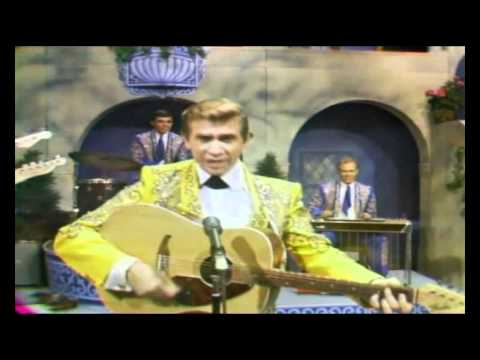
Early 1965 was the moment when the Bakersfield Sound arrived as a genuine national force in country music. The polished, string-laden productions emanating from Nashville had come to dominate the genre through the late 1950s and early 1960s, and a countermovement had been building on the West Coast, centered in the California Central Valley city of Bakersfield, where transplants from Oklahoma and Texas had brought their own musical traditions and found them hardening into something distinctive. Buck Owens was the central figure of that countermovement, and I've Got a Tiger by the Tail was its most commercially explosive statement.
Owens had already established himself as a major country force by 1965, having scored a series of number-one hits on the country charts through the early part of the decade. His collaboration with guitarist Don Rich had produced a sound characterized by a harder, sharper electric guitar tone than Nashville favored, a more insistent rhythmic drive, and a vocal delivery that owed more to honky-tonk than to the pop crossover aspirations that shaped much Nashville production. The Buckaroos, his backing band, were one of the tightest units in country music.
Writing and Recording the Hit
The song was written by Buck Owens and Harlan Howard, one of Nashville's most celebrated songwriters whose ability to craft hooky, economical country songs was legendary. Howard had already written dozens of hits for a range of artists, including Patsy Cline and Ray Price, and his instinct for the country lyric was matched by a prolificacy that kept his songs circulating continuously through the industry. The collaboration between Owens' Bakersfield sensibility and Howard's Nashville craft produced a song with both the sharpness of the West Coast sound and the storytelling economy of the best country writing.
The recording was released on Capitol Records, which had been Owens' label through his rise to prominence. Capitol's distribution and promotional network gave the release a national reach that smaller regional labels could not match, and the label's belief in Owens' commercial potential was vindicated repeatedly during this period. The track was recorded with the Buckaroos providing the tight, driving rhythmic bed that made Owens' recordings immediately identifiable.
Chart Ascent and Crossover Success
I've Got a Tiger by the Tail debuted on the Billboard Hot 100 on January 23, 1965, entering at number 85. Its climb was steady and impressive, reaching its peak of number 25 on February 27, 1965, and spending nine weeks on the pop chart. On the country charts it performed even more strongly, reaching number one and cementing Owens' status as the dominant figure in country music at that moment. The pop crossover showing at 25 was significant, demonstrating that the Bakersfield Sound could compete for mainstream radio attention in a chart environment still shaped by the British Invasion's seismic impact on American popular music.
The timing was notable: the British Invasion, triggered by the Beatles' arrival in February 1964, had reshaped American pop radio, and many domestic acts had found their chart positions squeezed by the enormous success of British groups. That Owens could score a top-25 pop hit in this environment said something important about the resilience of country music's crossover appeal when the production was sharp enough and the song strong enough.
The Bakersfield Sound Defined
What made the recording sound different from its Nashville contemporaries was immediately audible. The Telecaster guitar tone, bright and cutting, sat forward in the mix in a way that the smoother Nashville productions deliberately avoided. The rhythm section drove hard without the orchestral cushioning that characterized the Nashville Sound's attempt to reach pop audiences. The whole enterprise had a physical, kinetic quality that matched the energy of the lyric's central image perfectly.
The tiger-by-the-tail metaphor captured a particular relationship dynamic with precision and humor, the narrator describing a situation of exciting but uncontrollable momentum, the sense of being pulled along by forces more powerful than one's ability to manage them. This kind of knowing, self-deprecating humor in country lyrics was something Owens and Howard both excelled at, and it gave the song a lightness that prevented it from becoming mere complaint.
Legacy of the Bakersfield Pioneer
Decades of retrospective appreciation have secured I've Got a Tiger by the Tail as one of the essential Bakersfield Sound recordings. The influence of Owens' approach on subsequent generations of country music, from the outlaw movement of the 1970s to the neotraditional movement of the 1980s to the Americana artists of more recent years, has been consistently acknowledged. The Buckaroos' sound became a template that players and producers have returned to repeatedly when seeking an alternative to the prevailing Nashville polish.
If you want to understand what the Bakersfield Sound was and why it mattered, this is a nearly perfect entry point. The guitar bites, the rhythm drives, and Buck Owens sounds like he is having the time of his life. Press play and feel the energy that changed country music's direction.
"I've Got A Tiger By The Tail" — Buck Owens' singular moment on the 1960s charts.
02 Song Meaning
I've Got A Tiger By The Tail — Power, Momentum, and the Country Humor Tradition
An Idiom Made into Art
The phrase "tiger by the tail" carried specific cultural weight in 1965 that enriched the song's lyrical premise. The image described a situation of dangerous uncontrollable momentum: you have taken hold of something so powerful that releasing it is as dangerous as holding on. Applied to a romantic relationship, as Buck Owens and Harlan Howard did here, the phrase captured a recognizable experience with wit and economy. The narrator has found himself in a relationship that operates on terms he did not set and cannot fully manage, and the song describes that situation with the wry humor that is one of the great strengths of the honky-tonk tradition.
This self-deprecating mode distinguished the Bakersfield Sound's approach to romantic experience from the more earnest sentimentality of mainstream Nashville country. Where Nashville productions often foregrounded suffering and loss with orchestral solemnity, Owens and Howard found the comedy in the same situations, treating the protagonist's predicament as something to be observed and laughed at rather than simply mourned.
The Relationship Dynamic
The lyric presents a romantic dynamic in which the narrator's partner has more energy, more initiative, and more direction than he can comfortably accommodate. She is driving the relationship and he is trying to keep up. In 1965, this represented a mild but genuine gender commentary: the image of a woman who sets the pace in a relationship was not the default assumption of country music, which more typically positioned men as the active agents. The song's humor depended on the recognition of this reversal as both exhilarating and slightly terrifying for the narrator.
Audiences responded to this dynamic because it reflected genuine experience. Relationships where one partner drives the energy and the other follows along are common human terrain, regardless of which partner fills which role. The song's genius was in giving that experience a memorable image and a beat you could dance to.
The Bakersfield Sound as Cultural Argument
The musical setting of the lyric carried its own meaning. In choosing a hard-driving Telecaster sound and a punishing rhythm over the Nashville strings and vocal choruses that characterized the dominant country sound of the early 1960s, Owens was making an argument about what country music was supposed to be. The Bakersfield approach insisted on energy and physicality as core values, on the honky-tonk connection to working-class dance floor experience that it believed the Nashville Sound had traded away in pursuit of pop respectability.
That argument resonated with a significant portion of the country audience that had felt alienated by the polished pop crossover of the Nashville Sound era. The success of I've Got a Tiger by the Tail on both country and pop charts demonstrated that the Bakersfield position was commercially as well as aesthetically viable. You did not have to sand off the rough edges to reach a mass audience; sometimes the rough edges were exactly what the audience wanted.
Humor as a Country Tradition
The song participates in a humor tradition within country music that runs from the earliest honky-tonk recordings through the novelty songs of the 1950s and into the knowing comedy of the best Bakersfield productions. Harlan Howard's lyrical wit, deployed throughout a catalog of extraordinary breadth, found in Owens a performer with the timing and the delivery to make comedy land without sacrificing the musical integrity of the recording. The combination produced a track that was simultaneously funny, musically excellent, and commercially potent. That triple achievement is rarer than it sounds, and it is the signature of I've Got a Tiger by the Tail as a piece of country songwriting at its most accomplished.
→ More from Buck Owens
View all Buck Owens hits →

→ More from the 1960s File
View all 1960s hits →




Keep digging