The 1960s File Feature
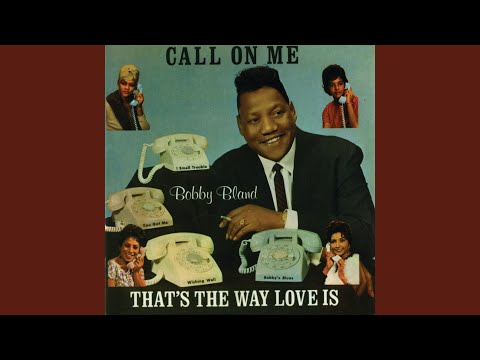
Call On Me
The Slow-Burning Ache of Call On Me by Bobby Bland Picture a Southern nightclub in the last weeks of 1962, cigarette smoke curling under a low ceiling, a hor…
01 The Story
The Slow-Burning Ache of "Call On Me" by Bobby Bland
Picture a Southern nightclub in the last weeks of 1962, cigarette smoke curling under a low ceiling, a horn section warming up while the crowd waits for the one voice that can turn a room from chatter to church-quiet. That was Bobby Bland's power, and by the time "Call On Me" slid onto radio in early 1963, he had already spent nearly a decade earning that command. He was not a novelty act or a fluke discovery. He was blues royalty in the making, a Memphis-bred singer whose gospel-trained rasp had been steadily climbing the R&B charts since the mid-1950s, and this single arrived right as his reputation was hardening into legend.
A Voice Forged in Memphis and Gospel Pews
Bland's career had been built the hard way, touring relentlessly through the Chitlin' Circuit with the kind of road-worn discipline that turned good singers into great ones. He came up alongside B.B. King in Memphis's Beale Street scene, absorbing the call-and-response fire of gospel and marrying it to the elegance of big-band blues. By 1963 he was signed to Duke Records, working under the sharp arranging hand of Joe Scott, whose horn charts gave Bland's ballads their cinematic sweep. "Call On Me" fit squarely into that lane: a plea for devotion dressed in brass and restraint, built for a singer who could turn a simple promise into an emotional event. Duke's roster at the time was stacked with talent, but Bland increasingly stood out as the label's most consistent hitmaker, the artist whose singles radio programmers could count on to move both the R&B and pop audiences at once.
The Sound of Uptown Blues
What set Bland apart from his blues contemporaries was his refusal to stay in one lane. He could growl like a bluesman and croon like a supper-club balladeer within the same eight bars, and "Call On Me" leans hard into that second instinct. The arrangement is patient, almost stately, letting horns breathe around Bland's phrasing rather than crowding it. There is a churchy tension in his delivery, the sense of a man testifying rather than simply singing, and that tension is exactly what made Duke Records' house sound so distinct from the grittier blues coming out of Chicago at the same moment. Where Chicago blues favored electric grit and harmonica wail, Bland and Scott were chasing something closer to a nightclub revival, horns swelling like a choir behind a preacher who happened to also be the smoothest man in the room.
A Steady Climb Up the Hot 100
The song entered the Billboard Hot 100 on January 5, 1963, and rather than flare and fade, it built momentum week after week, a pattern typical of Bland's career, where word of mouth and heavy R&B radio rotation did more work than any single flashy debut. It eventually reached number 22 during the chart week of February 16, 1963, and stayed on the Hot 100 for a run of twelve weeks total, a healthy, durable performance for an artist whose bread and butter was always the R&B chart rather than crossover pop stardom.
Its Place in a Towering Career
In the arc of Bland's catalog, "Call On Me" sits comfortably among the run of singles that cemented him as one of the defining voices of Southern soul-blues before the genre even had that name. He never chased the pure pop explosion that some of his peers did, and that restraint is part of his legend. Records like this one quietly built the foundation that later soul singers, from Otis Redding to Al Green, would draw from, borrowing his phrasing tricks and his knack for turning restraint into raw feeling. Bland's discography is full of these steady, dignified hits, and this one belongs right in that lineage. Decades later, critics and crate-diggers alike still point to this stretch of his Duke Records output as the blueprint for what soul-blues balladry could sound like when it aimed for elegance rather than raw grit.
Cue it up and listen for the moment the horns pull back and leave just his voice hanging in the air. That is the whole story of Bobby Bland in a single bar.
"Call On Me" — Bobby Bland's singular moment on the 1960s charts.
02 Song Meaning
What "Call On Me" Really Says About Devotion
Strip away the horns and the Duke Records polish, and "Call On Me" is a simple vow dressed up in orchestral blues. Bobby Bland is not chasing a lover here or lamenting a breakup in the usual blues fashion. He is offering himself as a permanent fixture, a shoulder that will not move no matter what storm rolls through. That steadiness is the emotional engine of the whole record, and it says a lot about what Bland understood about his audience, an audience that had lived through enough upheaval to value constancy above almost anything else a love song could offer.
A Promise Rather Than a Plea
Much of early 1960s R&B balladry leaned on longing, on absence, on the ache of someone who is not there. Bland flips that script. The song positions its narrator as reliable, present, and unwavering, a source of comfort rather than a source of heartbreak. It is less about winning someone over and more about reassurance, the kind of steady devotion that does not need to shout to be believed. That quiet confidence is what separates it from flashier love songs of the era. Where other singers postured and pleaded, Bland simply states his terms and trusts the listener to believe him, a difference in tone that carries real emotional weight across repeated listens.
The Emotional Register of Restraint
Bland's gift was always knowing when to hold back. Where a lesser singer might oversell a declaration like this one, he lets the arrangement do the heavy lifting, using space and dynamics to make his promise feel weighty rather than sentimental. The horns swell only when the emotion calls for it, and Bland's voice moves between a near-whisper and a full-throated cry without ever tipping into melodrama. That control is itself part of the message: real devotion does not need theatrics. It is a lesson many later soul singers absorbed directly from records exactly like this one, learning that silence and space can carry as much conviction as a shouted chorus.
Blues Values in a Pop Wrapper
By 1963, Black popular music was in the middle of a transformation, with blues, gospel, and early soul all bleeding into one another on the same radio dials. "Call On Me" sits right at that crossroads, using blues phrasing and gospel-rooted vocal power inside a smooth, radio-friendly arrangement. It reflects a moment when Southern audiences wanted sophistication without losing emotional honesty, and Bland, more than almost any of his peers, knew how to deliver both at once.
Why Listeners Leaned On It
Part of the song's appeal in 1963 was simply timing. Listeners navigating the ordinary uncertainties of relationships, distance, and daily hardship responded to a song that offered dependability instead of drama. It functioned almost like a personal anthem for steadfastness, something a listener could hold onto during a rough week. That universality, rather than any clever twist, is what carried it up the chart and kept it in rotation for months.
A Small Song With a Lasting Lesson
"Call On Me" endures not because it reinvents the blues ballad but because it executes one so precisely. Bland's phrasing, the horn section's patience, and the song's central promise all work together to create something that still reads as sincere decades later. It is a reminder that devotion, sung plainly and delivered with conviction, never really goes out of style.
→ More from Bobby Bland
View all Bobby Bland hits →


→ More from the 1960s File
View all 1960s hits →




Keep digging