The 1960s File Feature
Girls Can't Do What The Guys Do
"Girls Can't Do What The Guys Do" — Betty Wright's Early Feminist Broadside A Teenager Takes Aim at a Double Standard The summer of 1968 was a season of uphe…
01 The Story
"Girls Can't Do What The Guys Do" — Betty Wright's Early Feminist Broadside
A Teenager Takes Aim at a Double Standard
The summer of 1968 was a season of upheaval, and the questions being asked in American streets and American living rooms were not only about race and war. Gender and its constraints were being examined with new intensity, particularly by young women who had grown up inside a set of rules they were only beginning to articulate and resist. Into that moment stepped Betty Wright, a Miami teenager with a voice that punched well above her years and a message she delivered with complete conviction. "Girls Can't Do What The Guys Do" arrived on the radio in August 1968 sounding less like a pop single and more like an argument that had been building for years.
Miami's Young Soul Prodigy
Betty Wright was born Bessie Regina Norris in Miami, Florida, in 1953, which made her fourteen or fifteen years old when she recorded this single, a fact that makes the song's directness and emotional precision even more striking. She had been performing since childhood, trained in gospel and exposed to the rhythm and blues coming out of Florida's fertile soul scene. Her label, Alston Records, was part of the TK Records family based in Hialeah, Florida, and it provided Wright with the Miami soul sound that would become her creative home for much of the following decade. The production on "Girls Can't Do What The Guys Do" has the warm, rhythmic Florida soul character that distinguished Miami's output from the harder Stax sound or the polished Motown machine.
The Chart Climb Through Late Summer
The single entered the Billboard Hot 100 on August 3, 1968, debuting at number 91. It climbed methodically through the summer weeks: 86, then 71, then 52, then settling at 51 in its fifth week before continuing its ascent. The track peaked at number 33 on September 7, 1968, after eight weeks on the chart. That was a genuinely strong showing for a teenage soul singer on a regional Florida label competing against the full machinery of Motown and Atlantic Records. The chart performance confirmed that Wright's voice and the song's message were both connecting with a national audience, not just a local one.
The Argument the Song Makes
The content of the lyrics was unusually direct for a pop record of 1968. Wright's narrator identifies a specific unfairness in how the behavior of young women and young men is judged by society, finding that identical conduct attracts condemnation when performed by a woman but tolerance or even approval when performed by a man. This observation about the double standard was not new as an idea; women had been articulating it for generations. What was new was hearing it delivered by a teenage girl on the pop charts, in the language of soul music, with the full weight of a great voice behind it. Wright made the critique feel personal and immediate, not theoretical.
The Context of 1968's Changing Landscape
The women's liberation movement was accelerating in 1968, and the cultural climate was producing a wider appetite for voices that challenged traditional gender roles. The year saw major feminist protests and organizing that would carry into the following decade, and the pop charts were beginning, slowly, to reflect some of that energy. Wright's record was not a protest song in the folk tradition; it was a soul record with a direct social observation embedded in its hook. That combination, accessible rhythm and blues production carrying a pointed message, was something that Wright would develop further across a long and distinguished career. Alston Records had recognized early that Wright's voice could carry weight beyond standard romantic themes.
Looking Forward from 1968
Betty Wright went on to become one of the most significant figures in Miami soul and beyond, recording hits through the 1970s and earning widespread recognition as a vocalist and eventually as a producer and mentor. "Girls Can't Do What The Guys Do" was the opening statement in a career full of them, a record that announced a distinctive voice with both the talent and the courage to say something worth saying. The song has aged into something of a historical document, a capture of a particular moment when young Black women in America were finding their voices on every available platform simultaneously. Turn it up and hear a fifteen-year-old from Miami laying down a challenge that still resonates.
"Girls Can't Do What The Guys Do" — Betty Wright's singular moment on the 1960s charts.
02 Song Meaning
"Girls Can't Do What The Guys Do" — The Double Standard Named and Challenged
Calling Out the Rules Nobody Admits Are Rules
Every social system has a set of rules that operate below the level of official acknowledgment, understood by everyone but rarely stated plainly. The double standard that governs female behavior, the expectation that women who do what men freely do will be judged differently and harshly, was one such rule in 1968. Betty Wright's great act in this song was simply to name it, to put into the direct language of pop music something that had been experienced as fact by generations of women without being articulated so plainly in a mainstream commercial recording. The naming itself was radical.
Soul Music as Truth-Telling
Soul music has always had a tradition of truth-telling, of taking the emotional realities of Black American life and rendering them in forms that could be shared and recognized collectively. "Girls Can't Do What The Guys Do" belongs to that tradition, using the genre's directness and emotional immediacy to deliver a social observation. The form and the content work together: soul music's roots in gospel, in testimony, in bearing witness to experience, make it a natural vehicle for exactly this kind of observation. Wright was not stepping outside the tradition of her genre; she was using it exactly as it was designed to be used.
The Voice of Youth and Its Authority
There is something particularly significant about the fact that this critique came from a teenager. Young women in 1968 were acutely experiencing the double standard as a fresh injustice, not yet resigned to it, still at an age when the unfairness felt like something that could and should be challenged directly. Wright's youth gave the song an urgency that a more experienced voice might have smoothed into weariness. The anger and confusion in the song are the anger and confusion of someone who has recently discovered that the rules are not fair and has not yet learned to keep quiet about it.
The Emotional Stakes of Being Seen
What the song ultimately communicates is the exhaustion and frustration of being subject to a judgment that the person doing the judging refuses to apply to themselves. The narrator is not simply complaining. The song describes a genuine emotional burden, the cost of living under a set of expectations that are arbitrary, unfair, and enforced without acknowledgment that they are either. The emotional accuracy of that description is what makes the song more than a protest song. It is a piece of psychological realism, a portrait of what it feels like from the inside to be subject to a double standard that the culture pretends does not exist.
What Has and Has Not Changed
More than half a century after Betty Wright delivered this challenge from a Florida recording studio, the double standard she identified has not vanished. It has changed shape, been challenged, partially dismantled in some arenas, and vigorously reasserted in others. That the song still sounds relevant rather than historical is both a tribute to Wright's precision and a comment on the persistence of the social dynamics she was addressing. A song that was ahead of its moment in 1968 has become, in some ways, a measure of how far that moment's promises have and have not been fulfilled. Listen and hear a young voice holding the culture accountable with the confidence of someone who has decided the accounting can no longer wait.
→ More from Betty Wright
View all Betty Wright hits →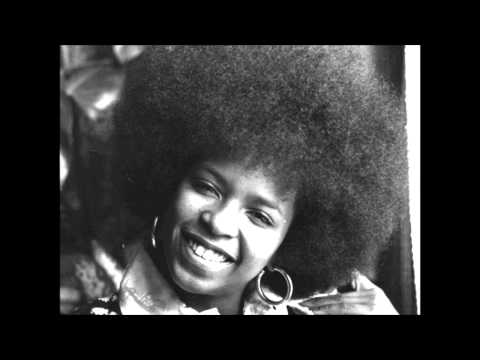
→ More from the 1960s File
View all 1960s hits →




Keep digging