The 1960s File Feature
The Shoop Shoop Song (It's In His Kiss)
The Shoop Shoop Song (It's In His Kiss) — Betty Everett (1964) Note: This entry covers Betty Everett's 1964 original recording on Vee-Jay Records, which is d…
01 The Story
The Shoop Shoop Song (It's In His Kiss) — Betty Everett (1964)
Note: This entry covers Betty Everett's 1964 original recording on Vee-Jay Records, which is distinct from Cher's 1990 cover version that appeared on the soundtrack to the film Mermaids and later became a major international hit. Betty Everett's original is the subject here.
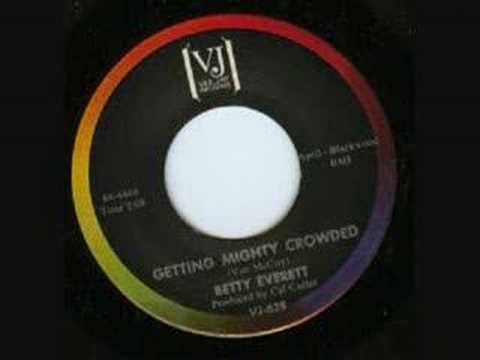
"The Shoop Shoop Song (It's In His Kiss)" was written by Rudy Clark and recorded by Betty Everett for Vee-Jay Records in Chicago, with the single reaching the public in early 1964. The song arrived during a remarkable period in American popular music, the months immediately following the Beatles' breakthrough in the United States, when the charts were being rapidly reshaped by the British Invasion while simultaneously maintaining the vibrant R&B and girl-group sounds that had characterized American pop since the early 1960s. Betty Everett's recording was a product of the Chicago R&B tradition, and it demonstrated that domestic Black American pop music retained enormous commercial vitality even as British acts were seizing an increasing share of the pop mainstream.
Betty Everett was born in Greenwood, Mississippi, in 1939 and moved north as part of the great migration that brought millions of Black Southerners to Chicago and other Northern cities during the mid-twentieth century. She had been singing gospel music from childhood and brought that tradition's emotional directness and rhythmic intensity to her secular recordings. Vee-Jay Records, the Chicago-based independent label that had signed her, was one of the most important Black-owned record companies in American music history, having also worked with artists including The Impressions, John Lee Hooker, and, briefly and famously, the Beatles themselves before Capitol exercised its American release options.
The song was produced with a driving rhythm, handclaps, and a vocal arrangement that built the kind of infectious, participatory energy that defined the best girl-group and R&B pop of the era. Everett's vocal is playful and knowing rather than wistful or vulnerable, treating the question of how to gauge a man's feelings not as an anxiety but as a puzzle with a pleasurable solution. The "shoop shoop" vocal hook, delivered as a kind of rhythmic aside, gave the song its memorable identity and its informal title, the one by which it was most frequently recalled by listeners even as the official subtitle "It's in His Kiss" carried the lyrical argument.
The song reached number six on the Billboard Hot 100 and performed even more strongly on the R&B chart, where it reached number one, confirming Everett's status as a major talent in Black American popular music. The crossover to the pop chart was commercially significant, demonstrating that R&B songs could compete at the top of the mainstream pop chart during this period even as rock and roll was dominating. The record's success established Everett as one of the important female voices in Chicago soul.
Vee-Jay Records was in a complicated commercial and legal situation during the period of the song's release. The label had signed the Beatles in 1963 when Capitol Records initially declined to exercise its American distribution rights to EMI recordings, and the subsequent legal disputes over the Beatles' American recordings had created financial and operational pressures. Despite these difficulties, the label continued to release significant music throughout 1964, with Betty Everett's hit demonstrating that Vee-Jay's artist roster extended well beyond its brief and complicated relationship with the British act that would soon reshape the industry.
Betty Everett went on to record several more charting singles, including the duet "Let It Be Me" recorded with Jerry Butler, which reached number five on the Hot 100 in 1964 and demonstrated her commercial versatility. The Vee-Jay partnership continued through the mid-1960s before the label's financial difficulties eventually led to its closure, after which Everett recorded for several other imprints. Her voice remained a consistent and distinctive presence in Chicago soul throughout the decade, though she never quite repeated the chart heights of her 1964 peak.
The song's most important legacy in commercial terms came from Cher's 1990 recording, which transformed the song into an international chart-topper across multiple markets and introduced the composition to a new generation of listeners. But the original Betty Everett recording had its own considerable cultural impact within its historical moment, and its position in the R&B and pop history of 1964 is not diminished by the later cover's larger international footprint. Rudy Clark's composition proved strong enough to sustain two major commercial recordings separated by a quarter century, which is a measure of remarkable songwriting.
In the historical context of early 1960s R&B, "The Shoop Shoop Song" represents the full flowering of a specifically Chicago sound: rhythmically propulsive, vocally expressive, and built around the kind of communal participation that the best popular music invites. Betty Everett's recording captures a moment when the tradition of gospel-inflected R&B pop was at peak creative and commercial vitality, before the genre splintered into the various specialized forms that would characterize the late 1960s and 1970s.
02 Song Meaning
What "The Shoop Shoop Song" Means: Reading Love Through Physical Language
"The Shoop Shoop Song (It's In His Kiss)" is a song about the epistemology of romantic love, specifically about how one knows whether a declaration of romantic interest is genuine. The song's central argument is that verbal expressions of affection are unreliable evidence, that what a man says about his feelings cannot be trusted as a primary source, and that the truth of romantic intention is most legibly communicated through physical gesture rather than through language. The kiss, in this framework, is not just an intimate act but an involuntary truth-telling mechanism, a bodily expression that bypasses the capacity for verbal deception.
The emotional register is playful rather than anxious. Betty Everett does not perform the question of romantic authenticity as a source of distress but as a kind of pleasurable problem-solving, as a puzzle that the narrator is happy to have found a reliable method for addressing. This tone distinguishes the song from the more melancholic tradition of pop songs about romantic uncertainty. Where many such songs dwell on the suffering produced by not knowing whether love is returned, "The Shoop Shoop Song" presents the question as one that has been resolved, with the kiss established as the definitive test.
The vocal hook, the recurring "shoop shoop" that gives the song its informal name, functions as an embodiment of the principle the song advocates. It is a sound that resists semantic content, that expresses feeling directly rather than through words, operating on precisely the level of pre-verbal physical communication that the song argues is more reliable than verbal declaration. This is an elegant piece of musical self-referentiality: a song about the trustworthiness of non-verbal expression uses a non-verbal vocal device as its most memorable element.
Rudy Clark's songwriting in "The Shoop Shoop Song" participates in a tradition of girl-group and early soul songs that addressed romantic knowledge and romantic strategy from a female perspective with considerable pragmatic intelligence. These songs, produced in abundance by the Brill Building tradition, Motown, and the Chicago R&B scene throughout the early 1960s, often gave their female narrators agency and epistemological authority that contrasted with the more passive romantic postures common in adult pop of the same period. The narrator of "The Shoop Shoop Song" is not waiting for someone to tell her how they feel; she has devised a test.
Betty Everett's performance amplifies this sense of agency. Her vocal is confident and rhythmically assured, suggesting a woman who has thought through the question and arrived at a satisfying answer. There is none of the vulnerability or complaint that characterizes many contemporary pop songs about romantic uncertainty. The narrator is in possession of a methodology, and she is pleased to share it. This pedagogical quality, the song as instruction, as sharing of practical romantic wisdom, gave it a communal resonance that pure romantic confession would not have achieved.
The historical context of 1964 pop music is also relevant to the song's meaning. Early 1960s R&B and girl-group pop had developed a sophisticated vocabulary for discussing romantic experience from within a specifically Black American cultural framework, one that drew on gospel music's emotional directness and communal expressiveness while addressing the secular concerns of young romantic life. Betty Everett's recording participates in this tradition and, through its pop crossover success, carried that tradition into the mainstream in a meaningful way. The song's continued life across decades of cover recordings and cultural references confirms that its central insight about the legibility of physical expression touched something genuinely universal in human romantic experience. Vee-Jay Records released the original in 1964, and the composition by Rudy Clark proved strong enough to sustain hit recordings across multiple decades.
→ More from Betty Everett
View all Betty Everett hits →

→ More from the 1960s File
View all 1960s hits →




Keep digging