The 1960s File Feature
To Love Somebody
"To Love Somebody" — The Bee Gees' First American Classic Three Brothers From Brisbane, Arriving in London, Aimed at the World The summer of 1967 is remember…
01 The Story
"To Love Somebody" — The Bee Gees' First American Classic
Three Brothers From Brisbane, Arriving in London, Aimed at the World
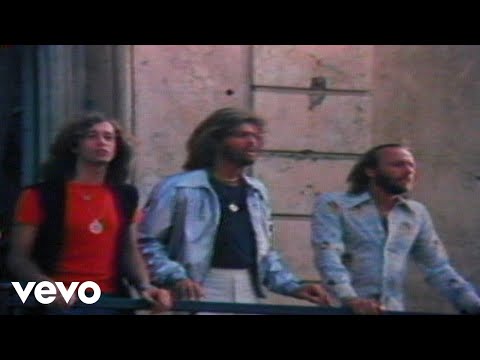
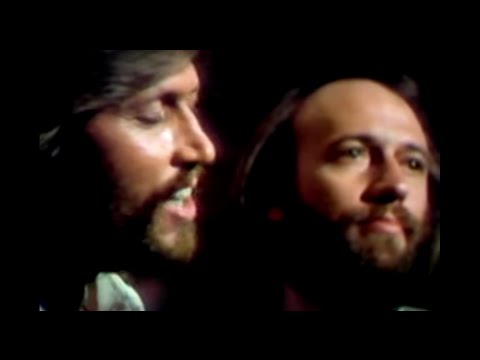
The summer of 1967 is remembered as the summer of love, of Sergeant Pepper, of the Monterey Pop Festival. What is sometimes overlooked is how many extraordinary records emerged from the edges of that moment, from artists who were not at the center of the psychedelic revolution but were nonetheless shaping the pop landscape with their own quieter ambitions. The Bee Gees, three Australian brothers who had recently relocated to London after years building a following on the other side of the world, released a record in July 1967 that would become one of the most covered songs in pop history.
Barry, Robin, and Maurice Gibb had grown up performing together in Australia and had already achieved considerable success there and in the United Kingdom before "To Love Somebody" brought them significant American chart attention. The song arrived in the United States at a moment when British pop acts were still riding the commercial wave that had begun with the Beatles in 1964, and the Bee Gees' sophisticated melodic sensibility fit naturally into an American radio landscape still hungry for well-crafted British pop.
The Creation of a Standard
The song was written by Barry and Robin Gibb and was originally conceived with Otis Redding in mind as the intended performer. Redding's representatives were reportedly in contact with the Gibb brothers about possible material, and the soulful register of "To Love Somebody" reflects that origin. The Bee Gees' own recording retained the song's fundamentally soul-influenced emotional vocabulary while placing it in a pop arrangement that emphasized their vocal harmonies and melodic strengths.
The production placed Barry Gibb's lead vocal front and center, with the arrangement building around him in a way that allowed the lyric's emotional directness to land cleanly. Strings and rhythm section support the vocal without crowding it, a production choice that would prove wise given how many other vocalists would subsequently record the song. A well-produced original that demonstrates the song's melodic and lyrical content without burying it in arrangement is always the most useful version for defining a standard.
The American Chart Run
The single debuted on the Billboard Hot 100 on July 15, 1967, entering at number 79. Its chart climb was steady over the following weeks: 42, then 32, 27, 22. The record continued rising through August, peaking at number 17 on August 26, 1967, and spending nine weeks total on the chart. The peak of 17 placed the Bee Gees solidly in the upper tier of the Hot 100, confirming their commercial viability in the American market.
The song's chart performance in the United Kingdom and Australia was also strong, establishing the Bee Gees as a genuinely international commercial force at a very early stage of their career. For a group that had only recently relocated to Britain and was still building its reputation among the core pop audience, a top-20 American single in their first full year of international activity was a remarkable achievement.
A Catalog of Cover Versions
The subsequent history of "To Love Somebody" is largely the history of its cover versions. Over the decades since its 1967 release, the song has been recorded by a remarkable range of artists across genres. Nina Simone's version remains among the most celebrated, bringing her characteristic depth and emotional intensity to the song's plea for reciprocal love. Michael Bolton, Roberta Flack, and many others also recorded the song, each finding something new in its construction without diminishing the original.
The sheer number and diversity of cover versions is the clearest evidence of the song's structural quality. Songs that get covered this extensively are almost always songs where the emotional content and melodic construction are strong enough to survive radical reinterpretation. "To Love Somebody" has proven itself on exactly those terms, remaining recognizable and affecting across wildly different interpretive approaches.
The Gibb Brothers' Trajectory
"To Love Somebody" belongs to the earliest phase of the Bee Gees' long career, predating by more than a decade the disco-era recordings that would make them household names across the world. The songwriting craft evident in this early single, the melodic intelligence, the emotional directness, the structural clarity, was already fully formed. The disco era would add a different set of skills and a different sonic context, but the writers responsible for "Stayin' Alive" and "How Deep Is Your Love" were recognizable in the writers of "To Love Somebody."
Play it loud and hear where one of the great songwriting careers began to find its footing.
"To Love Somebody" — Bee Gees' singular moment on the 1960s charts.
02 Song Meaning
The Weight of Unrequited Love: What "To Love Somebody" Is Really Saying
A Plea Rather Than a Declaration
The emotional center of "To Love Somebody" is a paradox that most listeners have experienced: the sensation of loving someone more fully than they love you in return. The song does not rage against this asymmetry or wallow in self-pity. Instead, it makes an argument, laying out with considerable earnestness the evidence that the person being addressed does not understand what they are missing by failing to love the narrator with equivalent depth.
This approach, plea rather than accusation, is one reason the song has proven so durable. The narrator retains dignity throughout, presenting the case for reciprocal love without reducing to bitterness. The emotional stance is simultaneously vulnerable and composed, which is a difficult register to inhabit and even harder to sustain across the length of a pop song.
Soul Music's Influence on the Song's Emotional Register
The fact that Barry and Robin Gibb originally wrote the song with Otis Redding in mind shaped its emotional DNA in ways that remain audible in the Bee Gees' own recording. Soul music, as Redding practiced it, operated through a kind of emotional transparency that could be startling in its directness. The genre did not hedge its emotional content or clothe vulnerability in irony. The unguarded quality of the song's lyrical content reflects this influence, even in the more polished pop production the Gibb brothers gave it.
The summer of 1967 was saturated with psychedelic experimentation, with music reaching for transcendence through distortion and volume. "To Love Somebody" moved in precisely the opposite direction, seeking emotional truth through clarity and directness. That contrast may have made it more rather than less effective; it offered listeners something they were not getting from most of what surrounded it on the radio.
Universal Feeling, Precise Expression
The song's longevity as a vehicle for cover versions is partly explained by its universal emotional content. The experience of loving someone who cannot or does not love you in return is one of the most common human experiences, recognized across cultures, generations, and circumstances. A song that describes this experience with precision and without condescension will always find listeners.
What distinguishes the Gibbs' writing here is the precision. The song does not simply gesture at the general feeling of unrequited love; it specifies, in detail, what it feels like to believe that you have more to offer than you are being allowed to give. This specificity is what allows such a wide range of singers to find themselves in the song. The emotional situation is precise enough to be real rather than generic, but not so specific to one set of circumstances that it excludes identification.
The Song as Creative Blueprint
For students of songcraft, "To Love Somebody" is worth examining as a structural achievement. The melody rises and resolves in ways that support the emotional arc of the lyric rather than simply decorating it. The chorus, when it arrives, provides both melodic climax and lyrical summation simultaneously, which is the hallmark of well-integrated songwriting rather than the pasted-together quality of songs where words and music feel like separate departments.
This integration is one reason the song survives so many different interpretive approaches in its cover versions. It does not depend on any specific production aesthetic for its power; the emotional content is embedded in the melody and lyric structure rather than in the arrangement. Strip it to voice and guitar, as many cover artists have done, and it holds. Dress it in orchestration, as some others have done, and it holds just as well.
The song's themes are as present and recognizable now as they were in 1967. Human beings are still discovering, again and again, that love does not always arrive symmetrically, and still needing music that acknowledges that particular difficulty with grace.
→ More from Bee Gees
View all Bee Gees hits →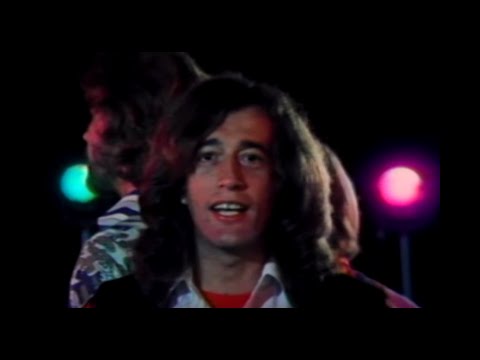

→ More from the 1960s File
View all 1960s hits →




Keep digging