The 1960s File Feature
Paper Roses
Anita Bryant and "Paper Roses": The Song That Launched a Career When "Paper Roses" entered the Billboard Hot 100 on April 11, 1960, debuting at number ninety…
01 The Story
Anita Bryant and "Paper Roses": The Song That Launched a Career
When "Paper Roses" entered the Billboard Hot 100 on April 11, 1960, debuting at number ninety-four, few observers could have predicted that it would climb all the way to number five and spend seventeen weeks on the chart. The song had been recorded by a nineteen-year-old singer from Barnsdall, Oklahoma, who had recently competed in the Miss America pageant and was still largely unknown to the national record-buying public. By the time "Paper Roses" finished its chart run in the summer of 1960, Anita Bryant was one of the most commercially successful new voices in American pop music and a fixture on the adult contemporary radio formats that were shaping the industry's commercial landscape.
Bryant had arrived in the music industry through an unusual combination of channels. Born in 1940 in Barnsdall, she had been a child performer from an early age, singing at local events and on radio programs throughout Oklahoma and the surrounding region. She was named Miss Oklahoma in 1958 and went on to finish as a semifinalist in the Miss America competition, an experience that raised her public profile significantly and brought her to the attention of talent scouts and record label executives. She signed with Carlton Records, a New York-based independent label, and began recording in the lat"Paper Roses" was written by Fred Spielman and Janice Torre, a songwriting team responsible for a number of popular songs during the late 1950s and early 1960s. The song's central metaphor, comparing artificial flowers to false love, was a well-established convention of popular romantic songwriting, but the execution was unusually elegant, and Bryant's recording brought a quality of emotional sincerity to the material that made it feel fresh rather than formulaic. Her voice, which combined a natural sweetness with a controlled vibrato and clear diction, was ideally suited to the kind of mainstream pop ballad that "Paper Roses" represented.ses" represented.
The production, handled for Carlton Records, was characteristic of mainstream pop recordings of the period: lush string arrangements, understated rhythm section, and a vocal placed prominently in a mix designed to present the singer's voice as clearly and attractively as possible. This approach was standard practice for the adult contemporary market of 1960, which prized vocal clarity and melodic accessibility above rhythmic complexity or sonic experimentation. Bryant's record fit comfortably within that framework while offering a vocal performance sufficiently distinctive to stand out from the considerable competition for chart positions in what was then a highly competitive market.
The song's climb from its debut position to its peak of number five, achieved during the week of June 13, 1960, was steady and deliberate. It benefited from strong airplay across a range of radio formats and received particularly enthusiastic support from the adult contemporary and easy listening stations that were then among the most commercially influential voices in American radio. The record also performed well on jukeboxes, which remained an important distribution channel for popular music in the early 1960s and which were particularly receptive to the kind of melodically direct, vocally centered records that Bryant was making.
The success of "Paper Roses" established Bryant as a commercially viable recording artist and opened doors to television appearances, live performance opportunities, and a recording career that would extend through the 1960s. She appeared on numerous television variety programs and became one of the more recognizable faces of mainstream pop music in the early part of the decade. She would go on to record a series of albums for Carlton and later for Columbia Records, though "Paper Roses" remained her most significant pop chart achievement.
The song's cultural life continued well beyond its original chart run. It was covered in 1973 by Marie Osmond, whose version reached number one on the country charts and number five on the pop charts, exactly replicating Bryant's original pop peak. Osmond's version introduced the song to an entirely new generation of listeners and cemented its status as a genuine pop standard rather than merely a period curiosity. The parallel chart performances across two different decades stand as a remarkable testament to the durability of the Spielman-Torre composition.
Bryant herself went on to become a significant commercial spokesperson and public figure, achieving perhaps her greatest prominence through her work as a spokesman for Florida orange juice and later through her public advocacy on social issues. Those subsequent chapters of her public life have often overshadowed her recording career in historical memory, but the musical achievement of "Paper Roses" and its place in the history of early 1960s pop music deserves recognition on its own terms. The record represents one of the more fully realized vocal performances in the mainstream pop genre of its era, and its seventeen weeks on the Billboard Hot 100 and peak position of number five are testimony to the genuine connection it made with the record-buying public of 1960.
02 Song Meaning
False Beauty and Real Feeling: The Emotional Logic of "Paper Roses"
"Paper Roses" belongs to a long tradition of songs that use the contrast between the artificial and the authentic as a vehicle for exploring romantic disillusionment. The central metaphor of the song, the paper rose that looks real but lacks the fragrance and life of a genuine flower, is a classical device in popular romantic songwriting, yet it carries genuine emotional weight when deployed in this particular context. Fred Spielman and Janice Torre, who wrote the song, understood that the most effective pop metaphors are those that translate complex emotional experiences into immediately graspable concrete terms, and the paper rose does precisely that: it gives the listener a tangible object through which to understand the experience of loving someone whose outward presentation does not match their inner reality.
The song's emotional situation is one that listeners of any era can recognize and feel. The narrator has been in a relationship with someone who appeared to offer warmth, beauty, and genuine feeling but who has turned out to be a surface without substance. The pain of this discovery is rendered not through bitterness or anger but through a kind of sorrowful clarity, a recognition that the difference between real roses and paper ones is the difference between love that nourishes and love that merely decorates. This tonal restraint is one of the song's most effective qualities: it allows the listener to inhabit the narrator's disappointment without being overwhelmed by it.
Anita Bryant's vocal interpretation adds an important layer of meaning to the material. Her voice, with its natural sweetness and transparency, creates a slight but productive irony: the narrator is clearly a person of genuine warmth and feeling, which makes the discovery that her partner is a paper rose rather than a real one all the more poignant. The innocence in Bryant's vocal tone reinforces the sense that the narrator has been genuinely deceived rather than merely disappointed, and this quality of sincere vulnerability gives the song a power that a more knowing or cynical performance could not have achieved.
The song's longevity as a piece of material, demonstrated by Marie Osmond's equally successful 1973 recording, reflects the universality of its central theme. In the thirteen years between Bryant's original recording and Osmond's cover, American popular culture had changed enormously, but the experience of discovering that someone's apparent qualities do not reflect their actual character remained as recognizable and painful as it had been in 1960. The song transcends its original period because its subject matter is not historically specific: false love dressed in beautiful packaging is not a phenomenon unique to any particular decade.
The choice of a floral metaphor also connects the song to broader cultural traditions in which flowers carry established meanings and associations. Roses have been symbols of love in Western culture for centuries, and the transformation of that symbol by the adjective "paper" represents a precise and elegant inversion. A paper rose is not merely a lesser rose; it is a counterfeit, something that appropriates the outward form of love without its essential quality of living growth and genuine fragrance. This distinction gives the metaphor a moral as well as emotional dimension, suggesting that the problem with false love is not simply that it disappoints but that it involves a fundamental deception.
The production values of Bryant's recording, with their lush orchestral arrangement and prominent vocal placement, frame the emotional content in a way that amplifies rather than diminishes its impact. The orchestral strings that surround the vocal create an atmosphere of romantic expectation that throws the lyric's revelation of disillusionment into sharper relief. The gap between the music's romantic warmth and the lyric's ultimately sad recognition is itself meaningful, suggesting that the world of genuine romance that the narrator hoped for remains present as an ideal even as the specific experience of false love constitutes a painful departure from it. This tension between ideal and reality is what gives "Paper Roses" its lasting emotional resonance.
→ More from Anita Bryant
View all Anita Bryant hits →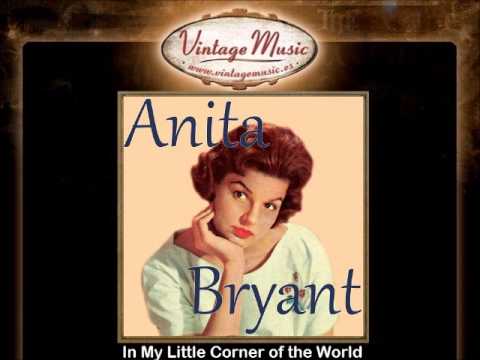

→ More from the 1960s File
View all 1960s hits →




Keep digging