The 1960s File Feature
1, 2, 3, Red Light
1, 2, 3, Red Light: The Bubblegum Machine at Full Speed In the summer of 1968, a song built around the simple rhythms of a children's counting game climbed t…
01 The Story
1, 2, 3, Red Light: The Bubblegum Machine at Full Speed
In the summer of 1968, a song built around the simple rhythms of a children's counting game climbed to number five on the Billboard Hot 100 and lodged itself into the consciousness of a generation. "1, 2, 3, Red Light" by the 1910 Fruitgum Co. was not an accident of pop culture but rather the calculated output of one of the most deliberate commercial enterprises in American music history: the Kasenetz-Katz bubblegum factory.
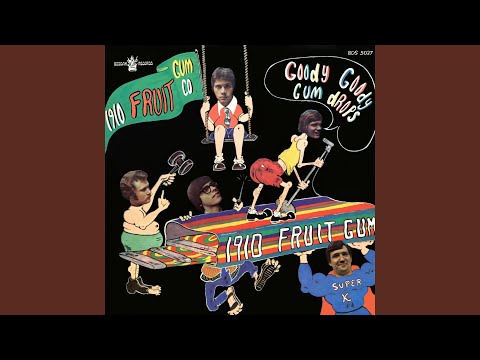
The architects of the 1910 Fruitgum Co.'s sound were Jerry Kasenetz and Jeff Katz, a production duo operating out of New York who had identified a precise demographic target in the children and pre-teen market and built an assembly-line approach to satisfying it. Working under the Super K Productions banner and releasing material through Buddah Records, they crafted songs with elementary melodic structures, call-and-response hooks, and subject matter borrowed from the playground. The 1910 Fruitgum Co. was in many ways the flagship act of this enterprise, a vehicle assembled to deliver what the market demanded rather than an organic group with an independent artistic identity.
The band's name itself was an exercise in deliberate whimsy, evoking a nostalgic, candy-colored Americana that had nothing to do with any actual year or any actual gum. The core personnel included Mark Gutkowski as lead vocalist, whose delivery of the counting-game hook gave the record its bouncy, guileless energy. The group's lineup shifted over time, reflecting the producer-driven nature of the enterprise, where the brand identity mattered more than any individual performer's continuity.
"1, 2, 3, Red Light" arrived as the follow-up to the group's smash debut, "Simon Says," which had reached number four earlier in 1968. The sequential success was not surprising: Kasenetz and Katz had refined a template, and the market was still hungry for it. The new single deployed the same innocuous bounce, but organized around the imagery of traffic signals and the stop-start logic of the childhood game. The arrangement was bright and horn-accented, with a rhythm section that kept things perpetually in motion.
The commercial context in which "1, 2, 3, Red Light" succeeded was notable. The summer of 1968 was one of the most turbulent periods in American social history, marked by political assassinations, urban unrest, and the escalating Vietnam War. Against this backdrop, the deliberately cheerful escapism of bubblegum pop found a ready audience. Not everyone seeking relief from the news cycle wanted psychedelia or protest folk. Buddah Records understood that a significant portion of the record-buying public, and particularly the youngest segment of it, wanted something uncomplicated and fun.
Buddah Records itself was a new label in 1968, having been founded that very year, and the bubblegum genre helped establish its commercial footing almost immediately. The label would go on to house other Kasenetz-Katz productions alongside acts with considerably different artistic profiles, but in its earliest months, hits like "1, 2, 3, Red Light" were central to its identity and financial survival.
The critical reception of bubblegum pop was, predictably, dismissive from the rock press, which was then elevating artists like The Beatles, The Rolling Stones, and Jimi Hendrix as serious musicians deserving serious analysis. Bubblegum was framed as the cynical commercial opposite of authentic rock expression. This framing, while understandable from within a certain critical ideology, obscured the genuine craft involved in writing and producing songs that were maximally effective at what they intended to do. A hook as sticky as the one in "1, 2, 3, Red Light" does not materialize without skill, even if the skill is deployed in service of mass-market efficiency rather than artistic exploration.
The song spent thirteen weeks on the Hot 100, peaking at number five in August 1968, confirming that the 1910 Fruitgum Co. had genuine staying power as a commercial entity, at least within the specific window that bubblegum dominated. By 1969, tastes had shifted enough that subsequent releases performed less impressively, and by the early 1970s the bubblegum era was effectively over as a dominant pop force. But in its moment, "1, 2, 3, Red Light" represented the form at its most efficient and its most successful.
The song's legacy is primarily one of genre definition. When music historians trace the bubblegum era, the 1910 Fruitgum Co.'s pair of 1968 hits serve as the central exhibits, the clearest articulations of what Kasenetz and Katz were selling and why so many consumers were buying. The cultural work done by these songs, however dismissed by critics at the time, was real: they provided joy, uncomplicated pleasure, and a brief respite from a difficult world, which is not nothing in the ledger of popular music's contributions to ordinary life.
02 Song Meaning
The Meaning Behind "1, 2, 3, Red Light": Innocence as Commercial Strategy
On its surface, "1, 2, 3, Red Light" by the 1910 Fruitgum Co. appears to be the simplest kind of pop song imaginable: a counting game set to a bright, bouncing melody. And on its surface, that assessment is largely correct. The song does not pursue depth. What makes it worth examining, however, is the way its deliberate simplicity functions as both a commercial strategy and an emotional experience for its intended audience.
The lyrical framework draws on the language of the playground, specifically the stop-and-go logic of the children's game where "red light" commands a freeze and movement resumes only with the appropriate cue. The romantic application of this imagery frames a relationship in terms of permission and restraint. The narrator is kept at bay by the object of his affection, perpetually stopped at red and awaiting a green light that may or may not come. It is a metaphor accessible to anyone old enough to understand traffic signals and young enough to find the game-playing quality of courtship both frustrating and exciting.
This metaphorical structure was exactly suited to the pre-teen audience that Kasenetz and Katz were targeting. The tension between wanting to move forward and being told to stop captures something real about early romantic experience, the confusion of signals, the uncertainty of how to proceed, the slight sting of being held at arm's length. But the song packages these emotions in a form so cheerful and so uncomplicated that they carry no weight of genuine heartbreak. The red light is frustrating, but the melody insists that everything will be fine.
Producer Jeff Katz and his partner Jerry Kasenetz understood that this tonal balance was essential. Too much genuine pathos would have alienated the youngest listeners. Too little emotional content would have produced something empty even by the standards of the genre. The counting hook gave the song its mechanical catchiness, while the romantic frustration gave it just enough human stakes to feel engaging rather than merely mechanical.
It is worth noting that the song's apparent simplicity concealed a sophisticated understanding of how repetition functions in pop music. The counting structure, "1, 2, 3, red light," is inherently mnemonic. Listeners internalized it immediately and found themselves replaying it involuntarily, which is precisely the mechanism by which hit records maintain their commercial presence on radio playlists and in household memories. The song was engineered for recollection, and it succeeded at that engineering with unusual efficiency.
The broader meaning of "1, 2, 3, Red Light" in its historical context relates to what bubblegum pop was offering in 1968. A summer of assassinations, riots, and an intensifying war produced a cultural appetite for the uncomplicated. The song's cheerful insistence on a world where the worst problem is a girl who won't let you get close was not naive so much as it was a deliberate counter-offer to the grimness of the news cycle. This escapist function is not trivial. Popular music has always served partly as an emotional refuge, and the bubblegum genre served that function with unusual directness.
Decades later, the song endures in the cultural memory as a marker of its era, a shorthand for the candy-colored end of the 1960s before the weight of the decade's events became fully legible in the culture. Its meaning, such as it is, is inseparable from the texture of that specific moment in American life.
→ More from 1910 Fruitgum Co.
View all 1910 Fruitgum Co. hits →

→ More from the 1960s File
View all 1960s hits →




Keep digging