The 1950s File Feature
Smile
The Tender Crooning of Smile by Tony Bennett Imagine the tail end of the 1950s, when the great American songbook still ruled the airwaves and a singer's job …
01 The Story
The Tender Crooning of "Smile" by Tony Bennett
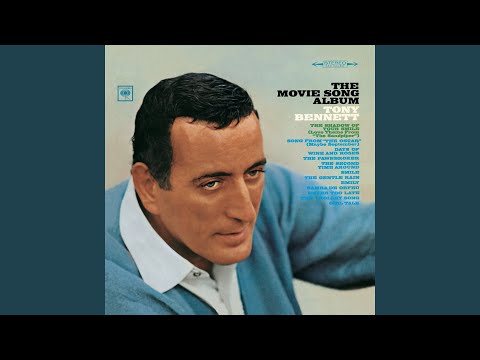
Imagine the tail end of the 1950s, when the great American songbook still ruled the airwaves and a singer's job was to make a melody feel like a confidence shared across a quiet table. Rock and roll was already rattling the windows, but there remained a vast audience for elegance, for a voice that could carry an old tune with warmth and dignity. Into that world stepped Tony Bennett, a Queens-born crooner with one of the most graceful instruments of his generation, lending his voice to a song with a remarkable pedigree.
A Melody Born in Silent Film
The tune itself was older than rock and roll, older than Bennett's career. Its melody was composed by Charlie Chaplin for his 1936 film Modern Times, a wordless theme of aching beauty. Lyrics by John Turner and Geoffrey Parsons were added in 1954, transforming Chaplin's instrumental into a song about putting on a brave face. By the time Bennett recorded it, the piece already carried the weight of cinema history, a melody that had survived from the silent era into the age of the LP.
Bennett at a Crossroads
By 1959, Tony Bennett was an established star but one navigating a changing landscape. He had scored major hits earlier in the decade, yet the rise of rock and roll was steadily reshaping what the charts rewarded. Recording a Chaplin ballad was a statement of values, a commitment to craft and standards in a market increasingly chasing teenage tastes. His interpretation leans on restraint, letting the melody breathe and trusting the listener to feel the ache beneath the composure.
A Brief Visit to the Hot 100
The single's chart run was gentle, much like the song itself. It debuted on the Billboard Hot 100 on August 17, 1959, at number 97, then climbed week by week, reaching number 85, then number 76, before dipping slightly and finally peaking at number 73 on September 14, 1959. It spent six weeks on the chart in all. The modest placement reflects the moment more than the performance, a sign that the pop audience's center of gravity was shifting away from traditional crooning even as Bennett delivered it beautifully.
A Song Many Voices Have Claimed
One reason the recording matters is that it placed Bennett within a long and distinguished lineage of interpreters. The Chaplin melody had already attracted some of the finest voices of the century, and would continue to do so for decades after. What separated a memorable version from a forgettable one was restraint, the wisdom to let the melody carry the emotion rather than smothering it in vocal acrobatics. Bennett's interpretation belongs to the school that trusts the song. He sings it cleanly and warmly, letting the natural ache of the tune surface without forcing it. That discipline is harder than it sounds, and it reflects the craftsmanship that defined his entire approach to the great American songbook. He treated standards as sacred texts to be served, not vehicles for showing off.
A Standard Bennett Carried for Life
The song became a lasting part of Bennett's repertoire, a piece he would return to across a career that stretched into the twenty-first century. His enduring association with classic standards, and his eventual emergence as an elder statesman beloved by younger generations of listeners and musicians, gave songs like this one a long afterlife. Where many of his 1950s peers faded as tastes changed, Bennett endured, his commitment to quality eventually rewarded with a remarkable late-career renaissance. The Chaplin melody, already immortal, found in Bennett a worthy interpreter who understood that its message of grace under sadness needed no embellishment. His recording stands as a small but telling example of why audiences trusted him with the songs they loved most, a singer who never got in the way of a beautiful melody.
Press play and let that warm, unhurried voice wrap around Chaplin's melody: this is elegance with a lump in its throat.
"Smile" — Tony Bennett's singular moment on the 1950s charts.
02 Song Meaning
What "Smile" by Tony Bennett Really Means
This is a song about the courage it takes to hide your pain. Its central instruction is deceptively simple, an encouragement to keep smiling even when your heart is breaking. Beneath that gentle surface runs a deep current of stoicism and quiet resilience that has made the song a comfort for generations.
Grace in the Face of Sorrow
The lyric urges the listener toward composure in the midst of heartbreak, suggesting that a smile can carry you through fear and grief. It does not deny the sadness; it acknowledges the clouds and the tears openly. The message is not to pretend everything is fine but to find strength in carrying on regardless, a difficult and very human kind of bravery.
Chaplin's Wordless Wisdom
Knowing the melody came from Charlie Chaplin deepens its meaning. The original appeared at the close of Modern Times, a film about ordinary people enduring hard luck with dignity and hope. That cinematic context lingers in the song, lending it the feel of a final, tender word of encouragement, the kind a friend offers as you walk into an uncertain future.
Comfort for a Changing World
Arriving in 1959, the song offered reassurance during uncertain times, an emotional anchor as the culture shifted rapidly around it. Bennett's measured delivery suited a generation that valued composure and understatement. The song's quiet stoicism reflected an era that prized keeping one's troubles private, making it both a personal balm and a small portrait of its age.
Hope Hidden in the Sadness
For all its melancholy, the song carries a thread of genuine optimism. It does not simply tell you to mask your pain; it suggests that the act of smiling, of choosing to face the day, can itself begin to mend you. The lyric points toward tomorrow, toward the possibility that the clouds will clear if you can just hold on through the present darkness. That forward-looking hope is what saves the song from despair. It acknowledges grief fully and then gently insists that grief is not the end of the story. Bennett's warm delivery underlines that hope, making the encouragement feel sincere rather than dismissive, a hand on the shoulder rather than a command to cheer up.
Why It Endures
The song lasts because its advice is timeless and gently hopeful. Everyone, in every era, faces moments when they must hold themselves together in public while breaking apart inside, and the song meets that experience with compassion. This melody and lyric speak directly to that experience, offering not a solution but companionship. Bennett understood that, and his interpretation treats the listener with tenderness rather than pity. That is why the song still moves people across generations, a soft reminder that a smile, even a fragile one, can be an act of grace and the first small step back toward the light.
→ More from Tony Bennett
View all Tony Bennett hits →


→ More from the 1950s File
View all 1950s hits →


Keep digging