The 1950s File Feature
This I Swear
"This I Swear" — The Skyliners and the Art of the Doo-Wop Vow Pittsburgh, 1959, and the Sound That Defined an Era Imagine the summer of 1959: jukeboxes glowi…
01 The Story
"This I Swear" — The Skyliners and the Art of the Doo-Wop Vow
Pittsburgh, 1959, and the Sound That Defined an Era
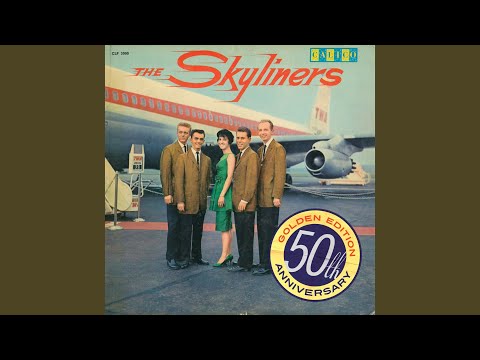
Imagine the summer of 1959: jukeboxes glowing in diners, teenagers crowding soda fountains, and the radio carrying something that sounded simultaneously ancient and completely of its moment. Doo-wop, that glorious hybrid of gospel harmony, rhythm and blues, and teenage sentiment, was at its commercial and artistic peak. Into that landscape walked The Skyliners, a Pittsburgh-based vocal group whose blend of white pop sensibility and deep R&B harmonic feeling produced some of the most emotionally precise records of the era. This I Swear arrived as their follow-up to the massive success of "Since I Don't Have You," and it carried every bit of the emotional weight that their fanbase had come to expect.
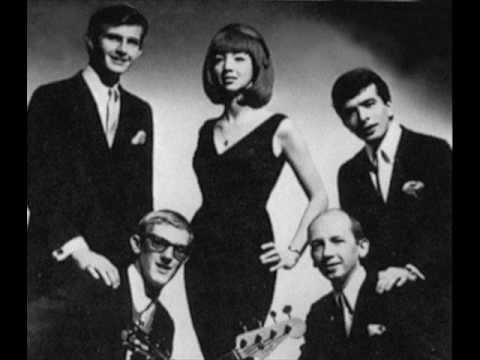
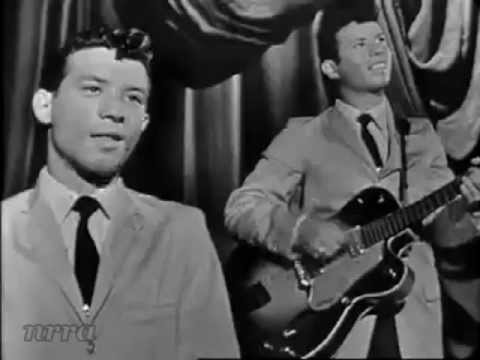
The Skyliners had formed in Pittsburgh, Pennsylvania, in the late 1950s, drawing together a remarkable collection of young voices. The group featured lead singer Jimmy Beaumont alongside Janet Vogel, Wally Lester, Jackie Taylor, and Joe VerScharen. Vogel's soprano and Beaumont's tenor gave the group an unusual tonal range, capable of creating harmonic textures that many of their peers could not match. By the time they recorded "This I Swear," they were working with a foundation of demonstrated commercial success that gave their performances additional confidence.
The Recording and Its Sound
The track was released on Calico Records, the independent Pittsburgh label that had launched "Since I Don't Have You" into the national consciousness. The production places Beaumont's earnest lead vocal at the center, surrounded by the group's characteristic tight harmonies and a string arrangement that lends the track a sweeping, almost cinematic quality. The orchestration reflects the late-1950s approach to doo-wop ballads, where the vocal performance was framed by lush instrumentation designed to heighten the emotional stakes.
The song itself is a pledge of devotion, a solemn declaration of love that uses the formality of a vow as its structural conceit. The title phrase recurs with the weight of a promise being made in real time, giving the performance an immediacy that transcends its studio origins. Beaumont's delivery is controlled but deeply felt, the voice of someone who wants every syllable to land with maximum sincerity.
Chart Performance and Reception
The track debuted on the Billboard Hot 100 on June 1, 1959, entering at position 87. Over the following weeks it climbed steadily, reaching its peak position of 26 on July 6, 1959, and spending 12 weeks on the chart in total. That chart run placed it among the more successful singles of the group's career, though it did not quite match the extraordinary heights of "Since I Don't Have You," which had reached the top five earlier that year.
The positioning was nonetheless impressive for a follow-up single. Many artists who produced a breakout hit found that their immediate follow-up received more skepticism from radio programmers and the public alike. The Skyliners' ability to crack the top 30 with their next release demonstrated genuine staying power.
The Skyliners in the Doo-Wop Pantheon
What distinguished The Skyliners from many of their contemporaries was a commitment to harmonic sophistication that owed as much to gospel quartets and classical vocal training as it did to street-corner singing. Janet Vogel's soprano was particularly distinctive, adding a quality to the group's sound that made their recordings immediately identifiable. Her voice on tracks like "This I Swear" adds an almost ethereal quality to the pledges of devotion in the lyrics, as though the song is reaching for something beyond ordinary expression.
The Pittsburgh connection is worth noting. Unlike many doo-wop acts that emerged from New York or Los Angeles, The Skyliners came from a working-class industrial city that had its own thriving music scene. That background arguably contributed to the emotional directness of their performances. There was nothing fashionable about sincerity in their milieu; it was simply how people communicated about things that mattered.
An Enduring Piece of American Vocal History
Listening to "This I Swear" today, what strikes most is how the production has aged into a kind of elegance. Recordings from this period sometimes feel quaint, artifacts of a simpler sonic era. The Skyliners' best work, including this track, sounds timeless because the emotional content is so precisely calibrated. The arrangement serves the feeling rather than displaying technique for its own sake. The voices carry the weight of genuine youth, of people who are discovering what it means to make a promise and mean it.
Put on this record in a quiet room and you will understand why the late 1950s produced some of the most affecting vocal music in American popular history.
"This I Swear" — The Skyliners' singular moment on the 1950s charts.
02 Song Meaning
"This I Swear" — The Grammar of Devotion in Late 1950s Pop
Vows as Song Structure
There is something formally interesting about a love song organized around a declaration rather than a narrative. Most popular songs move through time: they describe a relationship's beginning, its complications, its resolution or dissolution. This I Swear takes a different approach. It arrests time, planting the singer in a single sustained moment of commitment and refusing to move on. The structure mirrors the nature of a vow itself, which is by definition a statement made in the present tense that claims authority over the future.
The emotional effect of this choice is considerable. Because the song refuses to dramatize conflict or trace an emotional arc, all of its energy is directed toward the sincerity of the declaration. The listener is invited not to follow a story but to witness a promise, which requires a different kind of attention and produces a different kind of resonance.
Love in the Context of Late-1950s Youth Culture
By 1959, the postwar generation of teenagers had developed their own distinct cultural identity: their own music, their own dances, their own vocabulary of feeling. Doo-wop was one of that generation's primary emotional languages, a form built specifically for expressing states of longing, devotion, and heartache that adult pop had not addressed with the same directness. Songs like "This I Swear" gave young listeners access to an emotional register that felt appropriate to the intensity of adolescent experience.
The formal qualities of doo-wop, the tight harmonies, the call-and-response between lead and backing vocals, the soaring soprano lines, all reinforced the emotional architecture of pledge and validation. When Jimmy Beaumont sang his declaration and Janet Vogel's voice answered from above, the exchange felt like something communal and witnessed, not merely private.
The Skyliners and Cross-Racial Musical Exchange
The Skyliners occupied a notable position in the late-1950s pop landscape as a racially integrated group, drawing on both white pop vocal traditions and African American gospel and R&B harmonic practices. Their synthesis was genuine rather than imitative, the product of musicians who had grown up absorbing multiple musical traditions and fusing them intuitively. "This I Swear" reflects that fusion: the gospel influence is audible in the harmonic intensity, while the production values reflect the mainstream pop aesthetic of the period.
That cross-cultural synthesis was one of rock and roll's most significant social functions in the late 1950s, creating shared emotional spaces across racial lines at a time when those lines were vigorously maintained in most other areas of American life. The music did not solve structural inequality, but it created audible evidence that the walls were permeable.
Sincerity as a Lasting Value
What gives "This I Swear" its enduring quality is the uncomplicated sincerity of its emotional pitch. The track makes no attempt at irony, sophistication, or cool detachment. It commits fully to the feeling it is describing and trusts the listener to meet it there. That kind of full-throated emotional commitment became harder to execute as pop music developed more self-conscious layers in subsequent decades, but it remains identifiable and moving whenever listeners encounter it in recordings from this era.
The Skyliners understood something important: sincerity delivered with craft is not naive, it is courageous. This track is proof of that understanding, preserved in sound.
"This I Swear" — The Skyliners' singular moment on the 1950s charts.
→ More from The Skyliners
View all The Skyliners hits →
→ More from the 1950s File
View all 1950s hits →

Keep digging