The 1950s File Feature
You Mean Everything To Me
You Mean Everything To Me — The Fleetwoods and the Dawn of Teen Pop The Fleetwoods: A Vocal Trio With a Rare Quality The Fleetwoods were one of the more dist…
01 The Story
You Mean Everything To Me — The Fleetwoods and the Dawn of Teen Pop
The Fleetwoods: A Vocal Trio With a Rare Quality
The Fleetwoods were one of the more distinctive acts in the late-1950s pop landscape. The trio, formed in Olympia, Washington, by Gary Troxel, Barbara Ellis, and Gretchen Christopher, had a sound that was genuinely unusual: soft, blended harmonies built around a gentle falsetto from Troxel, a production approach that prioritized simplicity and intimacy over the elaborate arrangements that characterized much contemporary pop, and a lyrical sensibility that spoke to the most tender dimensions of teenage romantic experience. Their 1959 breakthrough Come Softly to Me had introduced this sound to a national audience, and they had followed it with additional successes that confirmed their commercial standing.
The Record's Gentle Power
You Mean Everything To Me arrived in the fall of 1959 from a group that had become one of the defining acts of the emerging teen pop format. The record embodied everything that the Fleetwoods did best: a melody that was simple enough to be immediately memorable and beautiful enough to be genuinely moving, harmonies that blended without losing the distinctive quality of each voice, and a production that was deliberately modest, trusting the voices to carry the emotional content without the support of elaborate arrangements. This trust in simplicity was itself a kind of sophistication, a recognition that what the record was trying to do required clarity rather than embellishment.
A Brief Chart Appearance in October 1959
You Mean Everything To Me debuted on the Billboard Hot 100 on October 26, 1959, entering at position 84. The chart run was brief, the single spending two weeks on the Hot 100 and debuting at its peak of number 84. The brevity of the chart appearance does not tell the full story of the record's commercial life, as the Fleetwoods' audience was concentrated in specific regional and demographic markets that the national Hot 100 only partially captured. The group's earlier success with Come Softly to Me had demonstrated their commercial viability; You Mean Everything To Me reached a narrower audience than that breakthrough but served that audience well.
The Late-1950s Teen Pop Moment
The fall of 1959 was a fascinating moment in American popular music. Elvis Presley was serving in the Army; the original wave of rock and roll was receding somewhat from its most disruptive cultural force; and the music industry was in the process of producing the more polished, more manageable teen pop that would dominate the early 1960s. The Fleetwoods were characteristic of this transitional moment: melodically sophisticated enough to appeal beyond the strictly teenage market, gentle enough to satisfy the radio programmers and parents who had found early rock and roll alarming, and genuinely talented enough to produce music that had real artistic merit alongside its commercial appeal.
The Simplicity That Endures
You Mean Everything To Me has the quality that the very best of the Fleetwoods' recordings consistently achieved: a simplicity that is not emptiness but clarity, a restraint that is not limitation but focus. The record does not try to do more than it needs to do; it sets a specific emotional goal and achieves it with admirable directness. This kind of focused simplicity is one of the hardest things to achieve in popular music, requiring both the skill to know what to leave out and the confidence to trust that what remains is sufficient. The Fleetwoods had both, and You Mean Everything To Me is evidence of the result. Give it a listen and let its gentle certainty work on you.
The Fleetwoods and the Pacific Northwest Sound
The Fleetwoods emerged from Olympia, Washington, a fact that gave their music a slightly different character from the vocal groups being produced in Los Angeles, New York, and the other major pop centers of the late 1950s. The Pacific Northwest was not yet the musical center it would later become, and the Fleetwoods' success there and nationally suggested that genuinely distinctive vocal talent could find its audience regardless of geographic origin. Their sound was not shaped by proximity to any particular industry hub or production tradition but by their own vocal instincts and the relatively unmediated influence of the broader American pop tradition. You Mean Everything To Me carried this quality of geographic and stylistic independence, a record that did not obviously belong to any particular regional school but simply sounded like what the three voices doing it naturally produced when they came together.
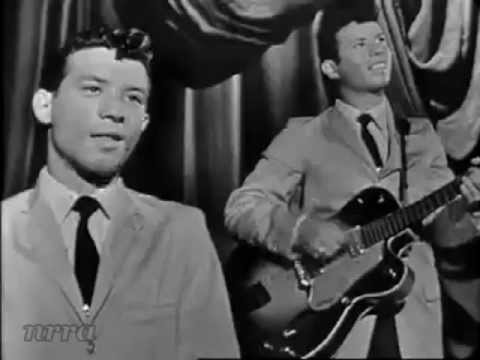
“You Mean Everything To Me” — The Fleetwoods' singular moment on the 1950s charts.
02 Song Meaning
The Meaning Behind “You Mean Everything To Me” by The Fleetwoods
The Declaration of Total Significance
You Mean Everything To Me makes the boldest possible romantic claim: not that the beloved is important, or wonderful, or deeply loved, but that they constitute the totality of what matters, that they are everything. This is the rhetoric of romantic absolutism, the assertion that the world has been organized around a single point of supreme importance. In the context of late-1950s teen pop, this kind of absolute statement was both conventional and genuinely felt: the emotional intensity of teenage love, which had not yet developed the protective irony that adult romantic expression often acquires, made this absolutism feel true rather than theatrical. The Fleetwoods delivered it with the sincerity it required, their soft harmonies lending the declaration a quality of quiet conviction more persuasive than any amount of dramatic emphasis would have been.
Softness as Emotional Intensity
The Fleetwoods' musical approach was built around softness: soft harmonies, gentle production, understated dynamics. This softness might seem like a limitation, a constraint that prevented them from accessing the emotional intensity that louder or more dramatic performers could achieve. In practice, it was the opposite: the softness amplified the emotional intensity by creating a sense of intimacy, of being trusted with something private rather than presented with something public. When the Fleetwoods sang that someone meant everything to them, the quiet delivery made it feel like a confession rather than a performance, a genuine disclosure rather than a commercial product. That quality of confessional intimacy was central to their artistic identity.
The Vocal Blend and What It Creates
The Fleetwoods' harmonies worked on a principle that is easy to describe but difficult to achieve: each voice was distinctive enough to be heard individually within the blend, while the blend itself created something that no single voice could have created alone. This is the goal of vocal ensemble performance at its best, and the Fleetwoods achieved it with a consistency that distinguished them from the many groups who could produce a decent blend but not one with this quality of individual distinctiveness within collective unity. You Mean Everything To Me demonstrates this quality in a setting that strips away every element except the voices and their relationship to each other, making the achievement clearly visible to any listener who attends to it.
Teen Love in the Late 1950s
The emotional landscape of teenage romantic life in 1959 was shaped by a specific set of cultural conditions: the relative prosperity of postwar American family life, the growing cultural recognition of teenagers as a distinct demographic with specific values and experiences, and the beginnings of a pop music industry specifically designed to address and profit from that recognition. The Fleetwoods were products of this environment, their music shaped by and for the emotional world of teenagers who were experiencing for the first time the feelings that their favorite records were designed to articulate. You Mean Everything To Me met its audience at the exact emotional moment it was written for, and the earnestness of the meeting was what made it work.
The Durability of Simple Declarations
You Mean Everything To Me has persisted in the collective memory not because it is sophisticated or innovative but because it is sincere and well-made. The declaration it makes is simple enough to be universally recognized and genuinely enough delivered to be believed. These are not trivial achievements: sincerity and credibility in performance are qualities that many records reach for and fewer actually achieve. The Fleetwoods achieved them consistently, and You Mean Everything To Me is a characteristic example of what that achievement looked like in practice. Hear it now and the sincerity is still palpable, still functioning, still reaching across the decades to make its quiet claim.
→ More from The Fleetwoods
View all The Fleetwoods hits →




→ More from the 1950s File
View all 1950s hits →



Keep digging