The 1950s File Feature
Poison Ivy
The Coasters, "Poison Ivy," and the Art of the Comic R B Single "Poison Ivy" by The Coasters arrived in the summer of 1959 and climbed to number seven on the…
01 The Story
The Coasters, "Poison Ivy," and the Art of the Comic R&B Single
"Poison Ivy" by The Coasters arrived in the summer of 1959 and climbed to number seven on the Billboard Hot 100, sustaining a remarkable sixteen-week chart run that underscored just how thoroughly the group had captured a mass American audience with their brand of comedic rhythm and blues. The record stands as one of the finest examples of what its composers intended: a novelty song with genuine musicological depth, a comedy record with real emotional resonance, and a pop single that sounded both effortless and precisely engineered.
The song was written by Jerry Leiber and Mike Stoller, the Brooklyn-born songwriting and production team who had already established themselves as perhaps the most important creative force in early rock and roll. Leiber and Stoller had a gift for comic narrative that went beyond mere joke-writing; their best Coasters songs function as miniature dramatic sketches, complete with characters, conflict, and a punchline that operates on multiple levels simultaneously. "Poison Ivy" exemplifies this approach. The song uses the itching, spreading misery of a poison ivy rash as an extended metaphor for a woman who is dangerously attractive — beautiful to approach, agonizing in her aftermath.
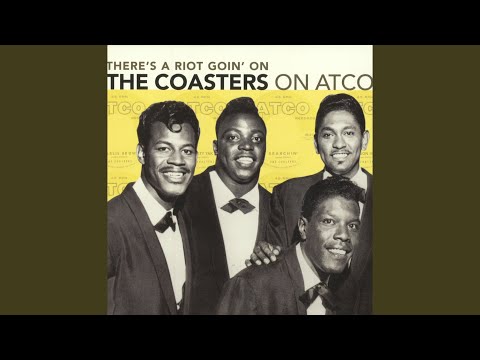
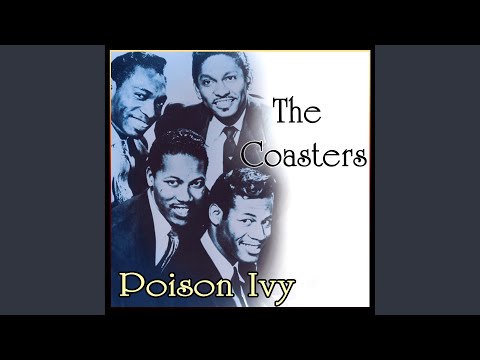
The Coasters themselves were the ideal vehicle for this kind of material. The Los Angeles-based group had evolved out of The Robins, another Leiber and Stoller act, and had refined a performance style that blended precise comedic timing with authentic R&B vocal chops. The group featured the contrasting voices of Carl Gardner on lead tenor, Cornell Gunter on high tenor and falsetto, Billy Guy contributing lead and comic asides, and Will "Dub" Jones anchoring the bottom with a distinctively comic bass voice. Jones's bass interjections were a crucial element of the Coasters' sound, providing the low-register punctuation that made many of their narrative songs land with particular comedic force.
By 1959, The Coasters had already scored major hits with "Yakety Yak" and "Charlie Brown," both Leiber-Stoller compositions that operated in the same comic mode as "Poison Ivy." The earlier records had established a formula that the team refined rather than abandoned: a narrative conceit delivered with theatrical flair, backed by a sparse but highly effective instrumental arrangement that gave the vocalists maximum space to perform. "Poison Ivy" follows this blueprint faithfully, with a guitar-and-rhythm arrangement that keeps the focus on the voices and the lyrics.
The recording was produced by Leiber and Stoller themselves, who had developed an unusually hands-on production style that was, for 1959, remarkably sophisticated. They understood instinctively that comic material required precise pacing, and they shaped the song's arrangement to maximize the comic payoff at key moments. The instrumental break in the middle of the record gives the listener just enough space to anticipate the next verse before the vocals return. This kind of structural intelligence was not accidental; it was the product of two men who had thought deeply about how music and humor interact.
The song was released on Atco Records, a subsidiary of Atlantic, which had been home to The Coasters since their national breakthrough. Atlantic's distribution and promotion infrastructure helped ensure that "Poison Ivy" reached radio stations and jukeboxes across the country in the critical weeks following its release. The sixteen-week chart run it achieved was a direct product of this infrastructure working in combination with the song's inherent qualities.
In the broader context of 1959 popular music, "Poison Ivy" occupied an interesting position. The year marked a transitional moment in early rock and roll: Elvis Presley was in the Army, Buddy Holly had died in February, Chuck Berry was facing legal troubles, and Little Richard had temporarily retired from secular music. Into this somewhat unsettled landscape, The Coasters offered a form of rock and roll that was simultaneously safer and smarter than the primal energy of the first wave. Their records were funny rather than threatening, clever rather than raw, but the R&B foundation was never compromised.
The song's crossover appeal was notable. It charted on both the pop chart and the rhythm and blues chart, demonstrating The Coasters' ability to reach audiences across the racial lines that still largely segregated American popular music in 1959. This crossover capacity was partly a function of the group's universal comedic appeal — the metaphor at the heart of the song was accessible to any listener regardless of background — and partly a function of the song's musical polish, which gave it a radio-friendly quality without sacrificing its R&B authenticity.
"Poison Ivy" endures as a standard of the era, covered by artists ranging from The Rolling Stones to various pub rock acts, and its metaphorical central image has remained vivid enough to make the song immediately recognizable decades after its initial release. It represents Leiber and Stoller at a peak of their powers, and The Coasters delivering a performance of perfect comic precision.
02 Song Meaning
Danger and Desire: The Metaphorical World of "Poison Ivy"
"Poison Ivy" by The Coasters operates on a single, sustained metaphor that is at once immediately comprehensible and surprisingly rich in its implications. A woman is compared to the plant toxicodendron radicans (commonly known as poison ivy) because she is beautiful, enticing, and capable of causing considerable suffering to anyone who gets too close. The song's central conceit is not subtle, but subtlety was never the point. Jerry Leiber and Mike Stoller designed the song to be funny, immediate, and slightly dangerous, and on all three counts they succeeded with considerable efficiency.
The metaphor works because poison ivy is a plant that most Americans in 1959 would have encountered, or at least feared. Its defining characteristic is that it looks harmless, often attractive with its glossy three-leafed clusters, but contact with it produces an intensely uncomfortable allergic reaction: itching, redness, spreading rashes that seem to worsen the more one scratches. The comparison to a seductive but ultimately troublesome woman was not original to Leiber and Stoller (the tradition of comparing dangerous women to natural hazards runs deep in blues music), but the specific choice of poison ivy gave the metaphor a particular vividness that resonated with audiences.
The song belongs to a tradition within rhythm and blues of cautionary tales delivered with a comic wink. The narrator is not devastated by the woman in question; he is inconvenienced, itching, and warning other men away from the same fate. This tone — rueful rather than tragic, amused rather than angry — places "Poison Ivy" in a specific emotional register that The Coasters had made their specialty. It is the register of the man who has made a foolish mistake and knows it, and who derives a kind of social currency from telling the story well.
The Coasters' vocal performance is essential to the song's meaning. The interplay between the different vocal registers — the high tenor exclamations, the bass interjections, the lead narrative — creates the impression of a group of men swapping a funny story, with each contributor adding his own reaction to the tale. This communal storytelling structure amplifies the cautionary dimension of the song. It is not one man's personal tragedy; it is a shared masculine joke about the hazards of female attractiveness.
There is also a dimension of the song that operates beneath its comic surface. The woman described is never blamed for the suffering she causes; the song does not condemn her but rather marvels at her capacity to produce distress simply by being what she is. In this sense, "Poison Ivy" is less a misogynistic warning than an acknowledgment of the involuntary power of attraction. The plant does not intend to cause harm; it simply possesses a natural property that makes contact with it dangerous. The woman in the song operates similarly.
This dimension of the metaphor was probably not the primary intent of Leiber and Stoller, who were primarily interested in writing a funny, commercially viable R&B single. But the song's longevity suggests that its metaphorical content has proven genuinely resonant across generations of listeners, including those who have covered it or revisited it as a piece of vintage popular culture. The image of poison ivy as a stand-in for irresistible but painful attraction has entered the broader cultural vocabulary, and "Poison Ivy" deserves credit for helping to lodge it there.
At its core, the song is about the gap between what we know and what we do. Every listener understands intellectually that some attractions lead to suffering. The song's enduring appeal lies in its cheerful acknowledgment that this knowledge changes very little about human behavior.
→ More from The Coasters
View all The Coasters hits →

→ More from the 1950s File
View all 1950s hits →




Keep digging