The 1950s File Feature
I Don't Know
I Don't Know: Ruth Brown and the Atlantic Records Sound in 1959 Ruth Brown was one of the foundational figures of rhythm and blues, an artist whose recording…
01 The Story
I Don't Know: Ruth Brown and the Atlantic Records Sound in 1959
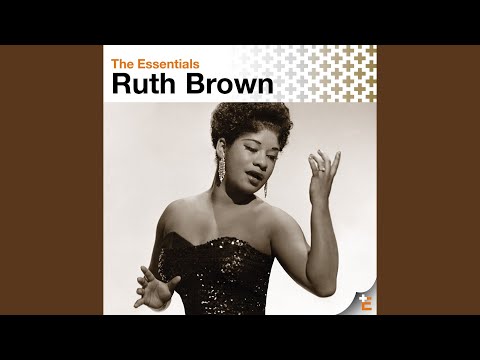
Ruth Brown was one of the foundational figures of rhythm and blues, an artist whose recordings for Atlantic Records through the 1950s were so commercially central to that label's early success that Atlantic became known informally in the music business as "the house that Ruth built." By 1959, when "I Don't Know" was released, Brown had been recording for Atlantic for a decade and had accumulated an impressive string of R&B hits that had established her as one of the most commercially significant Black female vocalists in America. The recording represents a later entry in her Atlantic catalog, coming at a moment when the landscape of rhythm and blues was undergoing significant changes as rock and roll increasingly captured the attention of younger audiences.
Brown had signed with Atlantic in 1949 following a period of illness that had delayed her entry into the recording industry, and her early recordings for the label had helped define what rhythm and blues meant as a commercial and artistic category in the early 1950s. Her vocal style combined a blues-inflected earthiness with a pop accessibility that made her recordings crossover candidates at a time when the boundaries between R&B and mainstream pop were more porous than they are sometimes assumed to have been. The Atlantic production team, which included the label's founders Ahmet Ertegun and Herb Abramson, as well as producer and songwriter Jesse Stone, understood how to frame her voice in arrangements that maximized its commercial appeal without compromising its character.
The context of Atlantic Records in 1959 is important for understanding where Brown stood in the music business. The label had grown substantially from its early days as a small independent operation to become one of the most respected names in American popular music, and its artist roster included figures whose work was reshaping the R&B and soul landscape. Brown had been at the label since its earliest years, and her continued presence in the catalog reflected her enduring commercial value even as the label's focus was beginning to shift toward some of its newer signings.
The production of "I Don't Know" reflects the Atlantic house style of the late 1950s, a sound built around tight rhythm section work, carefully arranged horn parts, and a production clarity that allowed the vocal performance to drive the recording. Atlantic had developed a distinctive sonic approach through years of work with Brown and other artists that balanced the rawness of blues-influenced performance with a studio sophistication that gave the recordings commercial broadcast quality. The result was a sound that occupied a productive middle ground between the earthier end of the blues spectrum and the more polished end of pop, a position that served Brown's crossover commercial ambitions effectively.
Brown's vocal performance on the track demonstrates the full range of her gifts as a singer. Her voice had the authority and expressiveness that came from years of performing in a demanding professional environment, and she brought to the material the kind of confident execution that distinguishes genuinely experienced performers from those who are still developing their command of the studio. The emotional directness of her delivery, a characteristic that had always been one of her most distinctive qualities, is fully present in the recording and gives it the quality of genuine personal expression rather than professional calculation.
The R&B chart context of 1959 was one in which the category was increasingly complex, encompassing a wide range of approaches from the sophisticated New York rhythm and blues of Atlantic's output to the rougher sounds being developed in cities like Chicago and Detroit. Brown's position within this landscape was that of an established artist whose approach had defined the category in its earlier years but who was now operating in a more crowded and diversified field. Her continued chart presence demonstrated the sustained loyalty of her audience, even as the broader cultural shifts associated with rock and roll's rise were beginning to alter the commercial landscape for all R&B artists.
The broader significance of Ruth Brown's career at Atlantic extends well beyond any single recording. She was not only a commercially important artist but a cultural pioneer whose success helped demonstrate to the music industry that Black female vocalists could sustain long careers as headlining recording artists rather than merely as occasional hit makers. The financial treatment of Brown and other Atlantic artists became a subject of significant controversy in later years, when it emerged that the royalty arrangements of the early independent label era had left many pioneering artists with far less financial compensation than their commercial contributions warranted. Brown became an important advocate for artists' rights in later life, and her advocacy contributed to legislative changes that improved the financial position of veteran performers.
The legacy of "I Don't Know" and Brown's broader Atlantic catalog is woven into the history of American popular music in ways that are not always fully recognized. The recordings she made in the 1950s were foundational documents of rhythm and blues as it developed from its roots in jump blues and swing-era music toward the soul and R&B forms that would dominate the following decade. Her influence on subsequent generations of female vocalists, from those who followed her at Atlantic to artists working decades after her peak commercial years, represents a cultural legacy that extends far beyond the chart positions of individual recordings.
02 Song Meaning
Ambivalence as Honesty: The Emotional World of Ruth Brown's "I Don't Know"
The title of Ruth Brown's "I Don't Know" signals from the outset a departure from the declarative certainties of much popular song. Where many recordings of the period were built around clear emotional positions, declarations of love or of its absence, expressions of joy or of loss, this recording places its narrator in a more uncertain and psychologically interesting position. The "I don't know" of the title is not a failure of knowledge but a description of a genuine emotional state, one in which the narrator is navigating feelings that resist easy categorization or simple resolution. This emotional complexity was characteristic of the best R&B songwriting of the period and reflects the genre's roots in the blues tradition, which had always been more comfortable with ambiguity and complexity than the mainstream pop conventions of the same era.
Ruth Brown's vocal approach is ideally suited to this kind of material. Her voice carries within it a quality of lived experience that gives weight to whatever emotional content she is called upon to communicate, and her delivery of ambivalent or conflicted emotional material is particularly effective because it conveys the sense that the narrator's uncertainty is genuine rather than performed. The blues tradition from which her vocal style descended had always valued emotional authenticity over decorative display, and Brown was a carrier of that tradition at the highest level of its commercial expression.
The emotional territory of "I Don't Know" is connected to a broader pattern in R&B and soul music in which romantic relationships are treated as sources of genuine complexity rather than occasions for simple emotional statements. The narrator's uncertainty about her own feelings, or about the situation she finds herself in, reflects a recognition that adult emotional life rarely presents itself in the clear categories that simpler songs might suggest. This honesty about complexity was one of the things that distinguished the best R&B recordings of the period from more smoothed-over pop treatments of similar themes.
The Atlantic Records context is also relevant to understanding the meaning of the recording. Atlantic had developed a production philosophy that valued emotional directness and authentic performance over the more sanitized approach of many mainstream pop labels, and this philosophy created a recording environment in which artists like Brown could engage with emotionally complex material without pressure to simplify or sanitize it for a broader audience. The resulting recordings had a quality of emotional truth that gave them their distinctive character and that accounts in part for their enduring appeal to audiences who encountered them long after their original commercial moment had passed.
For Brown's artistic identity, the track confirms the qualities that had made her one of the defining figures of rhythm and blues: the combination of vocal power and emotional nuance, the ability to inhabit a lyrical situation fully while communicating its emotional complexity, and the authority of a performer who has earned her relationship with difficult material through years of experience and craft. Her career legacy rests on exactly these qualities, and "I Don't Know" is a characteristic expression of them.
The recording also illuminates the broader significance of R&B music in 1959 as a form of emotional expression for Black American audiences. At a moment when the public discourse was still heavily constrained by the racial hierarchies of segregation, the music being made by artists like Ruth Brown on independent labels like Atlantic offered an emotional space in which the full complexity of human feeling could be explored without the limitations imposed by the more restrictive conventions of mainstream pop. This dimension of the music's cultural meaning was not always legible to contemporary listeners outside the community for which it was primarily made, but it was essential to understanding what made the best recordings of this era feel genuinely necessary to their original audience.
→ More from Ruth Brown
View all Ruth Brown hits →
→ More from the 1950s File
View all 1950s hits →




Keep digging