The 1950s File Feature
Never Be Anyone Else But You
"Never Be Anyone Else But You" — Ricky Nelson's Teen Idol at Full Confidence The Most Famous Living Room in America To understand Ricky Nelson's commercial p…
01 The Story
"Never Be Anyone Else But You" — Ricky Nelson's Teen Idol at Full Confidence
The Most Famous Living Room in America
To understand Ricky Nelson's commercial position in early 1959, you have to understand what it meant to grow up on television. Since 1952, Ricky Nelson had been a character on The Adventures of Ozzie and Harriet, the family sitcom that starred his actual parents and his actual brother, making him one of the most recognizable faces in American households long before he recorded a single note. When he began making records in 1957, the promotional infrastructure was already in place: millions of people who watched the show every week would hear about the records through the show itself. No talent agency could have constructed a more effective launch platform, and Nelson used it with shrewdness beyond his years.
By the time "Never Be Anyone Else But You" was released in early 1959, Ricky Nelson had already accumulated multiple top-10 hits, establishing himself as one of the genuine commercial powerhouses of the late-1950s pop scene. He was not merely a novelty product of his television exposure; his recordings demonstrated genuine musical sensibility and an instinct for selecting material that suited his particular vocal character. The teen idol apparatus of the period required a certain kind of face and a certain kind of story, but it could not sustain chart success without something behind the performance that connected with listeners on a musical level.
Rockabilly Polish and Teen-Pop Appeal
Nelson's recordings from this period occupied an interesting hybrid space. They were too polished and melodic to be pure rockabilly, too infused with guitar energy to be conventional pop balladry. His early backing band included guitarist James Burton, who would go on to become one of the most respected session musicians in American music history, later serving as Elvis Presley's lead guitarist. Burton's presence on Nelson's records gave them a musical credibility that extended beyond the teen idol context, with lead guitar work that was technically sophisticated and tonally distinctive even in the brief spaces available on a three-minute pop record.
"Never Be Anyone Else But You" is a love pledge in the classic late-1950s mode: the speaker commits completely to the object of affection, promising exclusivity with a certainty that the lyric treats as both natural and necessary. The production surrounds Nelson's voice with a comfortable arrangement, the guitars providing texture, the rhythm section keeping things moving without pushing too hard. The whole thing is designed to be immediately appealing without being particularly challenging, which was precisely the specification for a commercial teen pop record in 1959.
Sixteen Weeks and a Top-10 Peak
The chart run for "Never Be Anyone Else But You" was one of the most sustained of Nelson's early career. Entering the Billboard Hot 100 on February 23, 1959, at position 65, the record moved smartly upward over the first few weeks. By March 9 it had climbed into the top 20, and by March 16 it was sitting at number 9. The track peaked at number 6 on April 6, 1959, completing a remarkable sixteen-week chart journey that confirmed Nelson's commercial reliability.
A sixteen-week chart run for a pop single in early 1959 was a substantial achievement. The Hot 100 as a unified chart was still relatively new (having launched in 1958), and the singles market in this period was driven by radio play and jukebox placement as much as retail sales. Sixteen weeks reflected the kind of sustained listener interest that only genuine musical appeal could generate; television exposure could open doors, but it could not keep a record on the chart for that long.
Nelson Among His Contemporaries
The late-1950s teen idol era included figures like Fabian, Bobby Rydell, and Frankie Avalon, many of whom were promoted aggressively but whose musical legacy has not worn as well as Nelson's. The critical difference was musical substance. Nelson's involvement with genuine rock and country guitar players, particularly Burton, meant that his records had a sonic floor that most of his contemporaries could not match. When the British Invasion arrived in 1964 and many teen idols of the previous era found their commercial positions erased, Nelson was among the few who continued to record with genuine artistic conviction.
A Bedrock of the Late-1950s Sound
Hearing "Never Be Anyone Else But You" now is to encounter a very specific moment in American pop history: the late 1950s, when rock and roll had already established itself but had not yet generated the album-oriented ambitions that would come later. Singles were everything, radio was king, and the connection between a teenager's bedroom and the top of the chart was a direct and deeply felt transaction. Nelson understood that transaction intuitively, having grown up in the entertainment industry, and he executed it brilliantly on this record.
Put on "Never Be Anyone Else But You" and hear 1959's sweetest corner at the peak of its uncomplicated confidence.
"Never Be Anyone Else But You" — Ricky Nelson's singular moment on the 1950s charts.
02 Song Meaning
The Meaning of "Never Be Anyone Else But You" — Fidelity, Youth, and the Pop Promise
Total Commitment as Romantic Ideal
The title is an absolute statement. Not "I will try to be faithful" or "I prefer you above others" but "there will never, under any circumstances, be anyone else but you." That absolutism is not accidental. Late-1950s teen pop operated within a romantic framework that valued and celebrated total commitment as the natural endpoint of young love, a cultural inheritance from both the popular song tradition and the social expectations of the postwar era. The lyric delivers exactly what that framework demanded, and delivers it with complete conviction.
The Teen Audience and Its Romantic Expectations
To appreciate why "Never Be Anyone Else But You" worked as powerfully as it did requires understanding its intended audience. Teenagers in 1959 were navigating the emotional intensity of first love within a social structure that simultaneously encouraged romantic pairing and demanded adherence to strict behavioral codes. The fantasy of total, unconditional romantic devotion was both an escape from and a reinforcement of those codes. Songs like this one functioned as emotional rehearsal spaces, places where teenagers could experience the feeling of being completely chosen and completely committed without the complexity that actual adult relationships would eventually demand.
Ricky Nelson as the Ideal Vehicle
The meaning of the song is inseparable from the performer delivering it. Ricky Nelson's public image in 1959 was built around accessibility, the sense that he was simultaneously special (a television star, a recording artist) and ordinary (a teenager navigating the same experiences his audience was navigating). When he delivered a total romantic commitment on record, that combination of celebrity distance and boy-next-door familiarity made the pledge feel personal in a way that a more remote performer's version might not have achieved. His listeners could imagine that the commitment was directed at them specifically.
The Postwar Romantic Consensus
The late 1950s represented something close to a consensus moment in American popular culture's treatment of romantic relationships. The disruptions that would come with the 1960s counterculture, the women's movement, and the sexual revolution were still ahead. In 1959, the dominant cultural narrative about love and commitment was relatively unified, and pop music both reflected and reinforced that narrative. "Never Be Anyone Else But You" is a perfect artifact of that consensus, a record so aligned with its cultural moment that it could hardly have emerged in any other period of American history.
Why the Song Still Reads as Complete
Even for listeners who encounter the song now, well outside its original cultural context, it retains a certain completeness. The melody is genuinely appealing, the production is clean and purposeful, and the emotional statement is so unambiguous that it communicates immediately. Simple sincerity, when executed with sufficient craft, does not date in the way that more sophisticated or ironic approaches can. "Never Be Anyone Else But You" said what it meant and meant what it said, and that clarity remains audible across more than sixty years of subsequent cultural change.
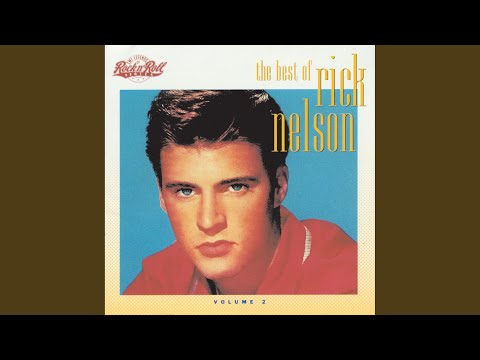
→ More from Ricky Nelson
View all Ricky Nelson hits →



→ More from the 1950s File
View all 1950s hits →



Keep digging