The 1950s File Feature
Midnight
Midnight: Paul Anka Finds the Dark Hours on His Way to Stardom The Sixteen-Year-Old Who Already Knew What He Was Doing There is something genuinely astonishi…
01 The Story
Midnight: Paul Anka Finds the Dark Hours on His Way to Stardom
The Sixteen-Year-Old Who Already Knew What He Was Doing
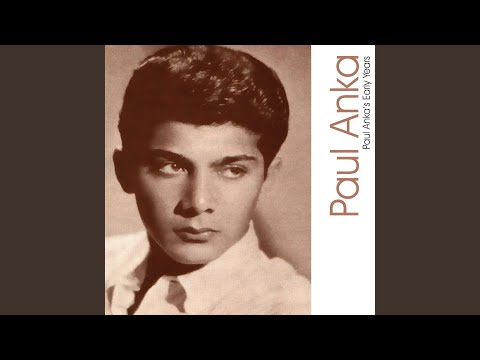
There is something genuinely astonishing about the arc of Paul Anka's early career. He was a teenager from Ottawa, Canada who walked into the offices of ABC-Paramount Records in the summer of 1957 with a song he had written himself, and walked out with a recording contract. That song, Diana, became one of the defining hits of the year, a record that sold millions of copies and announced the arrival of a self-contained pop entity: a teenager who could write, sing, and project the kind of charismatic vulnerability that radio listeners could not resist. By the summer of 1958, when Midnight entered the charts, Anka had already released several follow-up singles and had established himself as a fixture on both sides of the Atlantic. He was still only sixteen.
The Subject of Solitude and Night
Where many of Anka's early recordings dealt in the currency of teenage love and longing, Midnight worked a slightly different emotional territory. The midnight hour as a pop subject carried specific connotations in the late 1950s: it was the time when the wholesome daytime world receded and something more ambiguous took its place, when loneliness became most acute and thoughts most unguarded. For a young performer who had already demonstrated an instinct for emotional authenticity unusual in someone his age, this thematic choice was telling. He understood that his audience's emotional lives were not limited to dances and crushes; they included the specific quality of late-night feeling that the era rarely discussed openly.
Four Weeks Climbing Through the Summer
The single debuted on the Billboard Hot 100 on August 4, 1958, entering at number 76. Over the next two weeks it climbed steadily: to 71 on August 11, then to its peak position of number 69 on August 18. The fourth week brought a retreat to 79 before the record concluded its chart run. Four weeks on the Hot 100 in the summer of 1958 placed it in a competitive field; that August the charts were crowded with established stars and new voices competing for listeners' attention. Anka's ability to land a single in the top 70 during this period reflected both his sustained commercial momentum and the genuine quality of what he was delivering.
Anka in the Landscape of Teen Pop
By mid-1958 Paul Anka occupied a unique position in the pop landscape. He was young enough to be authentically part of the teen market he was selling to, but he had the professional instincts and compositional ability of someone far more experienced. This combination gave his recordings a credibility that many contemporary teen pop acts lacked; he was not a puppet of record producers or songwriters but a genuine creative participant in his own output. That distinction mattered to listeners who could sense the difference between authentic feeling and manufactured sentiment, and it gave even his minor chart entries a quality that held up on repeated plays.
One Entry in a Remarkable Run
Looking at Paul Anka's chart history through 1958 and 1959 reveals a level of consistency that was exceptional even by the standards of a very productive pop era. Midnight sits within that run as a solid mid-chart entry, not one of his signature moments but a record that demonstrated the range and depth of his early commercial impact. He would go on to write and record some of the era's most enduring songs, including Lonely Boy and Put Your Head on My Shoulder, building a career that extended across six decades and multiple musical identities. In the summer of 1958, he was just getting started, and the dark hours of midnight were already proving to be productive creative territory.
Play Midnight and hear Paul Anka at sixteen doing what he did better than almost any of his peers: finding the exact emotional frequency of a moment and committing to it completely.
“Midnight” — Paul Anka's singular moment on the 1950s charts.
02 Song Meaning
The Meaning Behind "Midnight" by Paul Anka
The Hour as Emotional State
Midnight in pop music is rarely just a time on the clock. It functions as shorthand for a particular quality of feeling: the late-night vulnerability that arrives when the distractions of the day have been cleared away and whatever you've been avoiding has to be faced. This emotional territory was familiar to the blues tradition long before it became part of teen pop, and when Paul Anka explored it on this 1958 recording, he was connecting his work to a longer lineage of music about darkness, solitude, and the thoughts that only come after the world goes quiet.
Teenage Longing at Its Most Honest
Anka's particular gift as a songwriter and performer in this period was his ability to communicate teenage feeling without condescension or sentimentality. The emotions he dealt in were real ones: longing, uncertainty, the acute self-consciousness of youth, and the desire to be understood and loved by someone specific. Midnight explores these themes through the lens of solitary late-night feeling, the specific kind of longing that is most intense when there's no one around to distract from it. That specificity of emotional situation gave his lyrics a precision that connected with listeners who recognized the experience.
Self-Expression at Sixteen
The fact that Paul Anka was sixteen when this record charted adds a dimension to its meaning that listeners of the era were aware of. He was not an adult observer commenting on teenage experience from outside; he was inside it, writing and performing from the same emotional position as his audience. This alignment between artist and listener was part of what made his recordings feel authentic in a pop landscape where manufactured teen idols were common. The midnight loneliness in his songs was not observed or imagined; it was the genuine material of his own life at that age.
Darkness and the Pop Permission Structure
Late-1950s pop had strict implicit rules about how much emotional darkness was permissible, and artists navigated those rules with varying degrees of success. The genre's mainstream tended toward optimism and resolution; ballads could be sad but were expected to carry the possibility of redemption. Anka's Midnight works within those constraints while pushing toward their limits, finding a tone that acknowledged the weight of late-night feeling without crossing into the kind of despair that radio programmers would have found uncomfortable. That calibration reflected a sophisticated understanding of how far pop could travel in a specific direction.
Night Songs and Their Lasting Resonance
Songs about the dark hours have maintained their appeal across every era of popular music because the experience they address is genuinely universal. The particular quality of 2 a.m. feeling, when emotions are unguarded and the mind runs where it will, does not change between generations even as the cultural forms that express it shift dramatically. Paul Anka located that feeling with precision in 1958, and the fact that the recording still communicates effectively across the decades suggests that his emotional accuracy was real. Midnight has always felt the same.
→ More from the 1950s File
View all 1950s hits →


Keep digging