The 1950s File Feature
The Ways Of A Woman In Love
The Ways of a Woman in Love: Johnny Cash and the Tennessee Two's 1958 CrossoverThe Man in Black Before the BlackIn the summer of 1958, Johnny Cash was at the…
01 The Story
The Ways of a Woman in Love: Johnny Cash and the Tennessee Two's 1958 Crossover
The Man in Black Before the Black
In the summer of 1958, Johnny Cash was at the beginning of one of the most significant careers in American popular music, though the full scale of what he would become was not yet visible. He was prolific, commercially active, and increasingly ambitious, a singer and songwriter from Kingsland, Arkansas, who had been making records since 1955 with a spare, driving sound built around the rhythm guitar and upright bass combination of the Tennessee Two. The image of Cash as the granite-faced Man in Black was still years in the future; in 1958 he was a young artist in his mid-twenties, feeling his way toward a larger artistic identity while navigating the complicated demands of the Sun Records roster and a touring schedule that kept him away from home for extended stretches.
Sun Records and the Rockabilly Context
Cash recorded at Sun Studio in Memphis, the label that had launched Elvis Presley, Carl Perkins, and Jerry Lee Lewis, and that occupied a unique position in the 1950s music landscape as the place where country, gospel, and blues influences were being fused into something genuinely new. Cash's sound at Sun was distinctive even within that extraordinary company: less frantic than rockabilly, more deliberate, built on a boom-chicka-boom rhythm that felt like a train moving steadily toward a destination. The Ways of a Woman in Love is a fascinating entry in that catalog because its subject matter was more conventionally romantic than much of his output, showing a range that the mythology of his later career sometimes obscures.
Eleven Weeks, a Peak of Number 24
The single had a respectable showing on the Billboard charts, spending eleven weeks in the Hot 100 and peaking at number 24 on September 15, 1958. That placed it solidly in the upper quarter of the chart, a genuine pop crossover for an artist primarily identified with country and rockabilly audiences. Cash was not the only act crossing those genre lines in 1958; the broader pop market was absorbing influences from all directions, and a singer with his combination of vocal distinctiveness and melodic accessibility had a clear path to the mainstream chart even without a conventional pop sound. Eleven weeks of chart presence signaled a real audience, not a novelty spike.
The Sound and the Performance
Cash's vocal on records from this period had a quality that is difficult to replicate: a dark, resonant baritone that conveyed both vulnerability and bedrock solidity simultaneously. On a song about the ways of a woman in love, that voice brought a depth of feeling that a lighter or more technically polished singer might not have achieved. The Tennessee Two's accompaniment, spare and rhythmically insistent, gave the track its forward motion without crowding the vocal. That was exactly the right approach for a singer whose voice was the entire point of the exercise: everything else existed to frame and support it, and the simplicity of the arrangement was a kind of discipline that Cash understood intuitively.
A Glimpse of the Man to Come
Listening to Cash's late-Sun recordings like this one, you can hear the contours of the larger artist taking shape. The voice is unmistakably his; the directness and the emotional honesty that would make his work endure across genres and decades are already fully present. The Ways of a Woman in Love may not be the Cash record you reach for first, but it belongs to the essential document of an artist in formation. The qualities that would eventually give him the authority to record albums with the weight of American Recordings were present at this early stage, waiting for the context that would make their full dimensions visible. Press play and hear Johnny Cash when he was still becoming Johnny Cash, which is to say: already remarkable.
“The Ways of a Woman in Love” — Johnny Cash And The Tennessee Two's singular moment on the 1950s charts.
02 Song Meaning
The Meaning of The Ways of a Woman in Love: Mystery, Power, and Devoted Observation
A Man Watching, Wondering
The title sets up a particular dramatic situation: a narrator who is not the woman in love but the person watching her, trying to understand what her love means and how it works. This observational posture gives the song an unusual angle. Rather than placing the listener inside the experience of love, it positions them just outside it, in the place of the man who is both the object of the woman's feeling and a student of its mysterious operations. This slight distance is what gives the song its texture.
Love as Something Women Know
There is a long tradition in popular music of positioning women as the keepers of love's deeper wisdom, and this song participates in that tradition with a certain earnestness. The "ways" of a woman in love are presented as something particular and perhaps unknowable to the male narrator, something he can observe and be moved by but cannot fully claim or explain. This is not a patronizing framing, or at least it need not be read that way: it acknowledges a genuine asymmetry in how love was understood to operate in the emotional grammar of late-1950s culture.
Cash's Voice and Emotional Authenticity
What Johnny Cash brought to any lyric was a quality of weight: the sense that every word has been tested against real experience and survived. His vocal performances did not traffic in lightness or irony; when he sang about the ways of a woman in love, the feeling behind the observation was tangible. This quality made even conventional romantic material feel more serious, more considered, than it might in other voices. The listener trusted him, which meant they trusted the song's observations even when those observations were about emotional territory that resisted easy explanation.
The Late 1950s Love Lyric
Popular songs about romantic love in 1958 operated within conventions that prized sincerity above sophistication. The expectation was that a love song should mean what it said, that the narrator's feelings should be genuine and legible, and that the emotional territory covered should be recognizable to any listener who had experienced something similar. The Ways of a Woman in Love meets those expectations straightforwardly, which is both its limitation and its strength: it does not attempt more than it can deliver, and what it delivers it delivers fully.
Devotion as a Form of Attention
At its deepest level, the song is about the attentiveness that love produces. To be in love is to pay a particular kind of attention to another person, and to be loved is to become the object of that attention, which transforms both parties. The narrator who studies the ways of the woman who loves him is not passive; he is performing the most active thing love asks of anyone: truly seeing another person and trying to understand what their inner life looks like. That aspiration is at the heart of the song and gives it a warmth that goes beyond its conventional surface.
→ More from the 1950s File
View all 1950s hits →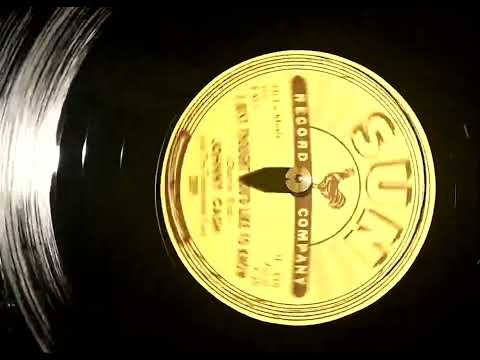




Keep digging