The 1950s File Feature
It's Just About Time
Johnny Cash and the Tennessee Two's It's Just About Time: Rockabilly Urgency in 1958 Sun Records and the World on a String Late 1958 was a strange and electr…
01 The Story
Johnny Cash and the Tennessee Two's "It's Just About Time": Rockabilly Urgency in 1958
Sun Records and the World on a String
Late 1958 was a strange and electric moment for American popular music. Elvis Presley had just been drafted, Chuck Berry and Little Richard were at their commercial peaks, and a lean, black-clad singer from Arkansas named Johnny Cash was building something at Sun Records in Memphis that felt unlike anything else on the dial. Cash had already scored significant hits with his stripped-back approach to country-inflected rock and roll, and he and his bandmates Luther Perkins and Marshall Grant, the Tennessee Two, had developed a signature sound that was deceptively spare: a boom-chicka-boom rhythm, Perkins' guitar lick sitting in the space between jazz and country, and Cash's voice, a baritone that sounded like it had been sandpapered by the Arkansas delta wind.
The Sound of Three Men Doing Everything
What made Cash and the Tennessee Two remarkable, and what you hear in "It's Just About Time," is the economy. There was no drummer on those early Sun sessions; the Tennessee Two's rhythm section was two instruments and the physical click of Perkins' muted strings against the strings themselves. That sound created a propulsive, slightly hypnotic pulse that was genuinely different from both the fuller rockabilly arrangements of Presley's band and the lush Nashville Sound that was beginning to take over country radio. Cash existed in his own pocket, and this single captures that perfectly.
A Steady Climb Up the Chart
"It's Just About Time" entered the Billboard Hot 100 on December 15, 1958, debuting at position 78. What followed was a textbook slow-burn chart climb: week by week the song inched upward, hitting 62, then 54, then 51, before peaking at number 47 on January 12, 1959. The track spent five weeks on the chart in total. That kind of patient ascent was characteristic of how mid-chart records moved in the pre-album-era market: radio play built gradually, jukebox demand accumulated, and word spread through regional airwaves before a national picture emerged.
Where Cash Stood in the Landscape
By this point in his career, Cash had already released "I Walk the Line" (1956) and "Ballad of a Teenage Queen" (1958), the latter reaching number one country and crossing into the pop Hot 100. He was known but not yet the monument he would become. Sun Records, Sam Phillips' groundbreaking Memphis label, was the context in which this music lived: the same studio that had cut records with Elvis, Jerry Lee Lewis, and Carl Perkins was nurturing Cash's particular strain of dark, minimal country-rock. The label's influence on the sound of the era cannot be overstated, and "It's Just About Time" sits squarely in that tradition.
Urgency and Legacy
The song's title itself is telling: a phrase of impatience, of reckoning deferred too long finally arriving. That sense of temporal urgency runs through a lot of early Cash material, the feeling that something is owed, something is coming, and the waiting is nearly over. It was a posture that suited the moment: a country and pop landscape in rapid transition, where the old rules of Nashville were being quietly upended by sounds coming out of Memphis and Lubbock and Macon. Cash would go on to define an entire vision of American music across the following decades, but moments like this one show the raw, lean form of what he was building at the very beginning.
Put on those old Sun recordings and hear how much a bass, a guitar, and one extraordinary voice could fill a room.
“It's Just About Time” — Johnny Cash and the Tennessee Two's singular moment on the 1950s charts.
02 Song Meaning
The Meaning of "It's Just About Time" by Johnny Cash and the Tennessee Two: Restless Anticipation
The Vocabulary of Impatience
There is something immediately recognizable in the phrase "it's just about time." It belongs to a vernacular of waiting pushed past its limit: the moment when patience runs out and the reckoning finally approaches. In early Cash material, this kind of language carried a double charge. On the surface it could be a love song — the moment of reunion, the return of someone absent — but underneath it always carried a harder edge, a suggestion of consequence and accountability.
Love, Return, and the Road
In the tradition of country music that Cash inhabited, songs about time and return were almost always about the road. The itinerant life of the touring musician, the promises made to people left behind, the guilt and longing of sustained absence: these were the emotional coordinates of the genre's most honest writing. "It's Just About Time" fits into that tradition, the voice of someone acknowledging that a return is overdue, that the waiting imposed on another person has gone on long enough, that something must change.
The Moral Undertone
What sets Cash apart from many of his contemporaries is the moral weight he brought to even his lighter material. There is rarely pure celebration in a Cash record; there is almost always some awareness of cost, of what has been spent or damaged in pursuit of whatever the song is about. That quality is present even here, in a relatively brief single. The title's phrase carries a tinge of accountability: not just "the time is coming" but "the time is overdue," which implies a debt that has been accumulating.
The Era's Emotional Register
In 1958, American popular culture was saturated with anxieties that pop music both reflected and occasionally escaped. The Cold War was at full pressure, the civil rights movement was building toward its most consequential years, and the music business itself was caught between the old Nashville establishment and the raw new energies coming out of rockabilly and rhythm and blues. Cash's minimal, direct style cut through a lot of that noise. His songs did not offer fantasy or escapism in the classic sense; they offered solidarity with listeners who knew what work and waiting and longing felt like from the inside.
Why the Message Still Lands
More than six decades after this record was cut at Sun Studio in Memphis, the emotional territory it maps remains as legible as ever. Everyone knows what it means to wait too long for something that should have happened already; everyone knows the mix of relief and apprehension when the waiting is nearly over. Cash gave those universal feelings a specific, grounded voice: plain-spoken, unhurried, but carrying genuine weight under the surface. That is what has kept his early catalog vital long past the era that produced it.
→ More from the 1950s File
View all 1950s hits →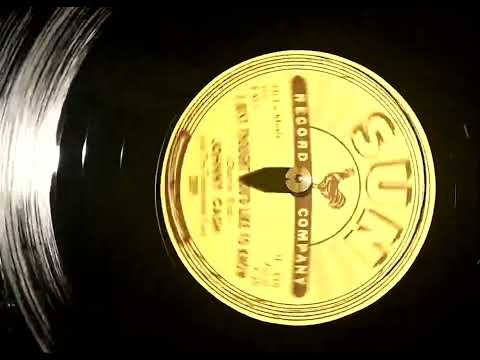


Keep digging