The 1950s File Feature
Teenage Heaven
Teenage Heaven by Eddie Cochran Turn the clock back to 1959, when rock and roll was still young, dangerous, and thrillingly new. Guitars twanged, teenagers c…
01 The Story
"Teenage Heaven" by Eddie Cochran
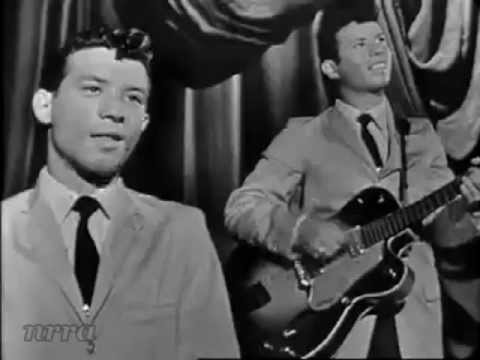
Turn the clock back to 1959, when rock and roll was still young, dangerous, and thrillingly new. Guitars twanged, teenagers claimed the music as their own, and a handful of charismatic young performers defined the sound of a rebellious generation. Eddie Cochran stood among them, a gifted guitarist and songwriter whose cool, effortless style embodied the spirit of early rock and roll. Teenage Heaven captures him doing what he did best: singing about the joys and frustrations of being young.
A Rockabilly Original
Eddie Cochran was one of the most talented figures of the first rock and roll wave, a multi-instrumentalist with a sharp ear for the concerns of teenage life. He is best remembered for the enduring classic Summertime Blues, a song whose stomping rhythm and lyric of youthful frustration became a template for generations of rock to come. By 1959 he was an established star with a distinctive guitar sound and a knack for writing songs that spoke directly to young listeners. Teenage Heaven fit squarely into that youth-focused catalog.
The Sound Of Young America
The song trades in the bright, energetic rockabilly style that made Cochran a favorite of the era. His music combined driving rhythm, ringing guitar, and lyrics steeped in the everyday dreams and complaints of teenagers, from cars and romance to the wish for freedom from adult rules. This was the moment rock and roll established itself as the voice of youth, and Cochran was one of its most authentic spokesmen, a young man singing convincingly about the world he actually inhabited.
A Fleeting Chart Entry
On the Billboard Hot 100, this particular single made only the briefest of appearances. It debuted at number 99 on the chart dated March 16, 1959, and that lone week marked its entire run. The song peaked at number 99 and spent just 1 week on the Hot 100 before dropping off. That modest showing should not be mistaken for a measure of Cochran's importance, however. Chart performance in this era could be fickle, and many of his most influential recordings were valued more for their lasting impact than their immediate chart numbers.
A Talent Cut Tragically Short
Cochran's story carries a heavy note of what-might-have-been. He died in a car accident in April 1960 at just twenty-one years old, while touring in England, cutting short one of the most promising careers of early rock and roll. His death robbed the music of a genuine innovator, a performer whose guitar work and songwriting had already influenced countless peers. Everything he recorded takes on added poignancy in light of how briefly he was able to create.
An Enduring Influence
Despite his short life, Cochran's impact proved immense. He was later inducted into the Rock and Roll Hall of Fame, and his songs were covered and revered by rock musicians for decades, from British Invasion bands to punk and beyond. His guitar techniques and his knack for capturing the teenage experience left fingerprints all over the music that followed. A minor chart single like this one is a small piece of a legacy far larger than any single number.
A Guitarist Ahead Of His Time
Cochran's importance extends well beyond his singing. He was a genuinely innovative guitarist and studio thinker, experimenting with overdubbing and layered production at a time when such techniques were far from routine. His approach to the instrument, full of muscular rhythm and inventive touches, pointed toward the future of rock guitar and inspired players on both sides of the Atlantic. British musicians in particular held him in enormous esteem, and echoes of his style surfaced in the rock explosion of the following decade. To hear his records is to hear a young artist already stretching the possibilities of what a rock and roll recording could be.
Youth Preserved In Sound
Listening today, there is a bittersweet vitality to Cochran's recordings, the sound of a young man fully alive to his moment. His music still crackles with the excitement of rock and roll's dawn. Press play and hear one of the genre's true pioneers, forever young, singing about the world as only a teenager could feel it.
"Teenage Heaven" — Eddie Cochran's singular moment on the 1950s charts.
02 Song Meaning
The Meaning Behind "Teenage Heaven" by Eddie Cochran
As its title suggests, this song imagines a young person's vision of paradise. It is a playful, wishful daydream about what a teenager's perfect world would look like, free of the restrictions and demands imposed by the adult grown-up world. In classic Cochran fashion, it speaks directly to the desires of the young.
A Teenager's Dream World
The lyric conjures an idealized fantasy tailored to youthful wishes, a place where all the ordinary rules and chores fall away. The song imagines freedom from adult authority and endless indulgence in teenage pleasures, painting a picture of exactly the life a restless young person might crave. That wish-fulfillment is the whole engine of the track.
The Voice Of Youthful Frustration
Beneath the fantasy runs a familiar current of frustration with grown-up limits. Cochran built much of his catalog on the friction between teenagers and the adult world, and this song extends that theme into daydream form. The paradise it describes is defined largely by the absence of the constraints young listeners chafed against, which gives the fantasy its emotional punch.
Rock And Roll As Rebellion
The song reflects the very identity of early rock and roll as the music of youth. Rock claimed the teenage experience as its rightful territory, giving young people a voice and an anthem in a culture that often overlooked them. Cochran's imagined heaven is a small declaration of that generational independence, a assertion that youth deserved a world of its own.
Why It Connected
The wish to escape rules and revel in freedom is one of the most universal feelings of adolescence. Teenagers of 1959 heard their own longings reflected back at them, delivered by a performer who was practically one of their own. That direct line to the youthful imagination was the source of the song's appeal.
Defining A New Audience
What makes songs like this historically significant is the way they helped carve out the very idea of the teenager as a cultural force. Before rock and roll, popular music largely addressed a general adult audience. Cochran and his peers spoke instead to a newly recognized group with its own tastes, money, and identity. By imagining a paradise built entirely around teenage desires, the song affirmed that young people were worthy of their own dreams and their own music. That act of recognition was part of a larger cultural shift, one that gave adolescence a distinct voice it had never quite enjoyed before.
A Playful Fantasy
What remains is a lighthearted daydream about being young and free. The song does not aim for depth so much as delight, offering a joyful escape into a teenager's ideal world. That playful spirit is exactly what made Cochran such a beloved voice of his generation.
→ More from Eddie Cochran
View all Eddie Cochran hits →


→ More from the 1950s File
View all 1950s hits →



Keep digging