The 1950s File Feature
Darling, I Love You
Al Martino Darling I Love You and the Autumn of 1959 There is something particular about the fall of 1959 in American pop: it sat in a narrow window between …
01 The Story
Al Martino Darling I Love You and the Autumn of 1959
There is something particular about the fall of 1959 in American pop: it sat in a narrow window between the first wave of rock and roll’s commercial dominance and the next seismic shift that the 1960s would bring. The charts still had generous room for the kind of polished, orchestrated romanticism that had ruled through the early part of the decade, and adult pop artists could still chart comfortably alongside the younger sounds that were reshaping the lower end of the market. Al Martino, who had scored one of the very first number-one records of the rock era with Here in My Heart in 1952, remained a meaningful presence in that adult pop tradition seven years later.
An Artist Who Kept His Footing
Martino’s career had an unusual shape: enormous early success followed by a period out of the spotlight, then a return in the late 1950s and early 1960s that demonstrated genuine staying power in a market that was changing rapidly around him. By 1959, he was recording for 20th Century Fox Records and producing material that fit the adult pop mainstream comfortably without straining for the youth market or attempting the kind of rock crossover that other adult pop artists were experimenting with during this transitional period. Darling, I Love You was a straightforward romantic ballad, the kind of direct declaration that Martino’s warm Italian-American baritone suited perfectly, and the kind of record that 1959 radio still welcomed without friction or format hesitation.
The Chart Run
The single debuted on the Billboard Hot 100 on September 28, 1959, at position 70. Over six weeks it climbed steadily: 68, then to its peak of number 63 during the weeks of October 12 and 19, 1959, where it held for two consecutive weeks before slipping to 70 and then below the chart in its sixth week. Holding at the same position for two consecutive weeks suggests a record that had found its natural level with radio programmers and was receiving stable, consistent play rather than building further or fading rapidly.
The Pop Mainstream of Late 1959
The fall of 1959 featured a pop landscape in active transition. Bobby Darin, Paul Anka, Connie Francis, and the emerging Brill Building songwriters were defining a new generation of mainstream pop that was younger and more energetic than the Martino tradition but still fundamentally melodic and vocal in its approach. Martino was working the upper edge of that tradition, positioning himself as a singer who connected to listeners who wanted craft and emotional directness from their pop records rather than novelty, teen energy, or the provocation of early rock and roll. He offered a different kind of pleasure, one that required a certain vocal maturity to deliver and a certain emotional maturity to fully appreciate.
Where This Sits in a Long Career
Al Martino would eventually generate his biggest mainstream moments with Spanish Eyes and Mary in the Morning in the 1960s, and his role in The Godfather in 1972 introduced him to a new generation of viewers and listeners who had not been there for the earlier chart successes. Darling, I Love You predates those chapters, a marker from a productive period of steady chart presence rather than a defining commercial moment. Six weeks on the Hot 100 and a peak of 63 was exactly the kind of reliable mid-chart performance that sustained a long career in a competitive market, confirming that an artist was still commercially relevant without making the kind of statement that would define their legacy. Press play for a small, clean piece of late-1950s pop at its most assured.
The Fox Years
20th Century Fox Records was an active participant in the late-1950s adult pop market, releasing material by established performers who fit the label’s mainstream commercial identity. Martino’s tenure at the label produced a series of chart entries that confirmed his continued commercial relevance during a period when many adult pop acts were struggling to hold their audience against the growing popularity of rock and roll and the more energetic sounds associated with younger audiences. Darling, I Love You was one of several Martino releases from this period that found their way onto the Hot 100, painting a picture of a performer who had found a stable, if modest, commercial niche in the adult pop mainstream and was working it consistently and professionally.
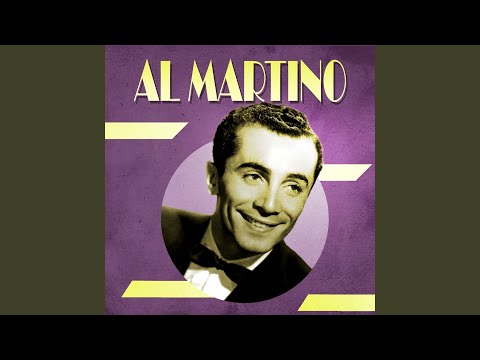
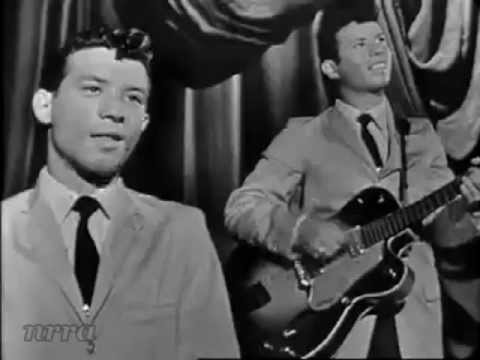
“Darling, I Love You” — Al Martino’s singular moment on the 1950s charts.
02 Song Meaning
The Directness of Al Martino Darling I Love You
The title states the entire emotional proposition of the song in four words. There is no metaphor, no circumlocution, no strategy, no setup or preamble: just a direct declaration of feeling addressed to a specific unnamed person in the most straightforward language available. Darling, I Love You belongs to a tradition of popular song that treats simplicity as a virtue, and that tradition has deep roots in American and European ballad-making stretching back well before the recording era began to document and preserve these forms.
The Ballad as Direct Address
Much of the most durable romantic pop has operated through this mode of direct address, the singer speaking to a you who is present in the song’s emotional space even if unnamed and unspecified in the lyric. This second-person mode creates intimacy with the listener because the you can be inhabited by anyone who hears the song; every listener gets to be the darling who is being loved and spoken to. It is a fundamental technology of pop songwriting, one that makes the listener a participant rather than an observer, and in 1959 it was deployed with uncomplicated confidence by artists who had grown up with the tradition rather than learned it analytically.
Italian-American Ballad Tradition
Martino came from a tradition that included Frank Sinatra, Perry Como, and Tony Bennett, all of whom shared Italian-American backgrounds and a vocal approach built on the bel canto ideal of the sustained, expressive note, the voice as an instrument capable of conveying emotional nuance through pure tone rather than lyrical complexity. This tradition placed supreme value on the emotional quality of the voice itself, on the ability to convey feeling through tone and phrasing and breath control as much as through the content of the words. A song as simply titled and simply organized as this gave Martino’s instrument full room to operate without interference from lyrical complexity or production flash that might distract from the voice itself.
Why Simple Declarations Endure
Pop music has never lost its appetite for the direct declaration of love, and that appetite explains why songs built around simple titles and clear emotional statements continue to find audiences across decades and through enormous changes in musical fashion and format. The simplicity is not laziness; it is precision. When a songwriter and a singer can make a four-word declaration feel genuine, specific, and emotionally complete rather than generic and formulaic, they have done something technically difficult while making it appear effortless and natural. Martino’s six-week chart run with this record in autumn 1959 suggests he made it feel exactly that way to the audiences who heard it on their radios during a season when the pop landscape was changing in ways that would soon transform everything around records like this one.
→ More from Al Martino
View all Al Martino hits →

→ More from the 1950s File
View all 1950s hits →


Keep digging